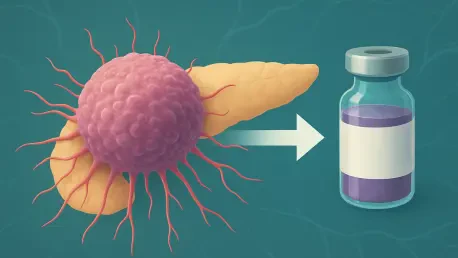

The pursuit of a reliable therapeutic strategy for metastatic pancreatic ductal adenocarcinoma has remained one of the most frustrating and stagnant chapters in modern oncology for decades. This specific malignancy is notorious for its silent progression, aggressive biological behavior, and a historical resistance to traditional cytotoxic therapies that leaves most patients with very few options once first-line treatments fail. However, a significant shift in this narrative is currently unfolding as Revolution Medicines reveals groundbreaking clinical data for its experimental inhibitor, daraxonrasib. By moving away from the “one-size-fits-all” approach of broad-spectrum chemotherapy and focusing on the underlying genetic drivers of the disease, this new therapeutic candidate offers a precision medicine solution for a condition that was once thought to be impervious to targeted intervention. The success of recent late-stage trials indicates that the medical community may finally be moving toward a period where pancreatic cancer is manageable.
Clinical Success and Patient Survival Metrics
The Phase 3 RASolute 302 clinical trial has delivered results that many industry experts are calling the most significant advancement in pancreatic cancer research in recent memory. The trial evaluated the efficacy of daraxonrasib in patients with metastatic disease whose cancer had returned after previous treatments, focusing on those harboring specific mutations in the RAS protein family. According to the interim data, patients treated with the experimental drug achieved a median overall survival of 13.2 months, which stands in stark contrast to the 6.7 months recorded for the control group receiving standard chemotherapy. This substantial improvement represents a 60% reduction in the risk of death, providing a level of efficacy that was previously unseen in this patient demographic. The evidence of benefit was so overwhelming that the independent data monitoring committee recommended terminating the trial early, allowing all participants to transition to the active drug for ethical reasons.
Beyond the headline survival figures, the secondary outcomes of the trial suggest that the drug’s impact is both deep and durable across various patient subgroups. While the primary focus was on the RAS G12 mutation, which is a hallmark of nearly 90% of pancreatic tumors, the “intent-to-treat” analysis showed that the benefits of daraxonrasib extended to a broader range of patients than initially anticipated. This is particularly relevant because previous attempts to target these pathways often resulted in rapid resistance or limited clinical response. In the RASolute 302 study, the objective response rates and progression-free survival metrics mirrored the primary survival data, suggesting that the drug not only extends life but also maintains a higher quality of life by preventing rapid tumor growth. The consistency of these results across different clinical sites and patient demographics reinforces the idea that daraxonrasib could become the new global benchmark for second-line therapy in metastatic cases.
Breaking the Barriers of RAS Mutational Targeting
For more than thirty years, the RAS protein family was famously labeled “undruggable” by the global scientific community due to its lack of deep binding pockets where small molecules could attach. The protein’s surface was often compared to a smooth billiard ball, making it nearly impossible for traditional medicinal chemistry to find a foothold to inhibit its activity. Daraxonrasib represents the successful culmination of a new era in structural biology and covalent bonding technology that has finally unlocked these elusive targets. By utilizing advanced molecular modeling, researchers were able to identify transient pockets on the protein that appear only during specific stages of its signaling cycle. This allows the drug to lock the protein in an inactive state, effectively cutting off the primary fuel source for the tumor’s growth and preventing the downstream signaling that leads to cellular proliferation.
The unique biology of pancreatic cancer makes this breakthrough especially impactful because these tumors are exceptionally dependent on RAS mutations for their survival and expansion. Unlike lung or colorectal cancers, which often have multiple redundant survival pathways, pancreatic ductal adenocarcinoma is frequently driven by a singular, dominant RAS mutation. Consequently, the high-affinity binding of daraxonrasib exerts a profound inhibitory effect that chemotherapy simply cannot replicate. While earlier inhibitors targeted the KRAS G12C mutation specifically, daraxonrasib is designed to address a wider variety of G12 mutations, making it a more versatile tool for clinicians. This shift from broad-spectrum cellular poisoning to high-precision molecular interference signifies a fundamental change in how the disease is perceived by oncologists, moving from a strategy of mitigation to one of targeted eradication at the cellular level.
Market Dynamics and Industry Strategic Movements
The financial world has reacted to these clinical milestones with a level of enthusiasm that matches the medical community’s optimism. Following the release of the trial data, Revolution Medicines experienced a dramatic increase in its market valuation, adding approximately $7 billion to its capitalization in a matter of days. This surge is not merely a reaction to a single trial outcome but reflects a broader market recognition that the company holds the keys to a multi-billion dollar oncology market. Investors are betting on the drug’s potential to become a first-line treatment in the coming years, which would exponentially increase its commercial reach. The rapid appreciation in stock value has also repositioned the company as a prime target for a strategic acquisition by larger pharmaceutical conglomerates looking to bolster their oncology portfolios with a proven, late-stage asset.
Speculation regarding a potential buyout has intensified as analysts point toward major players like Merck & Co. and other giants who are currently looking to diversify away from aging blockbuster drugs. While some large-scale deals in the sector have recently focused on earlier-stage biotech firms, the “derisked” nature of daraxonrasib makes Revolution Medicines a unique and highly attractive candidate. Industry experts suggest that any acquisition price would likely set a new record for the year, potentially eclipsing major deals seen in 2026. The logic behind such an acquisition is sound: a larger company could leverage its existing global distribution networks and massive sales forces to ensure daraxonrasib reaches every eligible patient worldwide as quickly as possible. This financial stability and institutional support would also provide the resources needed to explore combination therapies that could further enhance the drug’s efficacy.
Regulatory Transitions and Safety Management
The regulatory landscape for daraxonrasib is exceptionally clear, largely due to the “national priority” voucher previously issued by the Food and Drug Administration. This designation allows for an expedited review cycle, which can shorten the time from submission to approval from several months to just a few weeks. Revolution Medicines is currently preparing its final data package for submission, with a formal presentation scheduled for the annual meeting of the American Society of Clinical Oncology. This upcoming event will serve as a platform for peer review and global dissemination of the trial’s full results, which is a critical step in gaining the trust of the wider medical community. Given the high unmet need in the pancreatic cancer space, there is significant pressure on regulatory bodies to approve the drug rapidly so that it can be integrated into standard clinical workflows without further delay.
Patient safety remains a central topic of discussion, with a balanced view emerging from the latest clinical reports. While some high-profile patients have shared experiences regarding the drug’s potency and side effects, such as gastrointestinal distress and internal bleeding, the majority of clinical investigators classify these issues as manageable within the context of late-stage cancer treatment. Revolution Medicines has emphasized that the safety profile observed in Phase 3 is consistent with earlier studies and that most adverse events can be mitigated through proactive monitoring and dose adjustments. Clinicians are being trained on specific prophylactic strategies to minimize these “nuisance” side effects, ensuring that the life-extending benefits of the drug are not overshadowed by toxicity. This pragmatic approach to safety is common in oncology, where the trade-off between drug intensity and survival is a standard consideration for both doctors and patients.
Future Directions for Targeted Pancreatic Therapy
The arrival of daraxonrasib marks the beginning of a proactive phase in pancreatic cancer management where clinicians can finally offer a targeted alternative to traditional cytotoxic regimes. To maximize the impact of this breakthrough, medical institutions should immediately begin implementing routine comprehensive genomic profiling for all pancreatic cancer patients at the time of diagnosis. Identifying specific RAS mutations early in the disease progression will allow for the strategic integration of daraxonrasib into treatment plans, potentially moving it into earlier lines of therapy where the immune system is more robust. Furthermore, research should now pivot toward investigating how this drug can be combined with immunotherapy or other signaling inhibitors to overcome the compensatory mechanisms that tumors often use to survive.
Looking ahead, the focus must shift from simply proving efficacy to optimizing the delivery and accessibility of these advanced treatments. Health systems and insurers need to develop sustainable reimbursement frameworks that reflect the high value of significant survival extensions while ensuring that cost does not become a barrier to patient care. The pharmaceutical industry is expected to continue its investment in the “undruggable” space, using the success of daraxonrasib as a blueprint for targeting other difficult mutations. As these clinical advancements move toward standard practice, the goal is to transform pancreatic cancer from a terminal diagnosis into a manageable chronic condition. The path forward involves not just the adoption of a single drug, but a complete reorganization of the oncological infrastructure to prioritize molecularly driven, patient-specific interventions across all stages of the disease.