
Current clinical advancements in nanomedicine prioritize the development of materials that can unmask tumor antigens to the immune system through precise cell lysis. This strategic shift reflects a broader recognition that conventional treatments like chemotherapy often falter because they cannot navigate the complex, hostile environment of a solid tumor. These tumors are not just collections of cells but are biological fortresses characterized by extreme hypoxia and metabolic imbalances that shield them from systemic drugs. Consequently, the medical community has intensified its focus on piezoelectric nanozymes, which offer a transformative way to engage with these malignancies at a structural level. By combining the precision of nanomedicine with the principles of mechanical physics, these materials provide a pathway to trigger localized destruction on demand. This approach addresses the critical need for therapies that are both highly effective and minimally invasive, ensuring that the next phase of oncology focuses on maximizing patient safety while overcoming the biological resistance patterns.
Bridging Biology and Physics
The Evolution and Limitations of Enzymatic Nanomedicine
Standard nanozymes emerged as a revolutionary concept by mimicking the natural catalytic behavior of biological enzymes to trigger therapeutic effects. These engineered nanomaterials are specifically designed to stimulate chemical reactions that produce reactive oxygen species, which act as aggressive molecular agents against cancer cells. When these species are successfully generated within the tumor site, they induce severe oxidative stress, leading to the irreparable damage of cellular DNA and the rupture of protective membranes. This process is intended to drive the malignant cells toward programmed death, effectively utilizing the tumor’s own biochemistry against it. However, the initial optimism surrounding these materials was tempered by the realization that their efficiency is deeply tied to the existing conditions of the surrounding tissue. Without a stable and favorable chemical environment, the catalytic output of traditional nanozymes remains inconsistent, often failing to reach the threshold required for full remission.
The primary challenge for these earlier generations of nanozymes is the inherent complexity of the tumor microenvironment, which often acts as a natural inhibitor of catalytic activity. Most solid tumors are notoriously oxygen-depleted, a condition known as hypoxia, which significantly limits the chemical fuel available for reactive oxygen species generation. Furthermore, the localized pH levels and the presence of specific antioxidant defense mechanisms within the tumor can neutralize the effects of traditional nanocatalysts before they can achieve a meaningful therapeutic impact. This reliance on the internal chemistry of the patient’s body creates a significant bottleneck, as the very tumors that are the hardest to treat are also the ones that most effectively suppress the performance of standard enzymatic nanomedicine. As a result, the transition toward piezoelectric materials represents a necessary evolution, shifting the focus from the volatile chemistry of the tumor to the more predictable and controllable laws of mechanical physics.
Integrating Piezoelectric Properties for Enhanced Precision
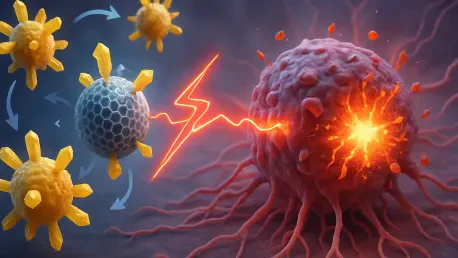
The integration of piezoelectric properties into nanozyme design introduces a mechanical dimension to cancer therapy that bypasses the chemical limitations of the tumor site. Piezoelectric materials are defined by their unique ability to generate an internal electric potential when subjected to physical deformation or mechanical stress. By engineering these properties into nanocatalysts, researchers have created a class of materials that can be activated through external physical triggers rather than internal chemical cues. When a patient is exposed to a mechanical stimulus, such as high-frequency sound waves, the nanozymes undergo subtle structural changes that lead to the separation of electric charges. This polarization-mediated charge separation is a critical technical advantage because it prevents the premature recombination of electrons, ensuring that the energy is fully utilized for the catalytic reaction. This allows the nanozymes to operate as robust energy converters that remain functional regardless of the surrounding oxygen levels.
This shift toward physics-based energy conversion allows for the creation of multifunctional nanocatalysts that act as a bridge between mechanical energy and chemical destruction. Unlike traditional methods that require specific biological precursors to be present, piezoelectric nanozymes use the mechanical stress provided by ultrasound or vibration to drive the production of toxic species directly. This level of control represents a significant milestone in the development of smart therapeutics, as it enables the clinician to dictate exactly when and where the treatment becomes active. By decoupling the catalytic process from the biological constraints of the tumor microenvironment, these materials provide a more reliable and consistent therapeutic outcome across different types of cancer. The ability to generate a powerful oxidative attack through a harmless external trigger ensures that the therapy remains highly focused, reducing the risk of systemic side effects while maintaining a potent lethal effect on the target cells.
Harnessing Mechanical Energy and Future Considerations
The operational success of piezoelectric nanozymes is largely dependent on the effective application of external mechanical stimulation, which serves as the primary engine for therapeutic activity. In clinical settings, ultrasound is frequently used to provide the necessary mechanical stress because it can penetrate deep into body tissues without causing harm to healthy structures. As these sound waves interact with the piezoelectric nanozymes, they create a continuous cycle of deformation and polarization that drives an aggressive electron transfer process. This mechanism facilitates the conversion of water and oxygen into a variety of reactive species that are far more potent than those produced by conventional catalysts. Because the mechanical energy is focused precisely on the tumor location, the resulting oxidative stress is confined to the malignant area, preventing the widespread damage often seen with chemotherapy. This focused approach ensures that the energy delivered from outside the body is translated into a surgical chemical strike.
Beyond the immediate destruction of cancerous cells, the high degree of precision offered by these materials represents a vital safety improvement for long-term patient care. Traditional systemic treatments often struggle with off-target toxicity, leading to debilitating side effects that can force the suspension of therapy. In contrast, the activation of piezoelectric nanozymes is strictly localized to the area where mechanical force is applied. This spatial control allows clinicians to treat sensitive regions of the body with a higher degree of confidence, knowing that the reactive oxygen species will not circulate to healthy organs. Furthermore, the ability of these nanozymes to function effectively in hypoxic environments makes them a critical tool for addressing the most resistant types of solid tumors. By sidestepping the physiological limitations that typically protect “cold” tumors, piezoelectric materials provide a reliable method for ensuring consistent therapeutic outcomes.
The transition toward these advanced nanocatalysts marked a significant turning point in the field of oncology, as researchers moved away from reactive chemistry toward proactive mechanical control. The implementation of piezoelectric nanozymes successfully addressed the persistent challenges of tumor hypoxia and acquired therapeutic resistance that had hindered previous generations of care. Clinical studies conducted throughout the current period showed that these materials could effectively unmask tumor antigens, allowing the patient’s own immune system to play a more active role in the eradication of remaining malignant cells. It was concluded that the most effective path forward involved the mass production of biocompatible piezoelectric carriers that could be tailored to specific tumor types. By integrating these systems into standard ultrasound protocols, the medical industry established a new baseline for non-invasive treatment. This strategic evolution ensured that precision oncology became accessible to patients.