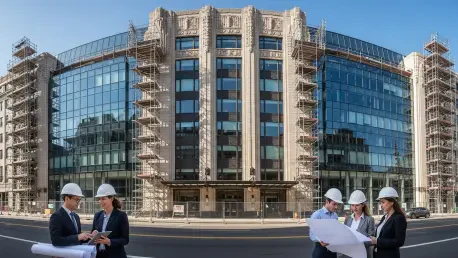

The towering Art Deco facade of the historic Charity Hospital has stood as a silent sentinel over the New Orleans skyline for decades, but it is now undergoing a massive five hundred million dollar transformation led by Tulane University. This ambitious redevelopment project seeks to convert the million-square-foot landmark into a premier global destination for bioscience research, advanced medical education, and community-focused innovation. By breathing new life into a structure that has been largely dormant since the mid-2000s, the university is establishing a central hub designed to drive scientific discovery and economic growth for the next generation. The initiative represents more than just a physical renovation; it is a profound reinvestment in the city’s downtown biomedical district, ensuring that the legacy of one of the nation’s oldest healthcare institutions continues in a modern, technologically advanced capacity that serves both students and the broader public.
Strategic Leadership: Directing the Redevelopment Vision
Tulane University transitioned into a dominant leadership role by becoming the lead developer and primary owner of the former Charity Hospital site. Previously, the institution was expected to serve merely as an anchor tenant, but the signing of a comprehensive purchase and sale agreement granted the university direct control over the project’s strategic direction and execution. This fundamental shift ensures that the renovation aligns perfectly with long-term academic goals while strengthening the university’s commitment to the revitalization of the city’s downtown biomedical district. By taking the reins of such a complex undertaking, university leadership eliminated potential layers of bureaucratic friction, allowing for a more streamlined decision-making process. This autonomy is essential for managing a project of this scale, providing the flexibility needed to adapt to evolving research needs and architectural challenges. The move solidifies Tulane’s position as a cornerstone of the regional economy and a catalyst for urban renewal.
The massive redevelopment is set to redefine both the New Orleans skyline and the local economy by its projected completion in 2029. This undertaking involves highly complex logistical and financial planning, with a formal financial closing for the development expected by the end of the current cycle. Once the final agreements and funding structures are fully in place, large-scale construction will accelerate, marking the beginning of one of the most significant architectural and institutional expansions in the history of the city. This phase requires meticulous coordination between architects, historic preservationists, and specialized contractors to ensure that the building’s iconic features are maintained while installing modern infrastructure. The construction timeline reflects the necessity of balancing high-tech laboratory requirements with the preservation of a national landmark. As work progresses from 2026 toward the 2029 opening, the project will serve as a visible symbol of the city’s resilience and its ongoing pivot toward a research-driven economy.
Academic Synergy: Centralizing Research and Education
Tulane plans to occupy more than six hundred and fifty thousand square feet of the facility to house its core academic and research functions. World-renowned institutions, such as the Celia Scott Weatherhead School of Public Health and Tropical Medicine and the Tulane School of Medicine, will relocate many of their primary operations to this centralized site. These schools will benefit from state-of-the-art laboratories and specialized classrooms designed to foster interdisciplinary collaboration and breakthrough scientific discovery. By concentrating these academic powerhouses in a single location, the university creates a density of expertise that is unmatched in the region. The proximity of clinical operations and research facilities will allow for a more seamless exchange of ideas between faculty, students, and healthcare professionals. This centralization is a strategic move to improve the efficiency of academic workflows while providing students with unprecedented access to modern medical technology and a collaborative learning environment.
The project will also host the Tulane University Innovation Institute, which is designed to act as a permanent catalyst for startups and the commercialization of university-led research. This specialized environment will support approximately seven hundred new researchers, providing them with the sophisticated infrastructure needed to tackle complex medical challenges and develop life-saving treatments. By bringing diverse minds together under one roof, the university aims to accelerate the transition of laboratory discoveries into real-world healthcare solutions that can be brought to market. The institute will offer resources for intellectual property management, venture capital engagement, and entrepreneurial training, creating a self-sustaining ecosystem for medical innovation. This focus on commercialization ensures that scientific progress does not stop at the publication of a paper but instead moves forward to create jobs and improve patient outcomes globally. The presence of such a facility downtown attracts top-tier talent and further integrates the university into the global tech landscape.
Community Integration: Creating a Vibrant Urban District
The vision for the former Charity Hospital extends far beyond laboratories and lecture halls to include a dynamic live, work, and play environment. Significant portions of the massive building are earmarked for modern residential units that will house a mix of students, faculty members, and working professionals. This residential component is crucial for ensuring the building remains active and vibrant around the clock, contributing to a safer and more energetic atmosphere in the downtown area. By providing high-quality housing within the same complex as research and educational facilities, the university reduces the commute for its staff and students while fostering a tightly knit academic community. These living spaces are designed with modern amenities that appeal to urban professionals, helping to retain talent within the city. This integrated approach to urban living reflects a modern trend in campus design that prioritizes accessibility and work-life balance, turning a historic medical site into a thriving neighborhood that supports the needs of its diverse inhabitants.
To further integrate the facility into the daily life of New Orleans, the redevelopment includes a planned food hall, diverse retail outlets, and various community spaces. These areas are specifically designed to be accessible to the general public, encouraging social interaction and successfully reintegrating the historic landmark into the surrounding neighborhood. This holistic approach prevents the building from becoming an isolated academic campus and instead turns it into a vibrant community asset that serves both residents and visitors. The ground-floor retail and dining options are expected to draw foot traffic from the nearby business district, creating a new destination for locals. By opening the doors of this historic structure to the community, Tulane is fostering a sense of shared ownership and pride in the city’s architectural heritage. The presence of public plazas and communal meeting rooms provides space for local events and collaborations, ensuring that the benefits of the redevelopment are felt by all citizens, not just those affiliated with the medical schools.
Economic Transformation: Sustaining Growth and Heritage
The economic implications of this redevelopment are substantial, with a projected one point two billion dollar boost to the local economy during the construction phase alone. Once the site is fully operational, it is expected to support over two thousand four hundred permanent jobs and contribute more than half a billion dollars annually to the state of Louisiana. This massive influx of economic activity will solidify the city’s reputation as a high-growth, research-powered economy that can compete with other major biotech hubs across the country. The creation of high-wage positions in research, administration, and services will provide new opportunities for the local workforce and help stem the tide of brain drain from the region. Furthermore, the taxes generated by these new jobs and businesses will provide a significant boost to public coffers, supporting infrastructure and education throughout the state. This project represents a generational shift in the local economic landscape, moving away from a reliance on traditional industries toward a future defined by innovation.
Success of the project relies on a strong coalition of government support and significant private philanthropy. A watershed gift from the Goldring Family Foundation provided the initial momentum needed to secure the project’s financial footing and demonstrated the high level of local commitment to the vision. Moving forward, Tulane will continue to engage with city, state, and federal partners to ensure the facility meets its ambitious goals for both workforce development and scientific advancement. This redevelopment honors a partnership that dates back to the university’s founding in 1834, when Tulane began training physicians at the original Charity Hospital. By transforming the site into a modern research hub, university leadership is preserving the powerful legacy of a local landmark while adapting it to meet the medical needs of the modern era. This project stands as a testament to the power of collaborative investment and a bold vision for the future of human health, ensuring that the hospital remains a symbol of healing and progress for centuries to come.
Strategic Outlook: Implementation and Future Goals
The project team established a comprehensive framework for sustainable growth that prioritized both local workforce development and global research impact. This strategy integrated long-term maintenance protocols and public-private partnership models that ensured the facility remained a cornerstone of New Orleans for the coming decades. Leadership emphasized the necessity of ongoing philanthropic engagement and state-level support to maintain the momentum of the biomedical district. By establishing clear benchmarks for innovation and community access, the university secured a roadmap for the successful integration of the facility into the city’s broader economic fabric. These decisions provided a stable foundation for the next phase of urban development, where the focus shifted toward attracting international talent and fostering a robust ecosystem for medical technology startups. The completion of this planning phase marked a definitive step toward a more resilient and scientifically advanced future for the region, cementing the hospital’s new role as an engine for progress.