


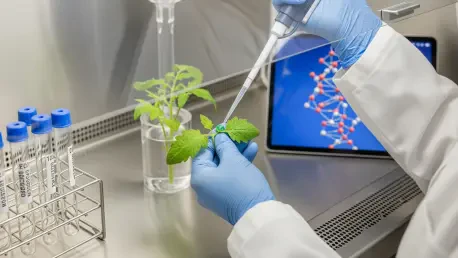

The realization of a sophisticated genetic blueprint for Romania’s most cherished horticultural assets has fundamentally altered the landscape of agricultural science within the region. Researchers at the Plant Genetic Resources Bank (BRGV) in Buzau have successfully completed the first comprehensive DNA sequencing of native tomato varieties, moving beyond centuries of visual cataloging into the precise world of molecular biology. This scientific breakthrough represents a decisive shift toward modernizing the nation’s seed banks by establishing a virtual genome library that serves as a definitive biological identity card for indigenous crops. By decoding the intricate genetic sequences of these plants, the institution has provided a rigorous empirical foundation that validates the unique characteristics of local varieties against a global market often flooded with standardized hybrids. This project does not merely document the present; it secures the evolutionary history of Romanian agriculture, ensuring that the labor of generations is protected by the most advanced forensic tools available in the modern scientific arsenal. The initiative reflects a broader commitment to technological sovereignty, as the ability to map these genomes internally allows for a more responsive and secure method of managing national biodiversity through digital infrastructure.
Technical Foundations of Internal Genetic Analysis
The transition to internal sequencing capabilities required a significant investment in both state-of-the-art laboratory hardware and the specialized intellectual capital needed to operate such sensitive equipment. Previously, the identification of plant varieties relied heavily on phenotypic observation—analyzing the height of the plant, the shape of the leaf, or the color of the fruit—which, while useful, remained susceptible to environmental variables and subjective interpretation. By acquiring high-performance DNA sequencers and implementing rigorous training programs for local scientists, the BRGV has eliminated these ambiguities, allowing for the extraction and mapping of genetic material from young leaves and growth tissues. This internal capacity is a cornerstone of scientific independence, as it removes the logistical and financial burdens of outsourcing genetic analysis to foreign institutions. Moreover, the ability to perform these tasks on-site ensures that the primary genetic data remains within national borders, safeguarding sensitive biological information that could be critical for future agricultural patents or food security strategies that prioritize local resilience over global dependence.
Developing this infrastructure involved a meticulously planned methodology where researchers focus on extracting the purest possible DNA strands to ensure that the resulting sequences are free from contamination. The process begins in the controlled environments of the Buzau facility, where specific tissues are harvested at optimal growth stages to yield the highest quality genetic material for the sequencing arrays. Once the DNA is processed, the resulting data is fed into high-speed computing systems that align the sequences to identify specific markers unique to Romanian landraces. This technological leap has transformed the bank from a passive storage facility into a dynamic center for genomic research, where the history of a plant can be read like a book. Such granular detail is essential for breeding programs that aim to enhance resilience against emerging pests or changing climatic conditions without sacrificing the traditional qualities that consumers value. The establishment of this internal workflow sets a new benchmark for other regional institutions, proving that localized scientific rigor is the most effective way to preserve the complex heritage of traditional agriculture in a rapidly digitizing world.
Strategic Differentiation of Commercial and Traditional Varieties
The initial phase of this genomic mapping project specifically targeted the Valahia and Claudia tomato varieties, each representing a distinct pillar of the Romanian agricultural economy and consumer preference. The Valahia variety is widely celebrated for its robust flavor and suitability for fresh consumption, making it a staple in local markets and a primary target for preservation efforts. In contrast, the Claudia variety has been meticulously bred for industrial applications, specifically for canning and processing, where traits such as skin thickness and acidity levels are paramount. By sequencing these two specific types, researchers have established a baseline for comparative analysis, allowing them to pinpoint the exact genetic sequences that differentiate a premium fresh-market tomato from one optimized for long-term storage and processing. This level of detail is crucial for commercial breeders who need to guarantee the consistency of their seeds, as it provides a verifiable genetic signature that can be used to resolve disputes regarding seed authenticity or intellectual property rights in the international marketplace during the 2026 planting season and beyond.
Beyond the immediate commercial benefits, the sequencing of these varieties serves as a vital diagnostic tool for understanding the underlying biological mechanisms that contribute to the success of local crops. For instance, the genetic markers identified in the Valahia variety might reveal why it thrives in specific regional soil compositions or why it possesses a certain profile of antioxidants and vitamins that foreign hybrids lack. This information is invaluable for nutritional science, as it allows researchers to promote the health benefits of native crops based on hard genomic data rather than anecdotal evidence. Furthermore, identifying the specific markers for Claudia provides insights into the plant’s structural integrity, which could be leveraged to develop new varieties that are even more resilient to the stresses of mechanical harvesting. By focusing on these specific case studies, the BRGV is building a robust database that serves as a protective shield for Romanian biodiversity, ensuring that these varieties are not lost to the homogenizing forces of global industrial agriculture. This strategic focus ensures that the unique genetic heritage of Romania continues to provide economic and nutritional value in a competitive trade environment.
Legal Protection Through Digital Genome Repositories
The creation of a virtual genome library is a sophisticated defense mechanism designed to provide legal evidence of a variety’s origin and its unique biological traits within a globalized agricultural framework. In an era where biopiracy and the unauthorized use of traditional plant varieties are growing concerns, having a high-resolution genetic map acts as a digital fingerprint that can be presented in international courts or regulatory bodies. This repository stores more than just strings of nucleotides; it archives the specific evolutionary adaptations that make Romanian tomatoes unique, such as resistance to local strains of late blight or tolerance to regional heat waves. When a variety is sequenced and its data is logged into this digital vault, it becomes much harder for third parties to claim ownership or to market imitation seeds under the same name. This legal robustness is essential for protecting the rights of local farmers and breeders who have spent decades refining these varieties. Moreover, the virtual library serves as a failsafe; should a physical seed lot be lost to disaster or disease, the genetic code remains archived, potentially allowing for the future reconstruction of the variety through advanced synthetic biology.
This digital repository also plays a critical role in the ongoing effort to understand the complex interactions between genetics and the environment, often referred to as gene-environment interactions. By maintaining a comprehensive library of genetic markers, scientists can more easily identify which specific genes are responsible for the superior taste and nutritional profiles associated with native Romanian tomatoes. This information is vital for the development of functional foods that are tailored to meet modern dietary needs while maintaining traditional culinary standards. Additionally, the library facilitates a deeper understanding of the genetic foundations of plant diseases, as researchers can compare the genomes of resistant varieties with those that are susceptible. This comparative genomics approach allows for the identification of natural resistance genes that can be incorporated into new breeding lines without the need for controversial transgenics. The virtual genome library thus acts as both a protective barrier for existing heritage and a launchpad for future innovation, ensuring that the biological wealth of the nation is documented with the highest possible degree of scientific accuracy and legal validity for the long term.
Institutional Standards and International Scientific Integration
Director Costel Vanatoru and his team at the BRGV have emphasized that the successful sequencing of tomato varieties is the result of years of meticulous preparation aimed at securing the country’s genetic resources. While the bank has previously managed to sequence a historical aubergine variety, the current tomato project represents a significant escalation in scale, given that the collection houses approximately 4,000 distinct types. Each of these varieties must undergo a rigorous evaluation process to ensure that the resulting database is not only accurate but also meets the stringent requirements for legal and scientific validity. This is not a task that can be rushed; it requires a systematic approach where each plant is grown under controlled conditions, its physical traits are documented, and its DNA is carefully analyzed. The ultimate goal is to complete this mapping for the entire collection, a feat that will likely take several years of continuous labor and significant resource allocation starting from 2026. This long-term commitment reflects a deep-seated institutional vision that prioritizes the preservation of biodiversity as a matter of national importance and scientific pride.
To ensure that the work performed in Buzau has a global impact, the institution is currently pursuing international accreditation for its laboratory processes and data management systems. This step is crucial because, without international recognition, the genetic data produced might not be accepted by global regulatory bodies or in patent disputes involving international corporations. By aligning its methods with the highest global scientific standards, the BRGV is ensuring that its virtual library is a respected and authoritative source of information. This alignment involves rigorous quality control, standardized data formats, and peer-reviewed methodologies that demonstrate the reliability of the sequencing results. Achieving this level of professional excellence allows Romania to assert its presence in the international scientific community and to participate more effectively in global discussions regarding plant genetics and food security. It also opens doors for collaboration with other world-leading genetic banks, fostering an exchange of knowledge that can further enhance the protection of regional biodiversity. The focus on high standards is what transforms a local research project into a globally recognized standard for agricultural conservation and genetic integrity.
Strategic Implementation of Modern Genomic Tools
The successful integration of biotechnology into traditional seed preservation strategies established a critical bridge between historical agricultural wisdom and the precision of twenty-first-century science. By training a new generation of internal experts and utilizing advanced sequencing tools, the BRGV secured a more autonomous path for the preservation of native seeds, reducing the risks associated with data fragmentation and loss. This approach ensured that the unique genetic signatures of Romanian tomatoes were not just stored in cold rooms but were actively managed through a digital framework that became accessible to researchers and breeders alike. The transition toward a data-driven model of conservation proved essential for maintaining food security in a volatile global market where the origins of food were becoming increasingly difficult to trace. As the institution moved forward with mapping the thousands of varieties remaining in its collection, the importance of this digital preservation grew, providing a permanent record of the nation’s horticultural evolution. This work laid the groundwork for a period where traditional crops could coexist with modern technological demands, ensuring that historical flavors remained a viable part of the global food supply.
Looking ahead, the focus shifted toward the practical application of these genomic insights to solve real-world agricultural challenges such as climate adaptation and nutritional optimization. The institution prioritized the creation of a decentralized network where farmers could access genetic data to verify the purity of their crops, thereby strengthening the local seed market during the late 2026 cycle. Researchers also explored the development of precision breeding kits that allowed for the rapid identification of specific traits in the field, further bridging the gap between the laboratory and the farm. By establishing clear protocols for data sharing and intellectual property management, the BRGV ensured that the genetic wealth of the nation remained a public good rather than a private commodity. These steps provided a clear roadmap for other nations seeking to protect their own agricultural heritage through the use of advanced technology. The integration of genomic mapping into the national agricultural strategy ultimately fostered a more resilient and transparent food system. By documenting the past with such precision, the scientific community successfully created a foundation for sustainable innovation that respected the historical context of the land while embracing the tools of the future.







