
The industrial landscape is currently undergoing a seismic shift as the acquisition of Genomatica by the Danish innovator Again creates a formidable powerhouse capable of redefining the boundaries of sustainable chemical production. This merger represents more than just a corporate expansion; it is a strategic alignment between physical infrastructure and digital intelligence designed to bridge the gap between laboratory success and industrial profitability. For decades, the “valley of death” has served as a graveyard for promising biotechnological breakthroughs, where high capital costs and the unpredictability of scaling biological systems have deterred investors and hindered progress. By uniting Again’s proprietary hardware with Genomatica’s established software and data assets, the industry now possesses a unified platform to tackle these challenges head-on. This partnership signals a move away from traditional fossil fuel reliance toward a more resilient, bio-based economy that prioritizes environmental stewardship and commercial feasibility in a rapidly evolving market.
Building the Infrastructure for a Post-Petroleum Economy
Achieving a significant reduction in industrial carbon footprints requires a departure from centralized, fossil-fuel-dependent manufacturing models that have dominated for over a century. The integration of Again’s modular hardware with Genomatica’s biological design capabilities allows for a more flexible and responsive production network that can be deployed where it is needed most. This approach addresses the logistical inefficiencies often associated with traditional chemical plants, which require massive amounts of energy and raw materials to be transported over long distances. Instead of relying on these rigid systems, the new unified entity focuses on localized production units that can tap into existing waste streams, effectively turning liabilities into assets. This paradigm shift is essential for creating a truly circular economy where the output of one process becomes the feedstock for another. By combining these unique strengths, the collaboration sets a new standard for how companies can implement sustainable technologies without sacrificing the high-volume output required by modern global supply chains.
Transforming Waste Emissions Into Valuable Chemical Building Blocks
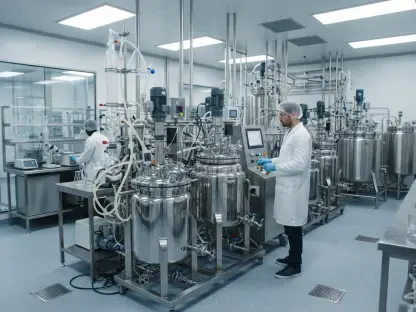
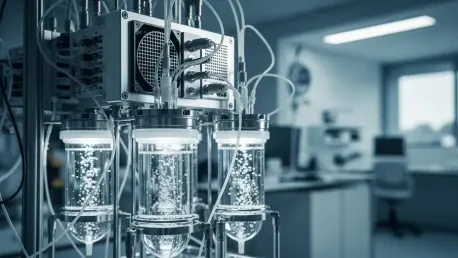
The physical core of this technological evolution lies in Again’s decentralized manufacturing model, which utilizes modular bioreactors designed to be installed directly at the source of industrial emissions. These units leverage the unique metabolic properties of a specialized bacterial strain known as Moorella, which has the remarkable ability to consume waste carbon dioxide and hydrogen to synthesize acetate. By capturing these gases before they are released into the atmosphere, the system provides a dual benefit: it reduces greenhouse gas emissions while simultaneously creating the essential building blocks for a wide range of industrial chemicals. This “at-the-source” approach is particularly revolutionary because it eliminates the need for the complex purification and transportation of carbon waste, which has historically been a major economic barrier to carbon utilization. The modularity of these bioreactors ensures that they can be scaled according to the specific needs of a facility, providing a versatile solution for diverse industries.
Utilizing Proprietary Biological Processes for Industrial Applications
While the physical hardware captures and converts waste, the biological efficiency of these processes is enhanced by Genomatica’s extensive library of engineered microorganisms and digital design tools. Genomatica has established itself as a leader in the field by perfecting the use of Escherichia coli and other biological “workhorses” to produce plant-based alternatives for materials found in everyday apparel and home goods. Their business model emphasizes the licensing of these proprietary biological processes to major global manufacturers, ensuring that sustainable innovations can be integrated into existing supply chains with minimal disruption. By combining Genomatica’s proven biological pathways with Again’s carbon-fixing technology, the merger creates a comprehensive suite of tools that can address a broader spectrum of chemical production needs. This synergy allows for the development of tailored biological solutions that are specifically optimized for the conditions found in industrial-scale bioreactors, further increasing the overall yield and economic viability of bio-based manufacturing.
Empowering Biomanufacturing Through Advanced Digital Intelligence
The successful transition from a laboratory setting to a massive industrial environment is often hindered by the unpredictable nature of biological systems when they are scaled up. This challenge is addressed through the application of advanced digital intelligence and predictive modeling, which allow researchers to simulate the behavior of microorganisms under various industrial conditions. By utilizing the massive datasets accumulated by Genomatica over years of experimentation, the combined entity can predict how specific bacterial strains will perform in large-scale tanks before physical construction even begins. This capability is crucial for reducing the risk associated with capital-intensive projects and for ensuring that the final production process is as efficient as possible. Furthermore, the integration of real-time data monitoring within Again’s modular bioreactors provides a continuous loop of information that can be used to further refine and optimize biological performance. This data-driven approach transforms biomanufacturing into a precise science, where every variable is analyzed and controlled to maximize output and sustainability.
Realizing the Economic Benefits of a Global Circular Economy
Beyond the technical advancements, the merger of these two companies offers a compelling economic roadmap for global decarbonization and the establishment of a robust circular economy. Together, the platforms have the potential to capture or avoid approximately 85 million tons of carbon dioxide annually by replacing petroleum-derived products with cleaner, bio-based alternatives. This impact is achieved not only by cleaning up industrial waste but also by creating high-value chemicals that are cost-competitive with traditional manufacturing methods. When sustainable options are economically viable, adoption rates among major industrial players increase significantly, leading to a more rapid shift away from carbon-intensive practices. The ability to generate profit from waste emissions creates a powerful incentive for industries to invest in green technology, fostering an environment where environmental goals and business objectives are perfectly aligned. This transition is a vital component of the broader effort to reach net-zero targets and to ensure the long-term resilience of the global manufacturing sector.
Establishing Future Frameworks for Sustainable Chemical Innovation
The strategic consolidation of hardware and digital assets provided a clear blueprint for the future of the biomanufacturing industry. To build on this foundation, stakeholders recognized the necessity of investing in modular infrastructure and predictive AI tools to mitigate the inherent risks of scaling biological processes. Industry analysts observed that the most successful implementations occurred when companies integrated carbon capture technologies directly into existing industrial sites, thereby minimizing logistics costs and maximizing waste utilization. It was concluded that the industry must continue to prioritize the development of diverse microbial strains and standardized data libraries to ensure versatility across different chemical families. Furthermore, the collaboration demonstrated that a licensing-based business model could effectively accelerate the global adoption of green technologies by leveraging the reach of established manufacturers. As the sector moved forward, the emphasis shifted toward creating interconnected networks of decentralized production units that could adapt to changing market demands and environmental regulations.