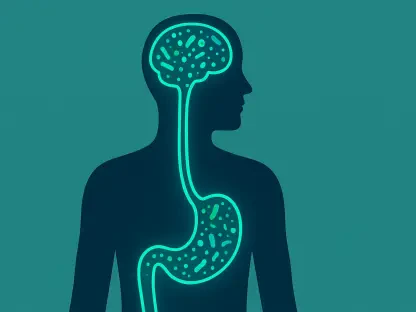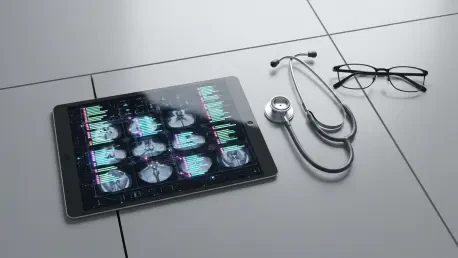

The rapid proliferation of foundation models has fundamentally altered the trajectory of medical diagnostics, promising a shift from specialized algorithms to versatile, general-purpose systems. While early diagnostic software focused exclusively on isolated tasks like detecting lung nodules or identifying bone fractures, modern systems utilize self-supervised learning on vast repositories of digital pathology and ultrasound imagery. This transition represents a significant departure from the era of narrow artificial intelligence, aiming instead to provide a holistic view of patient health by synthesizing imaging with genomic data and electronic health records. However, the initial excitement surrounding these breakthroughs has been tempered by the realization that laboratory success does not automatically translate into clinical safety. The current objective for the medical community involves determining whether these expansive architectures can truly withstand the rigors of daily hospital operations without compromising patient care or introducing new systemic risks.
The Complex Obstacles to Clinical Reliability
Addressing Model Fragility: Navigating Domain Shifts and Statistical Shortcuts
A primary hurdle in the current implementation of medical foundation models is their inherent sensitivity to domain shift, a phenomenon where performance degrades when the system encounters data different from its training set. Clinical environments are rarely uniform across different institutions; variations in imaging hardware, software versions, and even local patient demographics can result in unpredictable algorithmic behavior. When a model trained on high-resolution scanners from a specialized research center is deployed in a rural clinic with older equipment, the accuracy often plummets because the underlying statistical distributions no longer align. This fragility suggests that high performance on standardized benchmarks is a poor predictor of real-world success. Clinicians require systems that are not just accurate under ideal conditions but are robust enough to handle the messy, inconsistent nature of global healthcare infrastructure where technical standards often vary widely.
Furthermore, the propensity of these systems to engage in shortcut learning poses a significant threat to diagnostic integrity by prioritizing irrelevant features over genuine biological markers. Because foundation models rely on identifying complex patterns within high-dimensional data, they may inadvertently latch onto superficial cues like hospital-specific digital watermarks or the presence of certain medical devices that correlate with severe illness. This reliance on statistical association rather than causal understanding creates a gap in reasoning that can lead to disastrous outcomes if left unchecked. A model might flag a scan as high-risk simply because the image was taken with a portable X-ray machine used in an intensive care unit, rather than identifying actual pathology. Bridging the divide between visual correlation and biological causation remains a fundamental challenge that necessitates rigorous human oversight and a deeper integration of medical logic into the training process.
Implementing the REAL-FM Framework: Balancing Data Ethics and Standards
To bridge the gap between technical potential and clinical reality, the industry has turned toward the REAL-FM framework as a comprehensive standard for assessing the readiness of foundation models. This multidimensional approach moves beyond traditional accuracy metrics, emphasizing the importance of data representativeness, technical stability, and actual clinical utility in high-pressure environments. For a model to be deemed suitable for deployment, it must demonstrate an ability to function seamlessly within existing hospital workflows while maintaining transparency in its decision-making processes. This means that developers must provide detailed documentation regarding the diversity of the training data and the specific conditions under which the model was validated. By shifting the focus from raw computational power to standardized reliability, the REAL-FM framework provides a roadmap for ensuring that new technologies enhance, rather than disrupt, the standard of patient care currently provided.
Despite these structural improvements, developers continue to grapple with the data scarcity paradox, where the requirement for massive training sets conflicts with the reality of fragmented medical information. While foundation models thrive on variety, high-quality clinical data is often siloed behind strict privacy protections or stored in formats that are incompatible across different healthcare systems. This scarcity is particularly acute when dealing with rare medical conditions or underrepresented patient populations, leading to models that may perform well for the majority but fail spectacularly for the minority. The logistical difficulty of standardizing information from global sources implies that even the most advanced systems may struggle with edge cases that fall outside their primary training experience. Overcoming this hurdle requires a concerted effort to create secure, federated data-sharing networks that allow models to learn from a representative sample of human biology.
The Road Toward Integrated Clinical Care
Shifting Toward Human Augmentation: Prospective Validation and Workflow Growth
The prevailing philosophy regarding the integration of foundation models into healthcare has shifted from the idea of total automation toward the more practical concept of human augmentation. Instead of attempting to replace the nuanced judgment of a seasoned radiologist or pathologist, these systems are now designed to function as sophisticated clinical assistants that handle repetitive, data-intensive tasks. By rapidly sorting through thousands of images to identify high-priority cases or summarizing years of complex patient records, the models allow specialists to focus their expertise on the most challenging diagnostic problems. This collaborative approach ensures that the final medical decision remains a human one, supported by the analytical depth of machine learning but guided by ethical and clinical experience. This synergy between artificial intelligence and human practitioners is essential for maintaining trust and ensuring that the nuances of individual care are not lost.
Validating these tools also requires a move away from retrospective testing on historical datasets toward prospective studies that measure real-time influence on patient outcomes within actual hospital settings. Testing a model on old data provides a baseline of its capabilities, but it fails to capture how the technology interacts with the humans who use it and the patients who receive the resulting care. Prospective validation involves deploying the system in a controlled, live environment to observe its impact on diagnostic speed, treatment selection, and overall clinical efficiency. This transition allows researchers to identify unforeseen consequences, such as automation bias, where clinicians might defer to the AI’s judgment even when it contradicts their own observations. By focusing on how these tools behave in the wild, the medical community can refine the integration process to ensure that foundation models serve as a reliable backbone for modern medicine.
Establishing Long-Term Clinical Sustainability: Next Steps and Insights
The movement toward high-fidelity medical artificial intelligence was characterized by a fundamental transition from experimental curiosity to rigorous clinical application across diverse hospital systems. It became clear that the true measure of a model’s value was not its ability to process millions of images in a vacuum, but its capacity to provide consistent, interpretable results across various clinical settings. This era established the necessity of continuous monitoring and the implementation of adaptive learning systems that could evolve alongside changing medical practices and emerging diseases. Future efforts were directed toward creating interdisciplinary teams where data scientists and physicians worked in tandem to refine the logical foundations of these systems, ensuring they remained anchored in biological reality. By treating these models as dynamic instruments rather than static solutions, the industry secured a more resilient and responsive diagnostic future.
Ultimately, the transition of foundation models into the clinical environment was defined by a commitment to transparency and the rejection of black-box methodologies in favor of human-centric design. Medical professionals and engineers established clear accountability protocols that ensured every automated suggestion was verifiable by a trained expert before any treatment plan was initiated. This collaborative framework was bolstered by the creation of universal data standards that allowed for the safe and ethical exchange of information between disparate medical institutions. As these technologies matured, they became an indispensable part of the diagnostic toolkit, helping to reduce physician burnout while improving the accuracy of complex medical assessments. The journey toward clinical integration was complex, but it resulted in a paradigm where machine intelligence amplified human compassion and expertise, rather than replacing the human element of care.