
The global landscape of biotechnology is undergoing a fundamental shift as the Pohang University of Science and Technology establishes a pioneering research hub designed to bridge the gap between laboratory discovery and commercial viability. This new entity, known as the Global Healthcare & Bioengineering Research Institute, or K-BIGHEART, represents more than just an academic expansion; it signifies a strategic pivot toward institutional sustainability and high-impact medical technology. Led by Director Pyong-Sae Lee, a distinguished professor who returned to South Korea after a prolific fifty-year career at Harvard Medical School, the institute aims to redefine the boundaries of bioengineering. The core philosophy centers on integrating disparate scientific disciplines to create a unified ecosystem where engineering precision meets biological complexity. By positioning itself at the intersection of these fields, the institute seeks to address systemic challenges in healthcare delivery, ranging from the high cost of drug development to the accessibility of advanced diagnostic tools for the general public.
The Biomedical-Integrated-Circuit: Redefining Medical Diagnostics
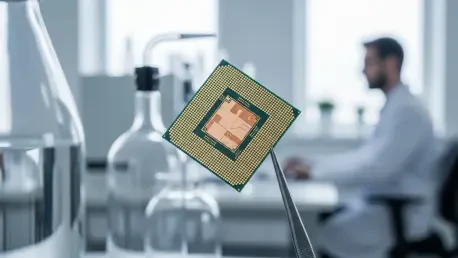
A primary focus of the institute involves the transition from passive sensors to active Biomedical-Integrated-Circuit (BIC) chips, which serve as a sophisticated interface between electronics and human biology. Traditional biosensors often serve a singular purpose, identifying specific biological markers without providing the means to influence them. In contrast, the BIC chip is engineered to simultaneously detect and control physiological variables. This dual-action capability allows for real-time adjustments to a patient’s internal environment, effectively turning a diagnostic tool into a therapeutic one. The engineering behind these chips leverages advancements in semiconductor technology to achieve a level of miniaturization that was previously unattainable. This breakthrough enables the integration of complex genetic testing protocols onto a single substrate, providing a robust platform for monitoring up to one hundred different health indicators. Such precision ensures that minute changes in physiological data are captured and processed with high fidelity.
This technological leap is expected to decentralize healthcare by moving high-grade diagnostic capabilities directly into the hands of the consumer. By utilizing the ubiquitous presence of smartphones, individuals can manage complex health screenings that once required specialized laboratory equipment and clinical oversight. This shift toward home-based diagnostics reduces the burden on traditional hospital systems and empowers patients to take a proactive role in their personal wellness. The integration of BIC chips with mobile platforms allows for the seamless transmission of health data to medical professionals, facilitating a more responsive and personalized approach to treatment. Furthermore, the ability to perform genetic analysis in a domestic setting could revolutionize early intervention strategies for chronic diseases. As these diagnostic tools become more accessible, the barrier to high-quality healthcare is lowered, fostering a future where geographical location no longer dictates the quality of medical care available to an individual.
Economic Autonomy: The Venture-Driven Future of Bioengineering
A defining characteristic of this initiative is the pursuit of financial independence through a robust commercialization strategy that prioritizes the launch of at least ten distinct startups. Supported by an initial investment of 113 billion won via the National Research Laboratory program, the institute is focused on turning its proprietary intellectual property into market-ready ventures. This approach marks a departure from traditional academic models that rely indefinitely on government subsidies for survival. Instead, the goal is to create a self-sustaining ecosystem where the success of these spin-off companies directly supports future research. By returning shares of these commercial ventures to the university, the institute ensures that its financial future is tied to its innovative output. This model is projected to achieve total economic autonomy within the next ten years, starting from 2026. Such a strategy not only provides a stable funding source but also accelerates the translation of laboratory breakthroughs into practical solutions.
The establishment of this institute provided a clear roadmap for the future of biomedical engineering by prioritizing economic self-reliance and technical versatility. Stakeholders in the biotechnology sector recognized that the integration of semiconductor logic with biological monitoring was not merely a trend, but a necessary evolution in patient care. The emphasis on decentralized diagnostics suggested that future healthcare systems had to prioritize mobile compatibility and user autonomy to remain effective. Researchers found that the coaching model successfully bridged the gap between academic theory and commercial application, ensuring that the next decade of innovation remained grounded in practical utility. By fostering a flexible environment for global talent, the organization mitigated the risks associated with intellectual isolation. These initiatives collectively moved the needle on how research institutions operated, shifting the focus toward a venture-driven model that valued long-term sustainability as much as scientific discovery.