
Engineering stable microbial cell factories requires genetic tools that function reliably when integrated into the chromosome rather than relying on high-copy plasmids. This foundational principle guided a recent high-impact collaboration between scientific teams in Argentina and Spain, who sought to modernize the genetic toolkit for Lactococcus cremoris. While this specific bacterium has served as the backbone of the global dairy industry for generations, particularly in the production of high-quality cheeses, its potential as a biological factory for specialized enzymes and therapeutic proteins has remained largely untapped until now. The researchers identified a critical bottleneck in the lack of high-performance regulatory elements that operate autonomously. By moving away from older, inducible systems that depend on expensive external chemical triggers, this international effort has successfully characterized a new suite of promoters capable of driving gene expression with unprecedented efficiency and precision in a food-grade environment.
Strategic Engineering and Native Compatibility
Utilizing Bioinformatic Discovery: The Hunt for Native Sequences
The research team initiated their study with an exhaustive bioinformatic survey of the Lactococcus cremoris genome, specifically targeting autologous sequences that have evolved naturally within the organism. This strategic focus on native DNA is a significant shift from older methods that often relied on borrowing genetic parts from distant species. Using native promoters ensures that the host cell’s internal machinery recognizes and processes the instructions without the friction often associated with foreign genetic material. From a practical standpoint, this approach is particularly valuable for the food and beverage industry, where the use of ‘self-cloned’ or entirely native DNA can significantly streamline the complex process of regulatory approval. By utilizing sequences that the bacterium already possesses, the scientists created a toolkit that is not only highly effective but also inherently safer for consumer applications, bridging the gap between advanced synthetic biology and commercial food-grade standards.
Rational Design: Modeling the 5′ Untranslated Region
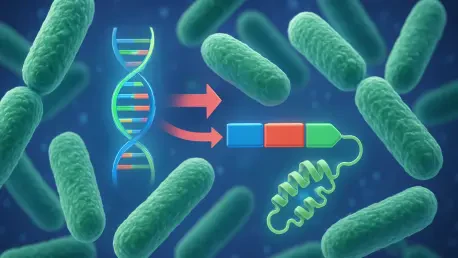
Beyond simply identifying existing sequences, the researchers applied advanced computational modeling to perform rational engineering on the 5′ untranslated region of the messenger RNA. This specific segment of the genetic code, which exists between the promoter and the actual protein-coding sequence, plays a decisive role in determining how much final product a cell actually creates. The team used these models to predict the physical shape of the RNA molecules, specifically looking for areas where the strand might fold back on itself in ways that block cellular access. By understanding these structural dynamics, they were able to make precise adjustments to the genetic sequences to ensure that the cell’s protein factories, known as ribosomes, could move efficiently along the mRNA strand. This level of molecular refinement allowed the researchers to bypass natural limitations, turning previously average sequences into high-output drivers of protein synthesis that function reliably across a wide range of growth conditions.
Cross-Species Functionality and Translational Optimization
Enhancing Portability: Broadening the Scope of Genetic Tools
A standout achievement of this research was the discovery that many of these newly engineered promoters possess a high degree of portability across different bacterial species. Although the primary focus was Lactococcus cremoris, the team observed robust activity when these genetic switches were tested in other industrially relevant organisms such as Escherichia coli, Lactiplantibacillus plantarum, and Weissella paramesenteroides. This cross-species functionality is a game-changer for laboratory efficiency, as it allows scientists to conduct initial high-throughput screening in fast-growing bacteria before moving the most promising candidates into the slower-growing target hosts. By establishing a toolkit that functions across a broad spectrum of the bacterial kingdom, the researchers have provided a versatile resource for developers of probiotics and other beneficial microbes. This versatility ensures that the breakthroughs made in L. cremoris can be adapted to various biotechnological sectors, from gut health to large-scale chemical synthesis.
Breaking Structural Barriers: Solving the mRNA Folding Problem
The research team successfully addressed a major technical hurdle known as the translational ceiling, where high levels of messenger RNA do not necessarily translate into high levels of finished protein. This discrepancy is often caused by the mRNA strand folding into complex hairpin structures that physically shield the ribosome binding site from the cell’s machinery. Even the strongest promoter is ineffective if the ribosome cannot latch onto the RNA to begin the translation process. Through targeted genetic editing based on their computational models, the scientists were able to unfold these inhibitory structures, making the binding sites fully accessible once again. This specific intervention resulted in a dramatic increase in protein output, demonstrating that maximizing gene expression requires a holistic view of the entire biological pathway. By optimizing the transition from DNA to RNA and finally to protein, the study has set a new standard for how regulatory elements should be designed in synthetic biology.
Overcoming Metabolic Repression and Industrial Scaling
Navigating Cellular Regulation: Bypassing Catabolite Repression
To ensure these promoters could function in the high-energy environments of industrial fermenters, the researchers tackled the challenge of catabolite repression. This is a natural survival strategy where bacteria shut down the production of certain enzymes when preferred sugars, like glucose, are readily available. The team identified specific sequences within their promoters called cre sites that acted as targets for the CcpA regulator protein, which essentially throttles gene expression during rapid growth. To solve this, they implemented a two-fold strategy: they either mutated the cre sites to make them invisible to the regulator or utilized specialized host strains that lacked the repression machinery entirely. By decoupling protein production from the bacterium’s natural metabolic preferences, the researchers ensured that the cell factories remain at maximum productivity regardless of the nutrient source. This step is critical for scaling up production, as it allows for the use of diverse and cost-effective feedstocks.
Lead Candidate Identification: High Output at Low Copy Numbers
The culmination of this extensive engineering effort was the identification of three elite promoter candidates designated as PR1, d60PG2, and dSDPR1. These specific elements demonstrated exceptional strength and, more importantly, they maintained this performance even when present in only a single copy within the bacterial chromosome. This is a vital characteristic for industrial stability because it eliminates the need for high-copy plasmids, which often impose a heavy metabolic burden and can be lost during the fermentation process as the cells divide. By integrating these robust switches directly into the genome, the researchers created a stable and permanent genetic architecture that does not degrade over time. These lead candidates provide the reliable, high-output power necessary for the commercial production of everything from specialized dairy enzymes to life-saving biopharmaceuticals, representing a major leap forward in the reliability of engineered microbial systems for a wide range of global applications.
Future Directions for Microbial Cell Factories
Strategic Implementation: Moving Toward Commercial Integration
The study established a clear framework for the next generation of microbial cell factories by combining advanced bioinformatics with rational molecular design. These efforts proved that optimizing both transcription and translation was essential for achieving the highest possible yields in Lactococcus cremoris. The research team successfully removed long-standing barriers to efficiency, allowing for the stable production of high-value molecules without the complications of external chemical inducers. As industrial bioprocessing continues to evolve from 2026 to 2028, the adoption of these constitutive promoters offered a scalable solution for companies looking to maximize output while minimizing operational costs. Future implementations of this technology were directed toward the development of live biotherapeutics, where engineered probiotics delivered medicine directly within the human gut. By finalizing this comprehensive toolkit, the scientific community provided the necessary foundation for more sustainable, efficient, and reliable bio-based manufacturing.
Global Impact: Solving the Production Efficiency Challenge
The broader implications of these developments reached far beyond the laboratory, offering a sustainable path for industrial-scale biotechnology. By providing a method to increase protein yields without relying on the metabolic strain of plasmid maintenance, the research enabled more efficient use of resources in high-volume production cycles. This efficiency was particularly relevant for the global effort to reduce the carbon footprint of chemical and pharmaceutical manufacturing. As these high-performance promoters were integrated into various platforms between 2026 and 2029, the industry saw a marked improvement in the stability of bio-based systems. The successful optimization of Lactococcus cremoris served as a blueprint for the engineering of other non-model organisms, expanding the diversity of bacterial species available for modern industrial applications. Ultimately, the work concluded with the establishment of a robust, versatile, and highly efficient genetic framework that effectively bridged the gap between theoretical synthetic biology and real-world industrial necessity.