
The precision of modern surgical intervention has reached a point where the traditional “one size fits all” approach to medical implants is no longer a viable standard for high-stakes procedures. At the Levin Center for Surgical Innovation and 3D Printing, located within the Ichilov Medical Center, a decade of dedicated research and clinical application has fundamentally altered the trajectory of personalized medicine. Under the pioneering leadership of Dr. Solomon Dadia, the facility has transitioned from using 3D printing as a mere visualization tool to utilizing it as a primary method for manufacturing permanent, life-saving medical hardware. This shift represents a broader movement in the healthcare sector where patient-specific data, harvested from high-resolution imaging, is directly translated into custom-made physical components. By bridging the once-wide gap between complex engineering and immediate clinical needs, the center has established itself as a global leader in the field of surgical customization. This evolution was not merely about adopting new technology but rather about rethinking the entire philosophy of patient care, ensuring that every implant is as unique as the individual receiving it.
Revolutionizing the In-House Manufacturing Model: A Shift Toward Localized Production
The traditional model for acquiring custom medical implants often involves a fragmented supply chain where hospitals must coordinate with external corporate manufacturers, leading to significant lead times and potential communication breakdowns. The Levin Center has challenged this status quo by operating as a fully integrated, end-to-end manufacturer located directly within the hospital environment. By centralizing the entire production cycle—from the initial medical imaging and digital CAD modeling to the final printing of titanium or polymer structures—the center has eliminated the typical logistical hurdles that often delay critical surgeries. This internal structure allows for an unprecedented level of control over the design process, ensuring that the final product adheres strictly to the surgeon’s requirements and the patient’s unique anatomical constraints. Furthermore, the proximity of the manufacturing lab to the operating theater facilitates a rapid iterative process, where designs can be refined in real-time based on direct clinical feedback, a luxury that is rarely possible when working with distant third-party suppliers.
This localized approach naturally fosters a unique synergy between the surgical staff and industrial engineers, creating a multidisciplinary environment where technical expertise and clinical experience intersect. When designers are present in the clinical space, they gain a deeper understanding of the biomechanical challenges and the biological environment where the device will eventually function. This collaborative depth is particularly vital for permanent implants, which must meet incredibly rigorous standards for durability, biocompatibility, and integration with human tissue. The internal model also provides a more cost-effective solution for the healthcare system by reducing the overhead associated with large-scale medical device marketing and distribution. By focusing resources on precision engineering rather than corporate logistics, the center ensures that the primary investment is directed toward the quality of the patient’s outcome. This paradigm shift has proven that a public hospital can match, and often exceed, the production capabilities of specialized private firms while maintaining a singular focus on immediate patient needs.
Navigating the Complexities of Medical Certification: Establishing Global Standards
As the capabilities of 3D printing technology expanded, it became clear that the rapid pace of innovation was outstripping the existing legal and regulatory frameworks designed for mass-produced medical devices. The Levin Center recognized this challenge early on and took a proactive stance by collaborating with the Israeli Ministry of Health to formulate comprehensive protocols for hospital-based manufacturing. These guidelines were essential to ensure that every customized device produced in-house was not only innovative but also safe, effective, and consistently reproducible across different cases. This collaboration helped demystify the process of “point-of-care” manufacturing, providing a roadmap for how medical institutions can maintain the highest safety standards without stifling the creative potential of custom engineering. By helping to draft these regulations, the center has played a pivotal role in legitimizing 3D-printed implants as a standard surgical option rather than an experimental last resort, paving the way for wider adoption across the global medical community.
A defining milestone in the center’s journey was achieving international ISO certification for surgical planning and the production of medical devices, a distinction usually reserved for major industrial corporations. This certification serves as a rigorous guarantee that every material used in the process—whether it is medical-grade titanium or specialized biocompatible polymers—undergoes a series of strict validation and sterilization procedures before it enters the sterile field of the operating room. Maintaining such high regulatory standards requires a constant commitment to quality control, including the meticulous documentation of every design iteration and the performance of extensive mechanical testing on printed components. For the patients, this means that their custom-made implant has undergone the same level of scrutiny as any mass-manufactured product found on the global market. This commitment to regulatory excellence has not only enhanced patient safety but has also elevated the hospital’s reputation, proving that clinical innovation can thrive within a framework of strict accountability and standardized excellence.
Enhancing Patient Outcomes: Specialized Applications in Oncology and Trauma Care
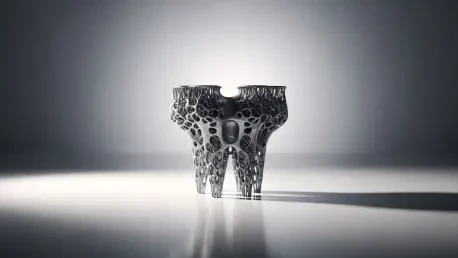
The practical utility of personalized implants is perhaps most evident in the fields of orthopedic oncology and complex trauma surgery, where standard implants often fail to address the massive bone loss associated with these conditions. In cases of bone cancer, for instance, surgeons often have to remove large sections of healthy tissue along with the tumor, leaving gaps that are difficult to bridge with traditional hardware. The Levin Center addresses this by designing titanium lattice structures that not only provide the necessary mechanical support but also feature porous architectures designed to encourage natural bone ingrowth. This bio-integration is a critical factor for the long-term success of the implant, as it allows the patient’s own biological tissue to eventually anchor the device in place, significantly reducing the risk of loosening or failure over time. These bespoke solutions allow for more conservative surgeries that preserve as much healthy tissue as possible, ultimately leading to faster recovery times and better functional outcomes for the patient.
Beyond the realm of oncology, the center has been instrumental in treating severe trauma, particularly in the context of treating injuries sustained by soldiers and civilians in high-intensity conflict zones. One of the most significant applications has been the manufacturing of custom skull plates for patients who have suffered major cranial trauma that leaves the brain unprotected. Standard “off-the-shelf” plates often require extensive intraoperative bending and adjustment, which increases the time the patient is under anesthesia and can lead to less-than-ideal aesthetic and functional results. In contrast, a 3D-printed plate is designed to perfectly match the contours of the individual’s skull, ensuring a seamless fit that restores the protective barrier of the cranium while achieving a more natural appearance. The ability to produce these life-altering components on-site within a matter of days has transformed the standard of care for trauma patients, providing a level of surgical precision that was previously considered unattainable in high-pressure clinical settings.
Implementing Sustainable Pathways: Future Insights into Bio-Integration and Digital Surgery
The successful integration of these advanced manufacturing systems demonstrated that the future of surgery relied heavily on the fusion of material science and real-time digital data. The Levin Center pioneered the exploration of biodegradable and hybrid implants, which were designed to provide immediate mechanical stability before slowly dissolving as the body regenerated its own healthy tissue. This approach addressed one of the most persistent problems in orthopedic surgery: the long-term complications associated with permanent foreign objects remaining in the body. By collaborating with leading academic institutions, the center validated how advanced lattice designs could be combined with cellular therapies to actively promote healing. These milestones proved that the role of an implant was not just to replace a missing part, but to act as a scaffold that facilitated the body’s natural restorative processes, thereby shifting the focus from mechanical substitution to biological augmentation.
Furthermore, the center established a new benchmark for surgical precision through the implementation of “Intelligent Operating Rooms” that utilized Mixed Reality and holographic overlays. This initiative allowed surgeons to superimpose digital twins of the 3D-printed implants and the patient’s internal anatomy directly onto the surgical site during the procedure. The integration of robotic positioning and real-time vital signs into a single, cohesive interface significantly reduced the cognitive load on the surgical team, ensuring that critical information was always within the surgeon’s line of sight. These advancements finalized the transition from traditional, manual techniques to a data-driven surgical environment where every move was guided by an exact digital roadmap. The framework developed at the Levin Center provided an actionable blueprint for other medical institutions, suggesting that the next logical step for the industry involved the widespread adoption of these integrated digital and physical manufacturing workflows to ensure the highest possible standard of personalized care.