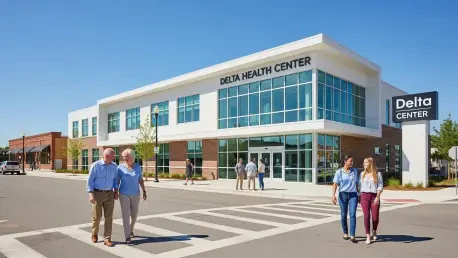

The sudden disappearance of a primary healthcare provider can leave a community in a state of quiet desperation, especially in regions where the nearest alternative is a highway away. Residents of Rosedale, Mississippi, recently navigated such a crisis when a six-month void in medical services forced vulnerable populations to choose between long-distance travel and neglecting their health. The arrival of the Delta Health Center at 1302 Main Street marks a decisive end to this period of uncertainty, reclaiming a vital piece of the town’s infrastructure. This expansion into the “Delta City of Brotherly Love” represents more than a logistical fix; it is a profound commitment to the principle that zip codes should not dictate life expectancy. By converting a healthcare desert back into a site of active wellness, the organization provides a sense of security for thousands who previously felt invisible to the modern medical system. The restoration of local care ensures that Rosedale is no longer a footnote in the rural health crisis but a leader in rebuilding the Delta’s safety net.
Addressing the Rural Healthcare Crisis
Eliminating the Burden of Travel for Essential Care
For the aging population and low-income families of the rural South, the physical distance between a home and a clinical exam room is the most formidable barrier to longevity. Before the Delta Health Center established its presence on Main Street, a routine checkup required a fifty-mile round trip to Mound Bayou or Cleveland, a distance that many found insurmountable without reliable personal transportation. Public transit options in these areas are often nonexistent, and the cost of gasoline or private transport services can easily consume a family’s weekly grocery budget. This geographic isolation often leads to a cycle of deferred maintenance, where minor ailments are ignored until they escalate into catastrophic health events. By placing essential services directly within the municipal boundaries of Rosedale, the clinic effectively removes the friction of distance, allowing patients to seek preventive care and chronic disease management without sacrificing their financial stability or several hours of their day.
The convenience of a local clinic extends beyond the logistical ease of scheduling a midday appointment for a child’s vaccination or a senior’s blood pressure check. It fosters a culture of consistent engagement with the medical community, which is necessary for managing the high rates of chronic conditions found in the region. When care is local, the psychological barrier to seeking help is lowered, and the medical staff becomes a familiar presence in the neighborhood rather than a distant authority figure. This proximity encourages a proactive rather than reactive approach to health, which is essential for changing the long-term epidemiological trajectory of the community. In Rosedale, the new facility serves as a constant reminder that health is a communal asset, supported by a physical location that is accessible to everyone, regardless of their mobility. This accessibility is the cornerstone of any successful intervention in a rural landscape where the lack of infrastructure has historically been a tool of exclusion and neglect.
Impact on Emergency Response Times and Outcomes
In the high-stakes environment of emergency medicine, the “golden hour” remains the definitive window during which medical intervention is most likely to prevent permanent disability or death. For residents living in isolated towns, this window often closes before help can arrive, as ambulances must navigate long stretches of two-lane roads to reach distant trauma centers. The presence of a local clinic significantly mitigates this risk by providing a stabilization point where immediate care can be administered before a patient is transported to a larger hospital. Whether dealing with a sudden cardiac event, a respiratory crisis, or an acute injury, the ability of local practitioners to provide initial triage and life-saving support cannot be overstated. By having a clinical team stationed in Rosedale, the community gains a critical safety net that bridges the gap between the onset of symptoms and the arrival of advanced specialized care, effectively improving the odds of survival for those in the most desperate circumstances.
The environmental realities of the Mississippi Delta also necessitate specialized local knowledge and rapid response capabilities that are often missing in generic health models. From agricultural accidents involving heavy machinery to the occasional but serious occurrence of venomous snake bites, the risks inherent to rural life require a medical team that understands the specific hazards of the terrain. The Rosedale clinic is uniquely positioned to handle these localized emergencies, offering immediate care that is tailored to the lifestyle and labor of its residents. Furthermore, the facility serves as a hub for community-wide safety education, teaching residents how to recognize the early signs of a stroke or how to manage severe allergic reactions before they become fatal. This integration of emergency preparedness and local clinical expertise transforms the facility from a mere doctor’s office into a comprehensive center for regional resilience. It ensures that the town’s inhabitants are no longer left to navigate life-threatening situations in total isolation.
Strategic Pillars: Advocacy and Inclusion
Honoring the History of Healthcare as a Human Right
The Delta Health Center carries a profound historical weight, standing as a living monument to the transformative power of the American Civil Rights Movement and the 1964 “Freedom Summer.” Founded in 1965 by a group of visionary physicians and activists, the organization was born from the radical idea that medical care is a fundamental human right, not a commodity reserved for the affluent. These founders recognized that health outcomes were inextricably linked to the socio-economic conditions of the South, where systemic poverty and racial discrimination often manifested as physical illness. By establishing the Rosedale site as the nineteenth location in its expansive network, the center continues a sixty-year tradition of challenging the status quo. The mission has always been to provide more than just prescriptions; it seeks to address the root causes of suffering by offering a dignified, high-quality medical experience to populations that have been historically marginalized and underserved by the modern establishment.
This commitment to equity is not merely a historical footnote but an active operational philosophy that guides every decision made at the new Rosedale facility. The doctors and administrators view their work as a form of social justice, recognizing that providing a checkup to an uninsured worker is an act of advocacy. In a region where the legacy of systemic inequality still echoes through the disparities in hospital funding and insurance coverage, the clinic serves as a beacon of progress and institutional stability. It offers a space where every patient is treated with the respect and attention they deserve, regardless of their background or bank account. By maintaining this standard, the Delta Health Center ensures that the progress made during the twentieth century is not only preserved but expanded upon in the current era. The Rosedale opening is a testament to the enduring relevance of the center’s founding principles, proving that the fight for health equity remains as vital today as it was during the struggle for civil rights.
Overcoming Clinical and Financial Barriers to Care
Addressing the medical needs of Rosedale requires an acute awareness of the practical hurdles that prevent patients from adhering to treatment plans, with transportation remaining the primary obstacle. For many elderly residents, the lack of a personal vehicle or the inability to drive long distances means that a clinic located on Main Street is the difference between receiving care and suffering in silence. The Delta Health Center has strategically positioned its facility to be within walking distance for a prominent portion of the population, effectively removing the physical friction that often leads to missed appointments. Furthermore, the clinic incorporates social determinants of health into its diagnostic process, asking patients about their access to fresh food and stable housing. This comprehensive understanding of the patient’s environment allows practitioners to tailor their medical advice to the realities of life in the Delta. By solving for these non-clinical barriers, the center ensures that the medical interventions it provides are actually feasible.
Economic barriers frequently stand in the way of essential medical care, particularly in a region where high rates of underinsurance and unemployment persist. The Delta Health Center addresses this reality through a robust financial inclusivity model that guarantees service to every resident, regardless of their ability to pay at the time of their visit. By utilizing a sliding fee scale based on income, the clinic ensures that costs do not become a deterrent for families who are already struggling to make ends meet. This approach is essential for preventing the accumulation of medical debt, which can be just as devastating to a household’s stability as a physical illness. The facility also employs dedicated social workers who assist patients in navigating the complexities of insurance enrollment and social service programs. This support network allows residents to focus on their recovery rather than the financial logistics of their care. In a landscape where many rural hospitals are closing, this commitment is a vital economic stabilizer.
Scaling Services: A Blueprint for Regional Stability
While current operations in Rosedale followed a standard weekday schedule, the Delta Health Center designed a sophisticated three-phase expansion plan to meet the community’s growing needs. This phased approach began with the establishment of a robust primary care foundation, allowing the medical team to build trust and gather data on the most prevalent health issues in the area. Once this foundation was secure, the roadmap included the gradual introduction of specialized services such as dentistry, behavioral health, and maternal care, which remained in short supply throughout the region. By scaling services incrementally, the organization ensured that each new department was financially stable and properly staffed before it opened to the public. This pragmatic strategy prevented the center from becoming overextended, a common pitfall for rural health initiatives. This careful planning ensured that the Rosedale facility remained a permanent fixture in the town’s infrastructure, providing reliable care for generations.
The model established in Rosedale served as a compelling blueprint for other rural communities facing similar healthcare crises across the American South. The Delta Health Center demonstrated that through strategic planning and a commitment to social equity, it was possible to restore essential services even in the most challenging economic environments. Residents and local leaders took active roles in advocating for the facility’s expansion, proving that community buy-in was the most valuable asset in maintaining institutional longevity. The organization successfully navigated the complexities of rural medicine by combining historical mission-driven care with modern clinical efficiencies. As the clinic moved into its next phase of service, the focus shifted toward deepening these regional partnerships and securing the legislative support necessary to maintain the sliding fee scales. This proactive stance ensured that the progress made in Rosedale was not an isolated success but the beginning of a broader movement toward regional medical stability.