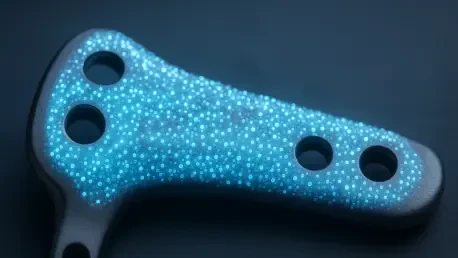

The integration of carbon-dot-based coatings on titanium medical implants offers a proactive method for repelling bacterial adhesion and preventing biofilm colonization from the start. This innovation arrives at a critical juncture in modern medicine, as the global healthcare community continues to grapple with the escalating threat of antimicrobial resistance. For decades, the primary defense against infection relied on a dwindling arsenal of conventional antibiotics, many of which have lost their efficacy against “superbugs” like methicillin-resistant Staphylococcus aureus and multidrug-resistant Gram-negative strains. These pathogens have developed sophisticated survival mechanisms, most notably the formation of biofilms—highly resilient, self-organized microbial communities encased in a protective slime layer. These biological fortresses shield bacteria from the immune system and increase their tolerance to traditional drugs by up to a thousand times. Consequently, there is an urgent need for versatile, non-traditional strategies that can penetrate these defenses without promoting further resistance. Carbon dots, a relatively new class of zero-dimensional nanomaterials, have emerged as a front-runner in this battle, offering a multifaceted approach that combines physical, chemical, and optical actions to neutralize even the most persistent microbial threats.
Defining the Power of Nanoscale Carbon: Structure and Safety
Carbon dots are defined by their incredibly small size, typically measuring less than ten nanometers in diameter, which gives them unique physical and chemical properties not found in bulk materials. These particles consist of a carbon-rich core that can be either amorphous or crystalline, depending on the synthesis method, and are surrounded by a diverse array of surface functional groups like hydroxyl, carboxyl, and amine moieties. This structural complexity is highly advantageous because it allows scientists to “tune” the behavior of the dots for specific medical or industrial purposes. Unlike older semiconductor quantum dots, which often rely on toxic heavy metals like lead or cadmium, carbon dots are inherently more biocompatible. This is primarily because they can be synthesized through “green” chemistry routes using abundant and benign organic precursors. From 2026 to 2028, researchers expect a significant shift toward utilizing biomass waste—such as agricultural leftovers or medicinal plant extracts—as the raw material for production. This approach not only reduces the environmental footprint of nanomaterial manufacturing but also imbues the carbon dots with natural antimicrobial compounds derived from the source material, creating a more potent and sustainable alternative to synthetic chemicals.
Beyond their fundamental structure, the optical features of carbon dots represent a significant leap forward in the field of theranostics, which merges therapy and diagnostics into a single platform. These nanoparticles exhibit intense fluorescence and high photostability, meaning they can glow under specific wavelengths of light for extended periods without losing their brightness. This property allows clinicians to track the movement of the dots within a biological system in real time, effectively visualizing the site and severity of an infection while simultaneously treating it. In contrast to conventional dyes that can be toxic or quickly degrade, carbon dots remain stable and safe for human cells. This capability is particularly useful for identifying deep-seated infections or monitoring the integrity of medical implants. By integrating these fluorescent markers into wound dressings or surgical tools, medical professionals can detect early signs of bacterial colonization before symptoms even appear. This dual-action capability ensures that the treatment is precisely targeted, minimizing damage to healthy tissue and reducing the overall dosage of antimicrobial agents needed to achieve a successful outcome.
Multi-Layered Mechanisms for Killing BacteriA Physical and Chemical Assault
The primary strength of carbon dots lies in their ability to exert antimicrobial effects through several concurrent pathways, making it nearly impossible for bacteria to develop a singular defense. One of the most effective methods is the generation of reactive oxygen species through photodynamic therapy. When carbon dots are exposed to specific light sources, they undergo photoexcitation and transfer energy to surrounding oxygen molecules, creating highly reactive radicals like singlet oxygen and hydrogen peroxide. These molecules act like a “scorched earth” campaign at the molecular level, simultaneously attacking the bacterial cell’s proteins, lipids, and DNA. Because this oxidative stress targets so many different components of the cell at once, bacteria cannot easily adapt through a single genetic mutation. This stands in stark contrast to traditional antibiotics, which often target only one specific enzyme or metabolic pathway, providing a narrow window that pathogens can eventually exploit to build resistance. The use of light-activated carbon dots ensures that the killing action is localized and highly controllable, protecting the beneficial microbes elsewhere in the body.
In addition to chemical warfare, carbon dots provide a mechanical means of destruction by exploiting the natural electrical charges of bacterial surfaces. Most bacterial cell walls are negatively charged, which allows researchers to engineer carbon dots with a strong positive, or cationic, charge using substances like polyamines. Through electrostatic attraction, these dots are drawn to the surface of the bacteria like magnets. Once they make contact, the carbon dots can physically destabilize the lipid bilayer of the cell membrane, creating pores or causing a total rupture of the protective envelope. This physical breach leads to the immediate leakage of essential intracellular contents, such as ions and proteins, resulting in rapid cell death. Recent studies have demonstrated that this membrane disruption is effective against both Gram-positive and Gram-negative bacteria, although the surface chemistry of the dots can be adjusted to favor one over the other for more selective treatments. This ability to physically “pop” a bacterial cell provides a robust fallback mechanism that remains effective even if the pathogen has built up biochemical defenses against other types of chemical or oxidative attacks.
Dismantling the Biofilm Fortress: Breaking the Cycle of Resistance
While killing free-floating bacteria is a vital step, the true challenge in modern infection control is the eradication of biofilms, which serve as the primary cause of chronic and hospital-acquired infections. Carbon dots are uniquely suited for this task due to their exceptionally small size and high surface-to-volume ratio, which allows them to penetrate the dense, slimy extracellular matrix that typically blocks larger antibiotic molecules. Once they have infiltrated the biofilm, the dots can deploy their oxidative and physical killing mechanisms directly against the embedded bacteria. This deep penetration is a game-changer for treating infections on medical devices such as catheters, prosthetic joints, and heart valves, where biofilms often take root and remain unreachable by standard treatments. By applying carbon-dot-based coatings to these surfaces, it is possible to prevent the initial attachment of microbes, effectively stopping the formation of the biofilm before it ever gains a foothold. This preventative approach is far more efficient than attempting to treat a mature, established infection that has already begun to damage the patient’s health.
Moreover, carbon dots offer a sophisticated way to disrupt the “social life” of bacteria through the inhibition of quorum sensing. Bacteria do not act alone; they use a complex chemical communication system to coordinate their behavior, such as when to build a biofilm or when to release toxins. By releasing specific signals, they can sense the density of their population and act as a single, organized unit. Carbon dots can be engineered to interfere with these signaling molecules, effectively “silencing” the communication between individual cells. Without the ability to talk to one another, the bacteria remain in a less dangerous state and are unable to organize into the resilient, multi-layered structures that characterize a biofilm. This disruption makes the bacteria significantly more vulnerable to the host’s immune system and to external antimicrobial agents. This innovative strategy of “vandalizing” bacterial communication represents a shift away from simply trying to kill every cell and toward a more nuanced approach of preventing the coordination that makes these pathogens so deadly in a clinical environment.
Innovative Paths to Clinical Integration: Future Perspectives and Challenges
The practical applications for carbon dots are expanding rapidly into sectors beyond traditional medicine, including food safety and environmental protection. In the food industry, researchers are developing active packaging films infused with carbon dots that can extend the shelf life of perishable goods like meat and seafood. These films provide a dual layer of protection: they actively kill surface-level bacteria and fungi while also blocking ultraviolet radiation, which can cause food to spoil. This could significantly reduce food waste and the risk of foodborne illnesses without the need for synthetic preservatives. In environmental engineering, carbon dots are being integrated into photocatalytic membranes for water purification. These systems utilize sunlight to activate the dots, which then degrade organic pollutants and neutralize waterborne pathogens simultaneously. From 2026 to 2029, the industry expects these sustainable water treatment solutions to become increasingly important in regions with limited access to electricity or chemical disinfectants, providing a clean and low-cost method for securing safe drinking water.
Despite the impressive results seen in laboratory settings, the transition of carbon-dot technology to widespread clinical use requires addressing several key technical and regulatory hurdles. One of the primary concerns is ensuring batch-to-batch consistency in production, especially when using natural precursors that can vary in composition. Standardizing the manufacturing process is essential for obtaining regulatory approval and ensuring that every dose or coating performs exactly as expected. Furthermore, while initial biocompatibility studies have been highly positive, more research was conducted regarding the long-term metabolic fate of these nanoparticles within the human body. Understanding how they are cleared by the kidneys or liver over extended periods is crucial for confirming their safety for internal medical use. As researchers move toward more standardized testing protocols and larger-scale production, the potential for carbon dots to serve as a cornerstone of the next generation of antimicrobial therapy became clear. By combining diagnostic precision with a multi-pronged attack on resistant pathogens, these nanoscale materials offered a promising path forward in the ongoing effort to safeguard global public health.