
The silent escalation of antimicrobial resistance has transformed everyday surface sanitation from a routine chore into a high-stakes battle for public health survival, forcing scientists to rethink how chemical agents are designed. As bacteria evolve faster than traditional laboratory methods can keep pace, the disinfectant industry finds itself at a critical crossroads. The reliance on legacy chemical structures is no longer sufficient to guarantee safety in clinical or domestic environments. To combat this, the integration of artificial intelligence into molecular discovery offers a promising pathway to stay ahead of increasingly resilient pathogens.
The Modern Landscape of Antimicrobial Discovery and Surface Sanitation
The disinfectant industry has transitioned from basic chemical agents to sophisticated antimicrobial solutions designed for high-traffic environments. Quaternary Ammonium Compounds, commonly referred to as QACs, have stood as the gold standard for global healthcare and household hygiene for nearly a century. These molecules are prized for their ability to disrupt the lipid membranes of bacteria and viruses, providing a reliable shield against infection. However, the ubiquity of these compounds has inadvertently led to selective pressure, encouraging the survival of strains that can tolerate standard cleaning protocols.
Current industry significance has reached an all-time high following the global focus on hygiene that began earlier this decade. Key market players are now navigating a landscape where the scope of chemical synthesis must expand to address antibiotic-resistant pathogens, often called superbugs. Computational biology is no longer a peripheral interest but a central pillar of product development. By leveraging large-scale data and predictive modeling, companies are moving toward a more targeted approach to sanitation, ensuring that new products are both effective and environmentally sustainable.
Catalysts for Change: Technological Shifts and Market Dynamics
The Convergence of Generative AI and Molecular Engineering
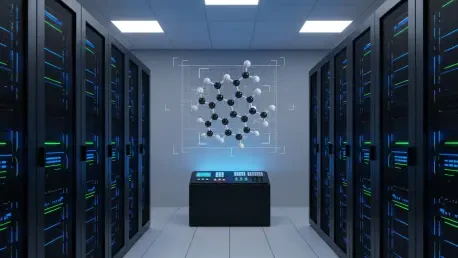
The shift from manual trial-and-error synthesis to automated, AI-driven molecular design is redefining the capabilities of modern chemistry. Emerging trends utilize graph-based machine learning to map atomic structures and chemical bonds with unprecedented precision. These models treat molecules as mathematical graphs where atoms are nodes and bonds are edges, allowing the software to predict how small structural changes might enhance or inhibit antimicrobial efficacy. This transition allows researchers to explore a chemical space far larger than what could be navigated through traditional experimental means.
Evolving clinical demands now prioritize disinfectants that can bypass the sophisticated survival mechanisms of Gram-negative bacteria. These pathogens possess a dual-membrane defense that many current QACs struggle to penetrate. Generative AI provides a unique opportunity for cross-disciplinary collaboration between academic researchers and the private pharmaceutical sector. By pooling resources and datasets, these entities can design molecules that are specifically tailored to breach cellular defenses while maintaining low toxicity for human contact.
Market Projections and the Economics of Synthetic Chemistry
Data-driven analysis reveals that AI integration significantly reduces the time and cost associated with molecular discovery. In the current 2026 market, the ability to filter out thousands of ineffective chemical candidates before they ever reach a physical laboratory is a massive competitive advantage. Performance indicators for AI workflows have shown a dramatic transition from low-validity outputs to high-precision chemical candidates. This efficiency translates to a faster pipeline for commercialization, allowing new, validated compounds to enter the market in months rather than years.
Growth projections for the disinfectant market are robust as these AI-validated compounds begin to reach widespread use. Forward-looking forecasts suggest an increased adoption of topology-aware models in chemical manufacturing through the end of the decade. These models are expected to become the industry standard, ensuring that every synthesized molecule has a high probability of success. The economics of the industry are shifting toward a model where high-quality data is the most valuable asset, fueling the next generation of synthetic chemistry.
Navigating the Complexities of Chemical Innovation and Resistance
The biological “arms race” remains a formidable obstacle, as bacteria continue to evolve resistance to traditional surface cleaners. When pathogens are exposed to sub-lethal concentrations of disinfectants, they develop specialized efflux pumps or thicker cell walls, rendering standard QACs ineffective. This necessitates a constant cycle of innovation to create molecules with novel modes of action. However, technological hurdles persist, particularly in training AI on data-scarce environments where only small chemical libraries are available for reference.
To address these challenges, strategic solutions involve implementing iterative feedback loops that connect the digital and physical worlds. Automated validity filters are used to refine AI accuracy, ensuring that the structures proposed by the computer are actually possible to build in a lab. This approach is particularly vital when attempting to neutralize Gram-negative bacteria. By using AI to predict the specific interactions between a molecule and the complex outer membrane of these bacteria, scientists can design “spear-like” carbon chains that are optimized for penetration and destruction.
Safety First: The Regulatory Framework for Novel Disinfectants
The role of national and international health agencies is more critical than ever in setting the standards for new antimicrobial agents. As AI accelerates the pace of discovery, regulatory bodies must adapt to evaluate these novel compounds with both speed and rigor. Navigating the legal requirements for chemical safety, environmental impact, and public health efficacy requires a transparent relationship between developers and regulators. High-quality, standardized datasets are the key to this process, providing the evidence needed to prove that a computer-generated molecule is safe for public use.
Security measures and ethical considerations are also at the forefront of the conversation. When deploying AI to design potent bioactive molecules, there is a responsibility to ensure that the technology is not misused. Standardized testing protocols must be followed to confirm that new disinfectants do not inadvertently contribute to further environmental resistance or harm non-target organisms. The goal is to create a regulatory environment that encourages innovation while maintaining the highest possible safety standards for the general population.
The Future Outlook: Toward an Automated Feedback Loop in Science
Emerging technologies in autonomous laboratories are set to revolutionize the practical side of chemical synthesis. These labs use robotics and real-time computational-experimental feedback to test thousands of variations of a chemical formula 24 hours a day. Potential market disruptors are already appearing, as the industry moves toward broad-spectrum agents discovered in weeks rather than decades. This speed allows for a rapid response to new viral or bacterial threats, providing a level of agility that was previously impossible.
Changing consumer preferences are also driving innovation in chemical formulation. Modern users are looking for “smarter” hygiene products that offer long-lasting protection and eco-friendly profiles. This demand pushes the industry to use AI not just for killing power, but for optimizing the longevity and safety of the disinfectants. The long-term impact of AI on scientific training is equally significant, as it bridges the gap between theoretical modeling and practical laboratory synthesis, creating a new generation of scientists who are as comfortable with code as they are with chemicals.
Final Verdict: A New Paradigm for Safeguarding Public Health
The successful development of AI-generated QACs demonstrated that the industry could finally outpace the evolution of bacterial resistance through structural precision. This breakthrough provided a clear roadmap for the scalability of AI frameworks across diverse medical and chemical domains. The results of recent experimental validation showed that compounds designed by machine learning could effectively neutralize even the most virulent bacterial strains, proving that the digital approach was not just a theoretical exercise but a practical solution for modern sanitation needs.
Investment in high-quality, curated datasets emerged as the most critical recommendation for future growth. The transition from manual research to an automated discovery model was validated by the high success rate of synthesized candidates. This new paradigm allowed the industry to stay ahead of biological threats by treating molecular design as a data-driven engineering problem rather than a game of chance. As the industry moved forward, the combination of human expertise and machine intelligence established a robust defense against the superbugs of tomorrow.