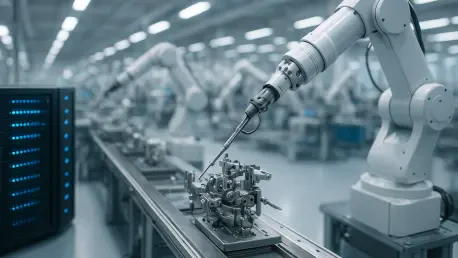

While cloud-based applications remained secure, the compromise of on-premises systems halted the ability of a major manufacturer to fulfill essential medical hardware orders. This incident sent immediate shockwaves through the global healthcare sector, highlighting the precarious dependency on legacy infrastructure within production environments. When ransomware or sophisticated malware penetrates the local network of a medical device facility, the consequences extend far beyond digital data loss. Assembly lines grinding to a halt mean that life-saving equipment, from insulin pumps to ventilators, fails to reach the hospitals and patients who rely on them daily. The modern manufacturing floor is a complex ecosystem of interconnected logic controllers and robotics that often lack the robust security protocols found in enterprise software. As cybercriminals shift their focus toward operational disruption, the vulnerability of physical production chains becomes a critical concern that demands immediate attention and systemic reform.
Systemic Risks: Control Vulnerabilities
Legacy Hardware: The Unpatched Danger
The integration of legacy industrial control systems with modern internet-facing networks has created a broad attack surface that many manufacturers are still struggling to secure. Many fabrication facilities rely on specialized machinery that was designed decades ago, long before the current threat landscape existed. These machines often run on outdated operating systems that no longer receive security patches, making them prime targets for automated exploitation tools. When these devices are networked to improve data collection and efficiency, they provide a backdoor for attackers to pivot from low-security administrative areas into the core production environment. The lack of network segmentation allows a single compromised workstation to potentially paralyze an entire factory floor. For medical device manufacturers, this risk is amplified by the strict regulatory requirements for equipment validation, which can paradoxically make it difficult to update software quickly.
Supply Chain: The Impact of Downtime
A disruption at a single manufacturing site can trigger a cascading failure throughout the global healthcare supply chain, leading to acute shortages of critical components. Medical devices are rarely built from scratch in one location; they rely on a sophisticated network of sub-suppliers providing specialized microchips, sensors, and biocompatible materials. If a major producer of surgical instruments or diagnostic machinery is sidelined by a cyberattack, the delay affects surgical schedules and patient care across multiple continents. This interdependence means that the security posture of a medium-sized parts supplier can be just as vital as it is for a Fortune 500 company. Furthermore, the specialized nature of medical hardware means that switching to an alternative supplier is not a rapid process due to the need for quality assurance and regulatory compliance. Consequently, a week of downtime in production can lead to months of backlogs for hospital staff and patients.
Defense Tactics: Building Resilience
Isolation: The Value of Segmentation
Moving toward a Zero Trust architecture within the manufacturing environment represents a necessary evolution in defending against targeted cyber threats. This methodology operates on the principle that no user or device should be inherently trusted, regardless of whether they are inside or outside the corporate network. In a medical device factory, this involves implementing micro-segmentation, where each production cell is isolated from others and communication is restricted to verified, essential pathways. By deploying identity-based access controls and continuous monitoring, security teams can detect anomalous behavior in real-time, such as a robotic arm attempting to communicate with an external server. This approach minimizes the lateral movement of malware, ensuring that even if a peripheral system is compromised, the core manufacturing logic remains protected. Transitioning to this model requires a collaborative effort between information technology and operational teams.
Proactive Defense: Industrial Lessons
The implementation of real-time threat detection and automated response protocols became the definitive standard for ensuring production continuity in the face of rising digital threats. Organizations that successfully navigated these challenges prioritized the deployment of artificial intelligence to analyze network traffic patterns for subtle indicators of compromise. These proactive measures allowed facilities to isolate infected segments before physical damage occurred or production was lost. Security leaders recognized that the convergence of physical and digital security was no longer optional but a fundamental requirement for operational resilience. By investing in dedicated incident response teams trained specifically for industrial environments, manufacturers reduced their recovery times significantly. The shift toward more resilient architectures ensured that patient safety remained the primary focus, even as the methods of attack grew complex. This strategic evolution proved that training was essential.