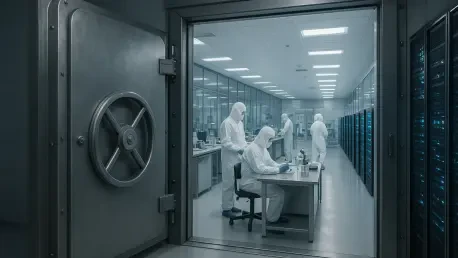

The proliferation of over one thousand high-containment laboratories in the United States since 9/11 has paradoxically increased the mathematical probability of a catastrophic accident. This startling statistic serves as the foundation for Annie Jacobsen’s investigation into the burgeoning threat of engineered pathogens, which she elevates from the fringes of academic debate to a central strategic concern. Through a meticulous review of global biodefense programs, Jacobsen constructs a narrative that functions as both a high-stakes thriller and a sobering warning about the fragility of modern civilization. Her objective is to force a public and political confrontation with the current state of international preparedness, arguing that the next existential threat may not come from a missile, but from a microscopic organism designed to bypass our natural defenses. This realization necessitates a fundamental shift in how we perceive national security, moving beyond traditional borders to consider the microscopic frontiers where the next war might be waged.
Strategic Preparedness Through Worst-Case Scenarios
Modeling Extreme Outcomes: The Path to Resilience
The book employs a methodology centered on extreme scenario modeling to illustrate the potential for global collapse. While critics might label this approach as alarmist, Jacobsen contends that examining the absolute limits of catastrophe is a prerequisite for meaningful preparedness and societal resilience. By detailing a hypothetical breakdown of order, she challenges readers to evaluate whether current political decision-making is robust enough to handle a total systemic failure. In this framework, avoiding the worst-case scenario should be viewed as a stroke of luck rather than an excuse to ignore the underlying vulnerabilities she exposes. This proactive stance suggests that waiting for a disaster to occur before implementing safeguards is a recipe for extinction. Instead, the narrative forces a recognition that true security lies in anticipating the unthinkable and building systems that can withstand even the most severe shocks to the global social and economic fabric.
Synthetic Pathogens: Reimagining the Vector Incident
The narrative heart of the work is a scientifically grounded scenario involving a genetically modified strain of the plague, inspired by the real-world explosion at Russia’s Vector laboratory. Using testimony from dozens of experts, Jacobsen constructs a minute-by-minute account of a global disaster triggered by a catastrophic breach at a high-containment facility. This fictionalized yet plausible event highlights her deep understanding of institutional protocols and the terrifying reality that a single laboratory accident could ignite an uncontrollable pandemic. This simulation serves as a visceral reminder that human error remains the most significant variable in the safety equation. Even with the most advanced containment technologies, the risk of a breach is never zero, and the consequences of such a failure are no longer localized. A leak in one hemisphere can become a global crisis in days, proving that our interconnectedness is both our greatest strength and our most profound weakness.
Evolution of the Biological Threat in a Post-Pandemic World
Lessons from COVID: Redefining Disruptive Power
The COVID-19 pandemic served as a paradigm shift, proving that even a pathogen with relatively low lethality could paralyze the global economy and collapse healthcare systems. Before recent years, many security professionals dismissed biological weapons as too unpredictable for strategic use, but the chaos witnessed from 2026 to 2028 has demonstrated their immense disruptive power. Jacobsen builds on this realization, asking the terrifying question of how society would cope if a pathogen were deliberately engineered to be significantly more contagious and lethal than any natural virus encountered to date. The experience of the past few years has shown that social cohesion is brittle when faced with an invisible enemy. This shift in perspective recognizes that the goal of a biological attack might not be total annihilation, but the total destabilization of an opponent’s society. The psychological impact of a recurring, uncontainable threat can be as damaging as the biological effects.
Lowering Barriers: The Democratization of Bio-Terror
Compounding this risk is the rapid lowering of technical barriers to genetic engineering, which allows both state actors and independent terrorists to manipulate life forms with increasing ease. The proliferation of high-containment laboratories—intended to protect the public—paradoxically increases the mathematical probability of a leak. Whether an outbreak is the result of a deliberate attack or a simple human error in a lab, Jacobsen argues that our global infrastructure remains dangerously ill-equipped to manage the fallout. Technologies like CRISPR and automated DNA synthesis mean that the blueprints for mass destruction are now digital and easily distributed. This democratization of biology implies that the gatekeepers of science are losing control over who can create life and who can weaponize it. As the cost of sequencing and synthesis continues to drop, the ability to engineer a customized pathogen moves from the realm of top-tier state labs into the hands of anyone with sufficient intent.
The Breakdown of International Oversight and Regulation
Engineered Evasion: Beyond Natural Outbreaks
A chilling distinction is made between natural outbreaks and biological warfare: while natural pandemics often foster global scientific cooperation, a deliberate attack would likely involve a secret, modified genetic blueprint. An engineered version of a known disease could be altered to render existing vaccines and antibiotics useless, forcing scientists to work under impossible time pressure to identify the modifications. This scenario is presented not as far-fetched science fiction, but as a looming reality that the scientific community is currently struggling to address. The ability to mask a pathogen so that it mimics other illnesses or remains dormant for long periods before becoming infectious adds a layer of complexity that standard diagnostic tools cannot handle. In such a case, the standard public health response would be perpetually several steps behind the pathogen’s evolution, leading to a state of crisis where traditional medical interventions are rendered obsolete.
Policy Loopholes: Strengthening the Weapons Convention
The most significant obstacle to safety is not a lack of scientific capability, but a massive gap in international regulation and political will. The Biological Weapons Convention remains the weakest link in mass destruction oversight, plagued by defensive research loopholes and a lack of rigorous verification. Despite the lessons of recent years, governments remain reluctant to invest in permanent pathogen surveillance systems, leaving the world vulnerable to a future catastrophe that Jacobsen’s work desperately seeks to prevent. The current geopolitical climate often prioritizes military secrecy over transparency, which directly undermines the collective security required to manage biological risks. Without a robust, enforceable framework for inspecting laboratories and monitoring synthetic DNA orders, the international community is essentially flying blind. Strengthening these treaties is not merely a diplomatic exercise; it is a vital survival strategy in an age where the distinction between defensive and offensive research is blurred.
Actionable Next Steps for Global Biosafety
The investigation concluded that immediate action was required to bridge the gap between technological advancement and regulatory oversight. To mitigate these risks, the international community focused on establishing a universal, transparent monitoring system for synthetic DNA synthesis, ensuring that every sequence order was screened against a global database of known pathogens. Governments began prioritizing the development of broad-spectrum antiviral platforms that could be rapidly adapted to novel threats, moving away from the one bug, one drug model. Furthermore, a renewed commitment to the Biological Weapons Convention saw the implementation of mandatory, unannounced inspections of high-containment facilities worldwide. Scientific organizations also took the lead in fostering an ethical culture that prioritized biosafety over rapid commercialization. By treating biological security as a shared global responsibility, stakeholders aimed to transform the current state of vulnerability into a resilient defense.