
The treatment of rare metabolic disorders represents one of the most demanding frontiers in modern biotechnology, where the margin for error is measured in hours and the patients are often only days old. Ivan Kairatov, a seasoned biopharma expert with a deep specialization in regenerative medicine and R&D, joins us to discuss the recent FDA Rare Pediatric Disease designation for Satellite Bio’s SB-101. Our conversation explores the devastating landscape of urea cycle disorders, the critical shift toward off-the-shelf bioengineered tissues, and the roadmap for transitioning these high-stakes therapies from the laboratory to the nursery. We delve into the complexities of restoring more than 500 vital liver functions and how functional hepatocytes could soon offer a bridge to life for infants who currently face limited options.
Urea cycle disorders often present immediately after birth with life-threatening risks like encephalopathy and coma. What are the specific physiological challenges of treating neonates in those first weeks of life, and how does a liver therapy designed for off-the-shelf use address these urgent clinical timelines?
The first few weeks of a neonate’s life are a period of incredible physiological vulnerability, as their systems are just beginning to manage metabolic loads independently. In patients with urea cycle disorders, the inability to process nitrogen leads to a rapid, toxic accumulation of ammonia that can trigger seizures and irreversible brain damage almost instantly. An off-the-shelf therapy like SB-101 is revolutionary because it bypasses the agonizing wait time associated with traditional organ procurement or complex gene editing prep. By having functional liver tissue ready for immediate deployment, clinicians can intervene during that narrow therapeutic window to prevent the onset of a coma. This approach moves us away from reactive crisis management and toward a proactive restoration of the body’s internal chemistry.
Mortality rates for these disorders exceed 25%, and survivors often face long-term neurocognitive deficits or organ failure. Could you explain the limitations of current standards of care and how introducing functional hepatocytes might stabilize a patient’s metabolic state more effectively than existing pharmaceutical interventions?
Current standards of care often rely on strict dietary restrictions and nitrogen-scavenging medications, which are frequently insufficient to prevent “crashing” during metabolic stress. Even with these interventions, we see that 50% of survivors suffer from cognitive impairment, illustrating that our current tools are just not precise enough to mimic a healthy liver. By introducing healthy, functional hepatocytes through a bioengineered platform, we are essentially installing a biological computer capable of real-time detoxification. These cells don’t just mask symptoms; they actively perform the enzymatic reactions necessary to keep ammonia levels within a safe range. This biological stability is the key to protecting the developing brain from the jagged peaks of metabolic imbalance that characterize the disease today.
The liver performs over 500 vital functions, including detoxification and protein production. When hepatocytes can no longer perform these roles, what specific metrics are used to determine the severity of liver dysfunction, and how do you ensure a therapeutic implant successfully integrates these complex biological processes?
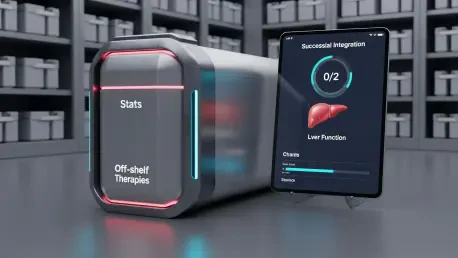
Assessing the severity of liver dysfunction requires looking at a spectrum of metrics, ranging from elevated blood ammonia levels to the presence of encephalopathy and the failure to produce essential blood proteins. When the liver’s 500+ functions begin to fail, the patient’s entire internal environment becomes toxic, leading to a visible and tragic decline in neurological responsiveness. Ensuring an implant integrates properly involves creating a microenvironment where the hepatocytes can immediately begin “talking” to the patient’s circulatory system. We monitor the successful production of albumin and the steady decline of toxins as clinical proof that the bioengineered tissue has taken up its role. It is a delicate dance of bioengineering where the implant must be robust enough to survive but flexible enough to join the host’s metabolic rhythm.
Clinical trials for SB-101 are projected to begin in 2026. What are the critical regulatory and logistical milestones necessary to move a bioengineered liver therapy from the laboratory to a phase 1/2 trial, and what unique safety protocols are required when treating pediatric populations?
Moving toward a 2026 clinical trial start requires a rigorous validation of manufacturing consistency to ensure every “off-the-shelf” unit meets the same high-performance standards. The Rare Pediatric Disease designation from the FDA is a massive milestone that helps streamline this regulatory path, but the safety hurdles remain appropriately high. When treating children, especially those from birth to 18 years of age, we have to account for their rapid growth and the long-term persistence of the therapy. Safety protocols must include intensive monitoring of the implant site and frequent neurodevelopmental assessments to ensure the therapy is supporting healthy maturation. Our logistical chain must also be flawless, as these infants cannot afford any delays in the delivery of their life-saving cells.
While initial efforts focus on early-onset pediatric cases, there is a broader need for therapies targeting adult chronic liver disease. How does the scalable nature of this liver therapy platform allow for adaptation across different age groups, and what adjustments are needed for adult metabolic requirements?
The beauty of a scalable liver therapy platform is that the fundamental building block—the functional hepatocyte—remains the same whether the patient is an infant or an adult. For adult patients with chronic liver disease, the primary adjustment lies in the sheer volume of metabolic support required to sustain a larger body mass and a more complex lifestyle. While a neonate requires a rapid “rescue” to prevent immediate brain injury, an adult may need a larger therapeutic mass to compensate for years of progressive scarring and lost protein production. We are designing the platform so that we can titrate the “dosage” of functional tissue to meet these varying demands. This flexibility allows us to envision a future where this technology serves as a bridge or even a long-term alternative for a wide variety of liver pathologies.
What is your forecast for the future of bioengineered liver therapies and their potential to replace or delay the need for traditional organ transplants?
I believe we are entering an era where the chronic shortage of donor organs will no longer be a death sentence for patients with liver failure. In the next decade, bioengineered therapies will likely become the primary intervention for stabilizing patients, effectively delaying the need for a full transplant for years or perhaps indefinitely. We will see a shift toward “living medicines” that can be implanted with minimally invasive procedures, reducing the surgical trauma associated with traditional transplantation. As these technologies mature, they will provide a more accessible, standardized, and scalable solution that transforms liver disease from a terminal condition into a manageable one. Ultimately, the goal is to ensure that no child or adult has to wait on a list for a second chance at life.