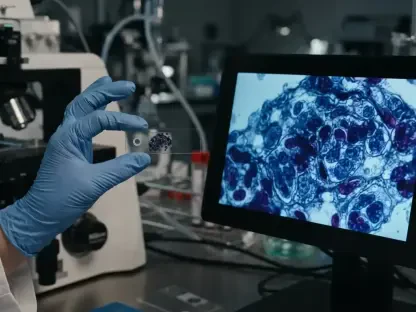

The federal landscape for biological research has undergone a seismic shift as the United States government implements a comprehensive ban on high-risk gain-of-function experiments. This pivotal policy represents a total overhaul of the life sciences sector, aiming to prioritize the safety of the general public over the pursuit of speculative scientific advancements that carry the potential for global catastrophe. By ending federal support for research that deliberately enhances the virulence or transmissibility of pathogens, the administration is closing significant gaps in oversight that have historically allowed dangerous studies to proceed with little to no external verification. This new “America First” directive signifies a transition from the era of scientific self-regulation toward a robust model of top-down accountability and rigorous federal scrutiny. The government is now ensuring that taxpayer dollars are never used to fund experiments that could pose an existential threat to national security or international health.
Restructuring the Framework of Biological Oversight
The current restructuring of biological oversight is grounded in the necessity of establishing a centralized authority that can assess the risks of life sciences research with total objectivity. Under this new mandate, any project involving the manipulation of potentially pandemic pathogens must undergo a rigorous, multi-tiered review process before a single cent of federal funding is released. This top-down model replaces the previous system where individual agencies and grant-making bodies exercised significant autonomy in determining the safety of the projects they sponsored. By consolidating oversight, the federal government is creating a unified defensive posture against the accidental or intentional release of engineered biological agents. This shift also includes a mandate for continuous monitoring, ensuring that any research which evolves to meet the criteria of gain-of-function is immediately halted and reassessed under the updated safety guidelines.
Enhancing Accountability: Transparent Standards and Independent Review
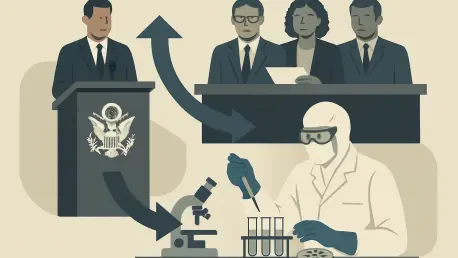
At the core of this regulatory restructuring is a transparent and highly accountable framework designed to govern all federally funded life sciences projects. The policy establishes a mandate for independent, external evaluations of any research proposal that could potentially result in the increased harmful consequences of biological agents. This shift effectively removes decision-making authority from the researchers who stand to benefit from the grants, thereby eliminating the inherent conflicts of interest that often plague the scientific community. Every proposed study must now undergo a multifaceted risk-benefit analysis, where the burden of proof lies with the investigators to demonstrate that their work does not introduce unnecessary risks of a laboratory leak or an accidental outbreak. By institutionalizing these oversight mechanisms, the federal government aims to ensure that no high-consequence biological research is conducted in the shadows or without the express consent of safety experts.
The new policy emphasizes the elimination of institutional bias by requiring that the primary oversight committee be composed of individuals with no financial or professional ties to the research being reviewed. This represents a significant departure from previous years, when scientists within the same field or even the same institution were often responsible for greenlighting high-risk experiments with minimal outside interference. By mandating that these panels include specialists from diverse fields—such as ethics, national security, and public health—the government ensures a holistic evaluation of the potential dangers associated with modifying dangerous pathogens. This multidisciplinary approach is designed to catch risks that a specialized virologist might overlook or undervalue in the pursuit of scientific breakthrough. Furthermore, these committees have the authority to halt projects mid-stream if new safety data emerges, providing a dynamic layer of protection that adjusts to the evolving nature of biological inquiry.
Global Standards: Enforcing Compliance Across International Facilities
This oversight mechanism is not confined to laboratories within the United States; it extends its reach to any international research initiative that relies on American financial backing. Foreign laboratories are now required to adhere to the same rigorous biosafety and biosecurity standards that govern domestic facilities if they wish to remain eligible for federal grants. This move is specifically designed to halt the uncontrolled proliferation of modified pathogens in regions where regulatory frameworks or laboratory infrastructures might be insufficient to handle such dangerous agents safely. By enforcing these conditions, the policy serves as a global safeguard, ensuring that American resources do not inadvertently contribute to a biological crisis in another part of the world. The goal is to create a unified standard of safety that prevents researchers from bypassing domestic restrictions by moving their high-risk experiments to foreign jurisdictions with more lenient oversight or less transparency.
Global cooperation in the life sciences now hinges on a shared commitment to the highest levels of biosecurity, making it impossible for researchers to seek out “havens” with lax oversight for their work. The U.S. government has made it clear that any entity receiving federal assistance, whether a university lab in Europe or a public health facility in Southeast Asia, must open its doors to regular, unannounced inspections by American safety officials. This level of transparency is essential for verifying that biosafety protocols are strictly followed and that inventory controls for lethal agents are infallible. Moreover, this policy discourages the practice of “offshoring” research risks, a tactic where domestic scientists would collaborate with foreign labs to perform experiments that were restricted on U.S. soil. By closing these loopholes, the administration is effectively exporting its rigorous safety culture, ensuring that biological research is conducted responsibly across the global ecosystem.
Lessons From the Past and Institutional Reform
The motivation behind these sweeping reforms is deeply rooted in the lessons learned from recent global health crises, including the COVID-19 pandemic and outbreaks of highly pathogenic avian influenza. Legislative investigations and expert testimonies have provided a sobering look at the risks associated with bioengineered pathogens and the historical lack of transparency within the scientific establishment. There is now a clear acknowledgment at the federal level that laboratory-acquired infections and human-driven virus modifications represent significant risks that were previously downplayed or ignored. By addressing these vulnerabilities directly, the new policy provides a necessary corrective measure to prevent future biological disasters that could arise from poorly monitored research. This focus on past failures serves as a catalyst for reform, driving the government to adopt a more skeptical and cautious approach toward any research that involves the manipulation of viral traits or the creation of chimeric organisms.
Institutional Change: Addressing Pathogen Origins and Leadership
Accompanying these structural changes is a fundamental transformation of the institutional culture at major agencies like the National Institutes of Health. Under a new era of leadership, the administration has fostered an environment where scientists are encouraged to challenge existing norms and prioritize a culture of thoughtful, safety-oriented evaluation. This leadership shift is specifically aimed at dismantling the influence of administrative figures who historically favored rapid scientific output over the careful assessment of long-term risks. The new model emphasizes the importance of open data, peer-reviewed safety protocols, and a rigorous challenge process for any project that touches on pathogen enhancement. By promoting a culture where “safe science” is valued above “fast science,” the agency is rebuilding its reputation as a guardian of public health rather than a mere conduit for research funding. This internal reform ensures that the personnel responsible for oversight are as committed to biosecurity.
National security intelligence has provided a startling overview of the extensive network of U.S.-funded biolabs across the globe, some of which are located in highly volatile regions. These facilities often house some of the world’s most dangerous pathogens, such as anthrax, Ebola, and various hemorrhagic fevers, making them potential flashpoints for accidental release or intentional misuse. The new federal policy mandates an exhaustive review of these international partnerships, requiring the immediate and strict enforcement of American safety protocols as a non-negotiable condition of continued cooperation. This proactive stance is intended to mitigate the significant geopolitical risks associated with conducting high-risk biological research in areas that lack robust regulatory oversight or political stability. By taking a more hands-on approach to managing global biolab networks, the government is working to ensure that American scientific investments do not become a liability for national defense or create unforeseen vulnerabilities.
National Security: Managing High-Risk Global Laboratory Networks
The prioritization of national security within the life sciences represents a departure from the traditional academic focus on unrestricted knowledge sharing. Under the new policy, biological research is treated with the same level of strategic caution as nuclear or aerospace technology, recognizing that certain types of information can be weaponized if they fall into the wrong hands. This security-centric model requires that any data generated from federally funded research be vetted for potential dual-use applications before it is published in open-access journals. By restricting the dissemination of “blueprints” for enhancing viral lethality, the government is making it significantly harder for bad actors to replicate high-risk experiments. This measure acts as a critical line of defense in an age where biotechnology is becoming increasingly accessible, ensuring that scientific progress does not inadvertently facilitate the creation of biological weapons or the emergence of man-made pandemics.
Ultimately, the transition toward a security-conscious model of life sciences sought to restore the public trust that had been eroded by years of opaque decision-making and perceived lack of accountability. The government moved to democratize the oversight of biological science by mandating enhanced reporting requirements and inviting public scrutiny of research outcomes that involve potential pandemic pathogens. This approach ensured that the pursuit of knowledge never came at the expense of the safety of the American people, effectively establishing a permanent barrier against the funding of high-risk experiments. Moving forward, the implementation of these protocols suggested a future where biological innovation and national security were inextricably linked. Scientific communities were encouraged to pivot toward safer research methodologies, such as the use of attenuated strains, which provided valuable insights without the inherent risks of pathogen enhancement. This landmark policy established a new global benchmark for biosecurity.