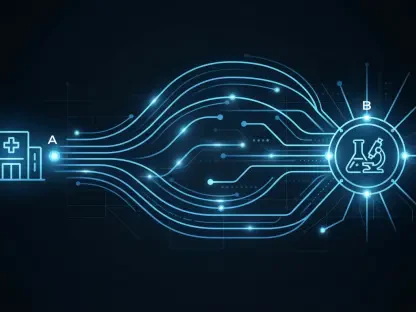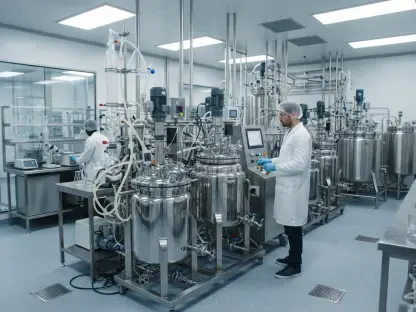
Effective digital twin architecture requires a robust data layer that synchronizes information from SCADA systems and laboratory information management systems. In the current landscape of 2026, the biopharmaceutical industry has moved decisively beyond traditional static modeling toward dynamic, real-time representations of physical assets. These digital twins serve as virtual mirrors of bioreactors, chromatography columns, and filtration units, allowing manufacturers to visualize internal process states that were previously inaccessible through physical sensors alone. By integrating high-frequency sensor data with advanced computational algorithms, facilities can now anticipate batch trajectories and identify potential deviations before they compromise product quality. This shift toward predictive intelligence is not merely a technological upgrade but a fundamental reimagining of how biological complexity is managed within the constraints of strict regulatory environments. As companies strive for greater yields and shorter development timelines, the ability to simulate “what-if” scenarios in a risk-free virtual environment has become a cornerstone of modern manufacturing science and technology strategies.
The evolution of bioprocessing controls has been accelerated by the demand for personalized medicine and the rapid production of complex biologics. Unlike traditional chemical synthesis, bioprocessing involves living organisms—such as Chinese Hamster Ovary cells—that exhibit inherent variability and sensitivity to environmental shifts. Digital twins mitigate this variability by providing a continuous stream of actionable insights, transforming raw data into a coherent narrative of the process life cycle. This capability is particularly vital for maintaining the critical quality attributes of therapeutic proteins, where even minor fluctuations in temperature or pH can lead to undesirable glycan profiles or protein aggregation. Consequently, the implementation of equipment-level digital twins is no longer viewed as an experimental luxury but as a necessary standard for ensuring process robustness and operational excellence across the global supply chain. This transition reflects a broader commitment to Industry 4.0 principles, where data-driven decision-making replaces historical reliance on experience-based intuition.
1. Identify the Core Decision: Solving Specific Production Challenges
The first and perhaps most critical stage in deploying a bioprocess digital twin involves the precise identification of the problem the model is intended to solve. Rather than attempting to model an entire facility at once, successful implementations in 2026 focus on specific, high-value unit operations where predictive insights can yield immediate dividends. For example, a team might decide that the core objective is to forecast whether glucose concentrations in a mammalian cell culture will remain within the optimal target range until the next scheduled manual sampling event. By narrowing the scope to a single critical variable, engineers can allocate resources more effectively and ensure that the resulting model provides high-resolution data for that specific need. This targeted approach prevents the project from becoming bogged down in unnecessary complexity, ensuring that the digital twin remains a practical tool for daily operations rather than a theoretical exercise that lacks real-world utility.
A well-defined core decision also serves as the primary metric for evaluating the success of the digital twin during its initial pilot phase. When the objective is clearly articulated—such as predicting the exact moment of harvest to maximize titer without compromising cell viability—the criteria for accuracy and reliability become self-evident. This clarity is essential for gaining stakeholder buy-in, as it allows manufacturing teams to see a direct correlation between the twin’s output and improvements in process efficiency or product consistency. In contrast, vague objectives often lead to models that provide interesting but unactionable data, which can undermine confidence in digital transformation initiatives. By focusing on a specific challenge, such as detecting the early signs of column breakthrough in downstream chromatography, manufacturers can build a library of focused twins that collectively enhance the overall resilience of the production line while maintaining manageable development costs.
Furthermore, defining the core decision requires a deep understanding of the biological and mechanical constraints of the equipment in question. In 2026, process scientists increasingly collaborate with data engineers to map out the relationship between process parameters and quality outcomes. This collaborative effort ensures that the digital twin is grounded in the reality of the cleanroom, accounting for factors such as sensor drift, raw material variability, and mechanical wear. By pinpointing the specific decision point—whether it is a feed adjustment, a temperature shift, or a filtration endpoint—the project team can select the most appropriate sensors and data streams to feed into the model. This foundational work ensures that the digital twin is not just a reactive monitor but a proactive guide that empowers the manufacturing team to stay ahead of the process curve, ultimately reducing the likelihood of batch failures and rework.
2. Establish the User and Their Response: Defining Operational Interaction
Once the core decision is established, the next priority is to determine exactly who will interact with the digital twin and what specific actions they will take based on its findings. In a modern 2026 biomanufacturing facility, the user might be a front-line operator, a process engineer, or a member of the manufacturing science and technology team. Each of these roles requires a different level of data granularity and a unique interface design. For an operator, the digital twin might manifest as a simplified dashboard showing a “green-to-red” process health indicator, accompanied by a specific instruction to adjust the feed rate if a deviation is predicted. For a process engineer, the interaction might involve more complex visualizations of metabolic flux or oxygen uptake rates, allowing for deeper troubleshooting of unexpected biological trends. Clearly defining these roles ensures that the digital twin’s output is relevant and accessible to the person responsible for the final decision.
Defining the response is equally as important as defining the user, as the true value of a digital twin lies in the change it effects on the physical process. If the twin predicts a decline in cell viability, the system must provide a clear, pre-validated protocol for the user to follow. This might include adjusting the dissolved oxygen set point, modifying the agitation speed, or initiating an unscheduled nutrient bolus. By pre-defining these responses, the organization creates a standard operating procedure that bridges the gap between digital insight and physical action. This structured approach reduces the cognitive load on personnel during high-pressure situations, as the digital twin provides a reliable roadmap for intervention. Moreover, this clarity helps in establishing accountability, ensuring that every alert generated by the virtual model is met with a timely and appropriate response that has been vetted by quality and process experts.
Beyond immediate interventions, the interaction between the user and the digital twin fosters a culture of continuous learning and process refinement. As operators and engineers gain experience with the virtual model, they begin to develop a more intuitive understanding of the complex interactions within the bioreactor or chromatography skid. In 2026, many facilities use these interactions to refine their digital twins, incorporating feedback from the shop floor to improve the user interface and the relevance of the alerts. This feedback loop ensures that the digital twin evolves alongside the workforce, becoming an indispensable partner in the manufacturing process. By treating the digital twin as a decision-support tool rather than a replacement for human expertise, companies can leverage the strengths of both computational speed and human judgment, leading to more robust and flexible production environments that can adapt to the challenges of modern bioprocessing.
3. Construct a Foundational Model: Building the Theoretical Framework
With the user and the core decision identified, the focus shifts to constructing the simplest foundational model capable of delivering the required insights. In the current era of 2026, bioprocess modeling typically follows three main paths: mechanistic, machine learning, or a hybrid of both. Mechanistic models are built on first principles of physics, chemistry, and biology, such as Monod kinetics or mass transfer equations. These models are highly interpretable and provide deep insights into the underlying process drivers, making them ideal for scaling up or transferring processes between different equipment sets. However, they can be computationally intensive and may struggle to capture the full complexity of non-linear biological systems. Consequently, many organizations start with a simplified mechanistic framework that captures the essential dynamics of the process before layering on more complex features as the project matures.
Alternatively, machine learning models have become increasingly popular in 2026 for their ability to recognize patterns in large, multi-dimensional datasets without requiring a detailed mathematical description of every biological interaction. These models excel at detecting subtle drifts in batch trajectories and can be trained using historical production data. While they are often viewed as “black boxes” due to their complexity, they provide rapid predictions that are essential for real-time control. The key to successful construction is to resist the urge to over-engineer the model during its first iteration. A foundational model that uses only a few reliable signals—such as pH, dissolved oxygen, and temperature—to predict a single outcome is far more valuable than a sophisticated but unproven model that attempts to simulate every metabolic pathway. This “start small” philosophy allows the development team to validate the core logic before expanding the model’s scope.
The most advanced applications in 2026 often utilize hybrid models, which combine the interpretability of mechanistic equations with the predictive power of machine learning. In this architecture, the mechanistic component handles the well-understood aspects of the process, such as oxygen mass transfer, while the machine learning component accounts for the residual variability that traditional equations cannot capture. This approach provides a robust and flexible foundation that can adapt to different cell lines or media formulations with minimal recalibration. By constructing the model in modular blocks, engineers can easily update specific components as new data becomes available or as process understanding deepens. This modularity is essential for maintaining the digital twin over long production campaigns, ensuring that the virtual model remains a faithful representation of the physical process even as conditions evolve.
4. Perform Model Validation: Ensuring Reliability and Accuracy
Validation is the process of proving that the digital twin’s predictions are accurate and reliable enough to support manufacturing decisions. In 2026, this involves testing the model against independent datasets that were not used during the initial training or calibration phases. This “blind” testing is crucial for ensuring that the model has truly learned the underlying process dynamics rather than simply memorizing the noise in the training data. For a bioreactor twin, this might mean comparing predicted metabolite profiles against actual off-line laboratory measurements from several independent production runs. The goal is to establish a high level of statistical confidence in the model’s performance, typically measured by metrics such as the root mean square error or the correlation coefficient between predicted and observed values. Only after a model has demonstrated consistent accuracy across multiple batches can it be considered ready for deployment.
The validation process also requires the establishment of “acceptance criteria” that define the allowable margin of error for the digital twin. These criteria are often risk-based, meaning that a model used for a critical quality decision, such as the timing of an expensive harvest step, will require a much higher level of precision than a model used for general process monitoring. In 2026, many quality assurance departments have developed standardized protocols for validating digital twins, treating them with the same level of rigor as any other piece of laboratory equipment or analytical software. This includes documenting the model’s sensitivity to variations in input data and its performance under edge-case conditions, such as sensor failure or extreme temperature fluctuations. This rigorous validation framework ensures that the digital twin is a trustworthy source of information, providing a solid foundation for its use in a regulated Good Manufacturing Practice environment.
Furthermore, model validation in 2026 is often viewed as an ongoing activity rather than a one-time event. As more production data is collected, the digital twin is periodically re-validated to ensure that it continues to perform within the established specifications. This is particularly important when there are changes to the manufacturing process, such as the introduction of a new batch of raw materials or an update to the equipment’s firmware. By maintaining a continuous validation cycle, organizations can detect “model drift” early, allowing for timely recalibration before the twin’s accuracy degrades. This proactive approach to quality management not only ensures the reliability of the digital twin but also provides valuable insights into the stability of the physical process itself. Ultimately, a thoroughly validated digital twin serves as a powerful tool for Continued Process Verification, helping manufacturers meet regulatory expectations for consistent product quality.
5. Initiate as a Decision-Support Tool: Bridging Theory and Production
Transitioning a digital twin from a validated model to an active part of the production workflow begins with its deployment as a decision-support tool. In this phase, the digital twin runs in parallel with the physical process, providing real-time insights and predictions to the human operators without directly controlling the equipment. This “shadowing” period is essential for building trust among the manufacturing staff and for identifying any practical challenges that may arise when integrating the twin with existing SCADA or Manufacturing Execution Systems. During this stage, the digital twin acts as a sophisticated advisor, flagging potential issues and offering recommendations that the operator can then choose to act upon. This approach allows the organization to benefit from the twin’s predictive capabilities while maintaining a “human-in-the-loop” safety net that ensures all final decisions are vetted by experienced personnel.
The success of a decision-support tool in 2026 is often measured by its impact on operational efficiency and the reduction of deviations. For instance, if a digital twin can alert an operator that a chromatography column is approaching its pressure limit two hours before a physical alarm would sound, the team has ample time to adjust the flow rate or prepare for a buffer change. This early warning capability significantly reduces the stress of manual monitoring and allows for more proactive management of the production schedule. Moreover, by recording the operator’s response to the twin’s suggestions, the organization can collect valuable data on the practical utility of the model’s outputs. This information is used to refine the user interface and to ensure that the recommendations are both clear and actionable, further strengthening the bond between the digital and physical aspects of the facility.
As the organization becomes more comfortable with the digital twin’s performance, the decision-support tool can gradually evolve to handle more complex scenarios. In 2026, some advanced facilities have begun using digital twins to optimize resource allocation across multiple production lines, using the virtual models to predict the exact timing of harvest and filtration steps to avoid bottlenecks in shared downstream equipment. This level of coordination would be nearly impossible with traditional manual scheduling but is made feasible by the real-time visibility provided by a fleet of interconnected digital twins. By starting as a simple advisor and slowly expanding its responsibilities, the digital twin becomes a natural extension of the manufacturing team, paving the way for future advancements in automated control and fully autonomous bioprocessing.
6. Execute Life-Cycle Management: Sustaining Long-Term Performance
Sustainable digital twin performance was achieved by implementing a robust life-cycle management strategy that treated the virtual model as a living asset. Throughout the production cycle, dedicated teams monitored the digital twin for signs of performance degradation, which often occurred as the physical equipment aged or as subtle changes in raw material lots were introduced. These teams utilized formal change control procedures to manage any necessary updates to the model’s parameters or underlying algorithms, ensuring that every modification was fully documented and validated before being deployed back to the production floor. This systematic approach to maintenance prevented the “model rot” that often plagued earlier iterations of bioprocess simulations, allowing the digital twin to remain a reliable source of truth for the entire duration of the product’s commercial life.
Recalibration and retraining became standard activities within the manufacturing schedule, much like the routine servicing of a physical bioreactor or centrifuge. In 2026, engineers utilized automated data pipelines to feed new production results back into the model-building environment, allowing the digital twin to learn from every completed batch. This continuous learning loop meant that the twin’s accuracy actually improved over time, as it encountered a wider variety of process conditions and biological responses. When a significant shift was detected—such as a change in the metabolic behavior of the cell line—the model underwent a formal retraining process, followed by a condensed validation cycle to confirm its renewed accuracy. This commitment to ongoing refinement ensured that the digital twin stayed synchronized with the evolving reality of the shop floor, providing consistent value across multiple years of operation.
Looking back on the implementation journey, the successful integration of digital twins fundamentally transformed the approach to bioprocessing controls. The industry moved away from reactive troubleshooting and toward a culture of proactive optimization, where data-driven insights informed every stage of the manufacturing process. Future considerations will likely involve the expansion of these models to cover the entire supply chain, from raw material sourcing to final patient delivery, creating an end-to-end digital thread that enhances transparency and security. For manufacturers today, the next steps involve scaling these successful pilots across their global networks and investing in the digital talent required to sustain this new way of working. By embracing the principles of life-cycle management, organizations have secured a competitive advantage that ensures the reliable delivery of life-saving therapies to patients around the world.