
By mimicking the natural bone extracellular matrix, these composite scaffolds address the physiological limitations of existing synthetic materials used in orthopedic surgery. The global healthcare landscape is currently navigating a quiet but profound crisis as bone-related injuries and degenerative diseases place an unprecedented strain on hospital resources. Every year, fractures alone account for approximately 150,000 hospitalizations, with hip fractures carrying a mortality rate between 15 and 20 percent. While the medical community has long relied on bone grafts and traditional surgical stabilization, these methods are frequently hampered by chronic donor shortages, the risk of immunological rejection, and the often sluggish pace of natural regeneration. In response to these challenges, the field of bone tissue engineering has emerged as a critical frontier, focusing on the development of sophisticated synthetic structures that can actively guide the regrowth of living bone tissue. Recent breakthroughs suggest that incorporating bioactive compounds from natural sources can significantly improve the performance of these synthetic materials.
Bridging Traditional Medicine: Modern Engineering Approaches
Material Composition: The Synergy of Bioactive Ingredients
The architectural success of the newly developed scaffold stems from its four primary components, each serving a distinct and essential role in the bone reconstruction process. Sodium alginate and chitosan form the foundational hydrogel framework, providing both structural integrity and a natural defense against microbial infections. To address the mineral requirements of the body, the researchers integrated beta-tricalcium phosphate, a bioactive ceramic that closely mimics the inorganic mineral phase of natural bone, thereby encouraging the deposition of new calcium deposits. The most innovative addition, however, is eugenol, a phenolic compound derived from cloves known for its potent antioxidant and anti-inflammatory properties. The research team hypothesized that eugenol would act as more than a passive additive; they believed it would strengthen the physical structure of the scaffold through complex molecular interactions with the surrounding polymeric chains. This combination of marine-derived polymers and botanical extracts creates a highly biocompatible environment for new tissue.
Virtual Modeling: In-Silico Pharmacology and Docking
Before initiating physical laboratory experiments, the research team utilized advanced in-silico network pharmacology to predict how eugenol would interact with the human body at a molecular level. By mapping the chemical compound against thousands of known human genes, the scientists identified nearly one hundred “hub genes” where eugenol likely exerts its most significant biological influence. This computational phase focused specifically on proteins that regulate antioxidant responses and mitigate inflammation, such as KEAP1 and NFE2L2. Subsequent molecular docking simulations revealed that eugenol possesses a remarkably high binding affinity for several key enzymes involved in bone remodeling and cellular protection. These findings provided a crucial theoretical roadmap, suggesting that the compound could protect developing bone cells from the oxidative stress that often accompanies major surgery. By establishing this molecular foundation early in the development process, the researchers were able to justify the transition to complex physical testing and eventual material fabrication.
Physical Strength: Engineering a Durable and Porous Framework
Fabrication Techniques: Durability and Porosity
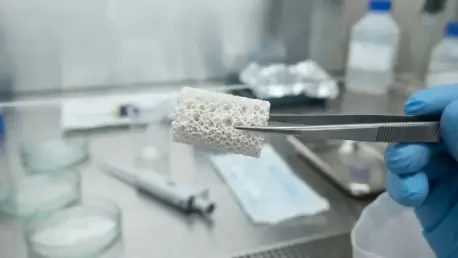
The fabrication of these specialized scaffolds involves a precise sequence of blending polymers and ceramic particles into a suspension, which is then crosslinked and subjected to extreme freezing. Through the process of lyophilization, or freeze-drying, the researchers produced a sponge-like architecture that mimics the porous interior of human bone. Mechanical testing demonstrated that the inclusion of eugenol fundamentally altered the scaffold’s physical resilience, making the composite significantly tougher and more resistant to compression than control versions. Specifically, the eugenol-infused scaffolds were able to withstand loads of up to 50 newtons, compared to only 36 newtons for the standard polymer blend. This notable increase in mechanical strength is vital for orthopedic applications, where a scaffold must provide reliable structural support to an injury site while new, healthy tissue slowly matures and eventually assumes the full load-bearing responsibilities of the skeletal system. The hydrogen bonding between the eugenol and the polymer matrix ensures long-term structural stability.
Structural Parameters: Permeability and Attachment
Beyond mere mechanical strength, the scaffold’s internal geometry was meticulously designed to support biological life through optimized permeability. The material maintains a porosity level between 60 and 70 percent, a range that is widely considered the ideal threshold for effective bone tissue engineering. This specific level of porosity is necessary to allow for the unrestricted migration of cells into the depths of the structure, ensuring that oxygen and essential nutrients reach the developing tissue while metabolic waste products are efficiently removed. Furthermore, the scaffold’s surface chemistry is naturally hydrophilic, meaning it attracts water and facilitates the immediate attachment of cells upon implantation. Chemical analysis confirmed that the eugenol was successfully integrated into the scaffold without disrupting these essential physical traits. Instead, the compound’s presence appeared to stabilize the overall structure, creating a more cohesive and predictable platform for bone regeneration that balances the competing needs of physical rigidity and biological openness.
Biological Performance: Assessing Bioactivity and Cellular Compatibility
Dynamic Release: Controlled Bioactivity and Mineralization
In a controlled laboratory environment, the eugenol-infused scaffolds demonstrated a sophisticated drug-release profile that is highly beneficial for clinical recovery. The material exhibited an initial “burst release” of eugenol within the first eight hours of exposure, which is strategically designed to address immediate post-surgical inflammation at the site of the bone defect. This was followed by a steady and sustained release of the compound over several days, providing long-term support for the complex process of tissue remodeling. When the scaffolds were immersed in simulated body fluid to test their bioactivity, they showed a superior ability to form dense, white layers of apatite crystals on their surface. This mineral formation is a definitive indicator of a material’s capacity to bond directly with living bone tissue. The presence of eugenol, particularly in higher concentrations, accelerated this mineralization process, proving that the scaffold does not just sit in the body as a passive bridge but actively participates in the chemical formation of new bone.
Cellular Vitality: Proliferation and Metabolic Health
The most critical evidence for the scaffold’s potential came from cell viability assays conducted with human osteoblast-like cells. These experiments revealed that the cells not only survived when placed on the eugenol-infused material but also flourished, exhibiting increased metabolic activity and significantly faster proliferation rates compared to the control groups. The high-dose eugenol scaffolds produced the most impressive boost in cell growth over a 48-hour observation period, suggesting that the compound provides a protective, stimulating environment for bone-forming units. Because the scaffold is non-toxic and promotes such robust cellular health, it represents a significant upgrade over existing synthetic alternatives that may sometimes cause local irritation or lack the necessary biological triggers for rapid healing. By serving as both a structural enhancer and a biological catalyst, the eugenol-based composite effectively bridges the historical gap between synthetic support structures and the natural biological vitality required for complete skeletal recovery and long-term orthopedic health.
Strategic Evolution: Scaling and Clinical Transition
Synergistic Effects: The Future of Bone Engineering
The overarching success of this research highlights a burgeoning trend in medical science: the strategic combination of natural polymers with bioactive plant extracts to solve complex orthopedic problems. The consensus among the investigators was that eugenol acts as a multi-functional agent, providing the chemical stability needed for mechanical durability while simultaneously offering the biological signaling required for tissue growth. This dual-purpose functionality is often missing in traditional synthetic materials, which frequently prioritize either strength or biocompatibility at the expense of the other. By leveraging the hydrogen bonding between eugenol and the alginate-chitosan matrix, the team created a composite that is greater than the sum of its parts. As the medical field moves toward more personalized and sustainable solutions, this specific combination of ingredients offers a scalable model for producing high-performance biomaterials that can be manufactured efficiently while maintaining the rigorous standards required for surgical implantation.
Actionable Progress: Towards Clinical Implementation
The investigation into eugenol-infused scaffolds successfully established a robust foundation for the next generation of bone repair technologies. The researchers proved that integrating botanical compounds into a polymer-ceramic matrix significantly enhanced both the mechanical toughness and the biological activity of the material. Moving forward, the focus should shift toward long-term studies in complex animal models to verify how these scaffolds perform under the dynamic stresses of a living physiological environment. Standardizing the concentration of eugenol to ensure consistent drug-release profiles across different patient demographics will be a necessary step for regulatory approval. Furthermore, exploring the use of 3D-printing technologies to customize the scaffold’s external shape to fit specific patient defects could further maximize the clinical utility of this material. The data confirmed that this approach was not only viable but also offered a sustainable path toward reducing the human and economic costs associated with bone trauma, paving the way for more integrated and effective orthopedic treatments.