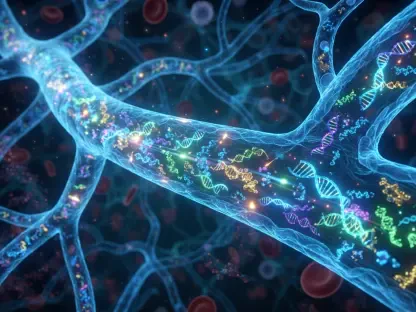

The maturation of artificial intelligence in the life sciences is now being judged by its ability to facilitate commercial execution rather than just generating digital designs. The recent acquisition of the American biotechnology firm Genomatica by Copenhagen-based Again signals a tectonic shift in how the industry perceives the intersection of computation and physical hardware. For years, the sector struggled with a fragmented approach where discovery and manufacturing were treated as distinct, incompatible silos. This strategic merger effectively dismantles those barriers by integrating sophisticated American computational algorithms with advanced European bioprocessing infrastructure. The resulting unified platform is designed to shepherd biological products through the entire lifecycle, from initial molecular configuration to large-scale commercial distribution. By moving away from fossil-fuel-dependent petrochemistry, the company seeks to prove that biology can finally serve as the primary manufacturing engine for the global economy.
Industrial Bio-Solutions: Resolving the Scale-Up Bottleneck
Scaling Infrastructure: Integrating Digital Intelligence and Hardware
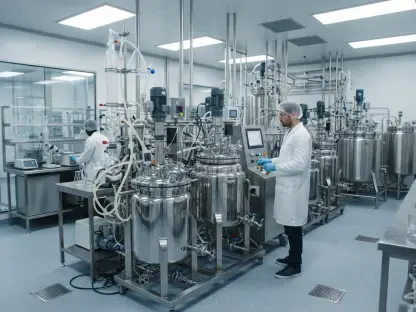
The “scale-up gap” remains the single most formidable barrier to the widespread adoption of industrial biotechnology because biological pathways that behave predictably in a controlled laboratory environment often fail when introduced to massive industrial bioreactors. While artificial intelligence has made incredible strides in accelerating the discovery of novel proteins and enzymes, the physical translation of these digital blueprints into consistent, high-yield results has remained notoriously difficult. This specific merger addresses this historical bottleneck by pairing predictive machine learning models with the tangible infrastructure required to process alternative feedstocks, such as industrial carbon dioxide captured directly from factory emissions. By grounding digital innovation in the realities of physical manufacturing, the initiative seeks to ensure that every computational design is inherently compatible with the rigors of industrial scale-up, bridging the chasm between theory and production.
Establishing this connection between the laboratory and the factory floor necessitates a fundamental rethink of how biological processes are engineered. Instead of optimizing a strain for maximum yield in a small flask and then attempting to adapt it to a 100,000-liter tank, engineers are now using AI to simulate the specific fluid dynamics and nutrient gradients present in large-scale vessels during the design phase. This approach allows the team to identify potential failure points early in the development cycle, long before expensive physical prototypes are constructed. By prioritizing scalability as a primary design constraint, the integrated platform reduces the frequency of unexpected biological mutations and metabolic shifts that frequently occur under the stress of industrial fermentation. This proactive integration of digital intelligence ensures that the transition from a computer screen to a physical manufacturing plant is no longer a gamble but a calculated, repeatable engineering exercise.
Operational Cycles: Building Predictive Feedback and Performance Models
The effectiveness of modern biomanufacturing relies heavily on the creation of a closed-loop system where real-world production data from the factory floor is continuously harvested and fed back into computational models. This iterative process allows machine learning algorithms to learn from the idiosyncrasies of physical hardware, refining their predictive capabilities with every batch produced. When a specific fermentation run deviates from its projected outcome, the automated sensors within the facility capture millions of data points—ranging from oxygen transfer rates to metabolite concentrations—and transmit them back to the central AI engine. This constant stream of operational intelligence enables the system to detect subtle patterns that human engineers might overlook, leading to more robust biological designs in the future. Over time, the platform accumulates a vast library of empirical process data that serves as a competitive moat, making subsequent product launches much more reliable.
Beyond simply improving yields, this closed-loop methodology fundamentally changes the economics of biotechnology by drastically reducing the reliance on costly and time-consuming trial-and-error experimentation. Historically, the development of a new bio-based chemical could take a decade and hundreds of millions of dollars in capital expenditure, much of which was spent on failed pilot projects. By utilizing actual manufacturing results to refine their algorithms, the company can now bypass many of the traditional middle steps in the scale-up process. This efficiency allows for a more rapid response to market demands, as the AI can quickly recalibrate designs to suit different feedstocks or environmental conditions without requiring a complete redesign of the facility. The ability to iterate digitally based on physical feedback loops represents a paradigm shift that elevates biomanufacturing from an experimental craft to a disciplined, data-driven industry capable of competing with the petrochemical sector.
Commercial Execution: Transforming Industrial Production
Pathway Design: Designing Biological Routes for Commercial Viability
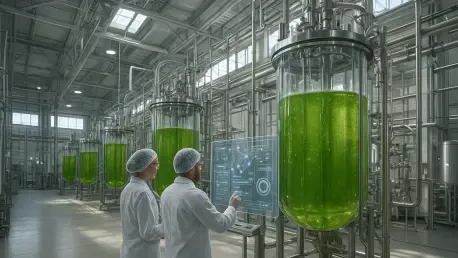
Developing entirely new biological production routes requires the ability to perform de novo pathway design, a process where AI constructs metabolic maps that do not exist in nature. These synthetic pathways are engineered specifically to thrive within the constraints of modern industrial hardware, such as the TXS-1 facility located in Texas. This particular site serves as a vital proof of concept, demonstrating how industrial emissions can be effectively intercepted and converted into foundational chemicals like acetic acid through specialized microbial activity. By designing the biological system to consume captured carbon rather than expensive sugars, the company significantly lowers the operational costs associated with large-scale production. This focus on commercial viability from the earliest stages of research ensures that the resulting chemicals are not just environmentally friendly, but also price-competitive with their petroleum-derived counterparts, which is essential for achieving broad market penetration.
The success of these synthetic pathways at the TXS-1 facility underscores a broader transition where biomanufacturing is no longer viewed as a niche alternative for high-value specialty items. Instead, it is emerging as a functional, high-volume replacement for traditional chemical plants, capable of meeting the demands of global supply chains. As the company refines these biological routes, they are increasingly targeting commodity chemicals that form the backbone of various industries, from plastics to textiles. This expansion into high-volume markets is made possible by the precision of AI-driven engineering, which allows for the creation of organisms that can tolerate high concentrations of products and survive in the harsh environments of continuous-flow bioreactors. Consequently, the industrial landscape is witnessing the rise of a new bio-economy where the primary feedstock is atmospheric waste, and the primary manufacturing tool is a living cell optimized for maximum economic output.
Strategic Frameworks: Strengthening Global Supply Chains and Resilience
The evolution of the global biomanufacturing landscape demonstrated that the most resilient organizations were those that prioritized the total integration of their digital and physical assets. By shifting the focus from isolated molecular discovery to comprehensive systems engineering, leaders managed to overcome the stagnation that previously hindered the industry. This period was marked by significant geopolitical shifts, where legislative efforts such as the BIOSECURE Act encouraged companies to secure domestic manufacturing capacity. By maintaining a strong presence in both Europe and the United States, the organization positioned itself as a strategic player capable of providing localized and secure production centers near the point of demand. This geographical diversity proved essential for mitigating the risks associated with international trade volatility and supply chain disruptions. Leaders effectively used AI as a strategic advisor to guide the deployment of capital toward the most resilient and scalable biological platforms.
Moving forward, the industry learned that maintaining a competitive edge required a commitment to open-source data standards for manufacturing processes, which facilitated smoother collaboration across different regions. Stakeholders realized that the establishment of decentralized, modular production facilities was essential for mitigating the risks associated with global supply chain disruptions. These smaller, AI-optimized plants allowed for greater flexibility in responding to localized market needs while maintaining the high efficiency of centralized factories. Furthermore, the adoption of transparent environmental reporting became a prerequisite for securing long-term partnerships with sustainability-focused corporations. By treating carbon capture not just as a regulatory requirement but as a valuable feedstock source, firms turned a liability into a significant economic asset. Ultimately, the successful merger of digital intelligence and physical infrastructure provided the necessary framework for biology to displace fossil-fuel-based chemistry.