
The National Institute of Advanced Industrial Science and Technology (AIST) has introduced a transformative analytical technique designed to redefine how manufacturers assess the quality and consistency of culture media. This innovation utilizes a sophisticated fingerprinting approach to capture the total composition of complex chemical mixtures through distinct fluorescence patterns, bypassing the need for exhaustive chemical breakdowns or prolonged biological testing. Published in the journal Chemical Science, this methodology addresses a critical bottleneck in the production of biologics and lab-grown food products. By providing a rapid and non-invasive diagnostic tool, the system ensures that production batches meet stringent quality standards before expensive cell lines are introduced. This advancement reflects a broader trend toward digitizing quality control, offering a scalable solution for industries that depend on highly specialized nutrient environments. The focus on holistic patterns rather than individual components allows for a more comprehensive understanding of media stability.
The Limitations of Current Quality Control Paradigms
Culture media and their associated supplements represent the fundamental lifeblood of modern biomanufacturing, providing the exact vitamins, minerals, and growth factors required for cellular health. However, these nutrient-rich mixtures are notoriously difficult to standardize because they often contain hundreds of distinct molecules that interact in ways that are not fully understood. Since many of these supplements are derived from natural sources, they are prone to significant batch-to-batch variation based on geographic origin, seasonal changes, or even minor deviations in processing methods. In a high-stakes production environment, even a marginal shift in the concentration of a single amino acid can derail an entire production run, leading to significant financial losses and delayed timelines for critical medications. Consequently, manufacturers have historically been forced to choose between slow, reactive testing and prohibitively expensive analytical processes that fail to provide real-time results.
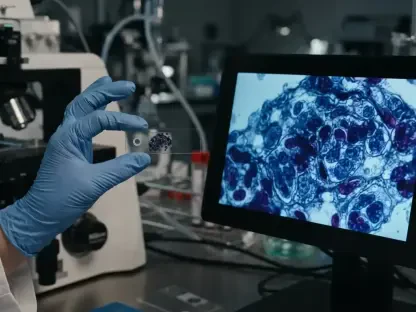
Traditional methods for evaluating these complex mixtures have long struggled to keep pace with the rapid demands of industrial biofoundries. On one hand, deep chemical analysis via mass spectrometry provides detailed data but is far too slow and costly for daily screening of incoming raw materials. On the other hand, conventional cell culture assays—where a sample of the media is tested by actually growing cells—often take several days or even weeks to yield definitive results. These biological tests are inherently subjective, as the results can be heavily influenced by the initial state of the seed cells or the technical proficiency of the laboratory personnel. This lack of objectivity makes it difficult to compare data across different facilities or to establish a global standard for media quality. The industry has reached a point where more agile, data-driven solutions are required to ensure the reliability of the supply chain in an increasingly automated manufacturing landscape.
Analytical Power of Aggregation Induced Emission
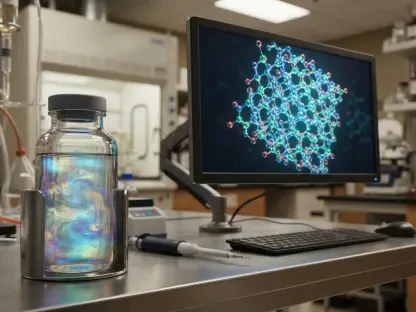
To address these systemic challenges, researchers at AIST developed a novel sensing platform that leverages synthetic polymer probes embedded with aggregation-induced emission dyes. Unlike traditional fluorescent dyes that dim when they clump together, these specialized molecules actually glow more intensely as they interact with the various chemical components of the culture media. When these probes are introduced to a sample, they bind to the mixture’s proteins, vitamins, and other nutrients, creating a complex, multidimensional visual signature. This process effectively generates a unique chemical fingerprint for every batch of media, capturing the overall state of the environment without the need to isolate or identify every individual molecule present. This shift from identifying specific parts to observing the whole system represents a major leap forward in analytical chemistry, allowing for a much faster assessment of material integrity and consistency.
The true breakthrough of this technology lies in its integration with modern machine learning algorithms and advanced statistical data analysis. By training the system on known high-quality samples, the researchers were able to create a digital benchmark that can be used to evaluate any new incoming lot of material. The sensors proved capable of detecting minute differences between production batches that would otherwise be invisible to traditional testing methods, such as the subtle chemical degradation caused by improper storage or temperature fluctuations. Furthermore, the platform demonstrated an impressive ability to identify the geographic origin of natural supplements, providing an extra layer of security against counterfeit or substandard raw materials. This data-driven approach allows for the creation of a digital identity for every batch, facilitating better record-keeping and regulatory compliance across the entire 2026-2028 production cycle for pharmaceutical companies.
Strategic Shifts Toward Data Driven Biomanufacturing
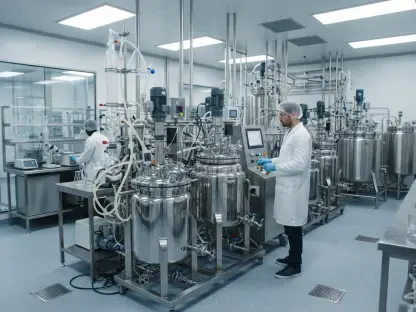
This development aligns perfectly with the global movement toward more objective and automated testing protocols, frequently categorized under the banner of Process Analytical Technology. As the world scales up the production of regenerative therapies and sustainable protein sources, the industry requires a reliable fail-fast mechanism to verify raw materials at the very beginning of the pipeline. By implementing a non-biological check that takes only a few minutes, manufacturers can significantly reduce the risk of wasting expensive cell lines on sub-optimal growth environments. This rapid verification step not only lowers operational costs but also improves the overall safety of the final product by ensuring that the chemical environment remains within strict physiological parameters throughout the duration of the culture process. The ability to perform these checks on-site without specialized chemical equipment makes the technology highly accessible.
The research conducted by the AIST team provided a clear path forward for facilities looking to modernize their quality assurance frameworks through actionable strategies. The study demonstrated that incorporating high-precision fluorescence sensors into the early stages of material intake allowed organizations to catch impurities before they impacted the bioreactor phase. Leaders in the sector utilized these findings to move away from subjective observations and toward a model defined by rigid chemical signatures and digital verification. This transition was essential for the support of the next generation of automated biofoundries, where digital inputs managed large-scale production safely and efficiently. By establishing these fingerprints as a prerequisite for production, the industry solidified a more resilient supply chain that remained capable of meeting global health goals. The shift toward such objective tools ensured that biomanufacturing became more predictable, scalable, and cost-effective for all stakeholders involved.