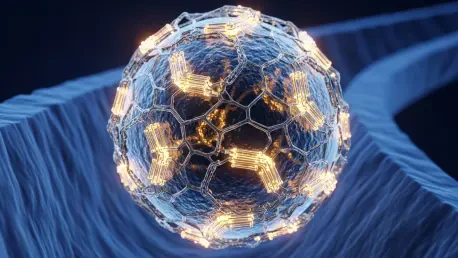

The discovery that activated T cells deploy specialized genetic messengers represents one of the most transformative shifts in our understanding of how the human immune system orchestrates its counter-offensives against aggressive malignancies. This breakthrough centers on extracellular vesicles (EVs), once dismissed as the cellular equivalent of waste disposal, but now recognized as sophisticated vehicles for biological communication. As the field of cancer immunology moves deeper into the possibilities of 2026, the focus has shifted from merely observing immune reactions to engineering the very messages that cells exchange. This review explores how T cell-derived EVs are redefining the boundaries of immunotherapy by functioning as autonomous units of genetic reprogramming.
Evolution and Fundamentals of T Cell-Derived Extracellular Vesicles
For decades, the scientific community viewed the secretion of vesicles as a primitive method for cells to shed damaged proteins and metabolic byproducts. However, the transition from this historical view to the current understanding of EVs as intercellular messengers has revolutionized molecular medicine. Unlike the vesicles secreted by tumor cells, which often carry signals to suppress the immune system, those derived from activated T cells are designed to amplify the body’s defensive response. This evolution in perspective has placed T cell-derived EVs at the forefront of the technological landscape, bridging the gap between cell-based therapies and molecular gene delivery.
The core principle behind this technology involves the natural ability of T cells to package specific bioactive molecules into lipid-bound spheres that can travel through the bloodstream and lymphatic system. These vesicles serve as a decentralized extension of the T cell’s functional capacity, allowing a single immune cell to influence dozens of distant targets simultaneously. This represents a significant departure from traditional models of immune interaction, which prioritized direct cell-to-cell contact. By understanding the composition of these vesicles, researchers have unlocked a new method for stimulating immunity that does not rely on the physical presence of the T cell itself.
Core Mechanistic Features and Biological Composition
Functional Genomic Cargo and DNA Payload
The primary feature that distinguishes T cell-derived EVs from other classes of vesicles is their unique enrichment with functional DNA and immune-related genes. While many vesicles carry RNA or proteins, these specific T cell messengers are packed with genetic material that encodes the machinery necessary for antigen processing. This cargo is not merely adrift within the vesicle; much of it is organized and localized on the surface, which allows for immediate interaction with the recipient cell’s receptors. This surface-associated localization ensures that the genetic information is protected from degradation while remaining highly accessible upon arrival at its destination.
The significance of this DNA payload lies in its ability to provide recipient cells with the “instructions” needed to engage with the immune system more effectively. For example, when a vesicle delivers its genetic material to an antigen-presenting cell, it can trigger the upregulation of signaling molecules that are crucial for T cell activation. This mechanism provides a localized boost of genetic information that is far more targeted than systemic gene therapies. It represents a precise biological intervention, where the T cell acts as a central hub, distributing critical updates to the rest of the immune network to ensure a coordinated response.
The Molecular Drill Enzyme System
Facilitating the successful delivery of this genetic payload is a specialized system of surface enzymes that act as a “molecular drill.” This technical feature is perhaps the most innovative aspect of the vesicle’s architecture, as it allows the vesicle to overcome the significant barrier of the nuclear membrane. Traditional delivery methods often see their cargo trapped in the cytoplasm or destroyed by lysosomes before they can reach the nucleus. In contrast, the molecular drill enables direct-to-nucleus delivery, ensuring that the DNA is deposited exactly where it can be transcribed and expressed.
This direct penetration allows for the efficient, transient expression of the genetic payload within the recipient cell. Because the delivery is so direct, the amount of DNA required to achieve a biological effect is significantly lower than what is typically needed for non-viral delivery platforms. The transient nature of this expression is actually a benefit in the context of immune modulation, as it allows for a powerful, temporary surge in activity without the long-term risks associated with permanent genomic integration. This enzyme-driven approach ensures that the vesicle’s message is not just delivered, but effectively enacted by the target cell.
Emerging Trends in Vesicular Communication and Systemic Homing
The trajectory of EV research is increasingly focused on the natural homing instincts that direct these vesicles toward specific biological hubs, such as the spleen and lymph nodes. Rather than dispersing randomly throughout the body, T cell-derived vesicles appear to follow chemical gradients that lead them to areas where immune cells congregate. This discovery has shifted the perspective on immune coordination, suggesting that the immune system uses vesicles as a sort of “early warning system” to prepare distant lymph nodes for an impending encounter with a pathogen or tumor.
Furthermore, the interaction between these vesicles and dendritic cells has revealed a sophisticated feedback loop. When vesicles arrive in the lymph nodes, they are preferentially captured by these professional antigen-presenting cells, which then use the delivered genetic information to improve their ability to prime new T cells. This realization is influencing the development of new therapeutic strategies that seek to exploit these natural migratory patterns. By understanding how vesicles navigate the body, scientists can better design treatments that hit their targets with minimal off-target effects, enhancing the overall efficiency of the systemic immune response.
Real-World Applications in Oncology and Beyond
Reversing Tumor Stealth and Immunological Invisibility
One of the most promising applications of this technology is its ability to transform “cold” tumors, which are invisible to the immune system, into “hot” tumors that are easily detected. Many malignant cells survive by shutting down their antigen-processing machinery, effectively hiding from the T cells that would otherwise destroy them. T cell-derived vesicles can reverse this process by delivering the DNA necessary to restore these markers. Once the tumor cells begin to express these antigens again, they are forced to reveal their presence, allowing the body’s natural defenses to engage and eliminate the malignancy.
This process essentially strips away the tumor’s “stealth” capabilities and creates a positive-feedback loop of immune activation. As more T cells are activated by the newly visible tumor, they release more vesicles, which in turn unmask more cancer cells. This cumulative effect has shown remarkable success in experimental models, proving that vesicles can act as a catalyst for a sustained and expanding immune offensive. This application represents a paradigm shift in oncology, where the goal is not just to kill the cancer directly, but to force the cancer to stop hiding from the immune system.
Advanced Platforms for Non-Viral Gene Delivery
Beyond their natural role in immunity, these vesicles are being developed as advanced platforms for non-viral gene delivery. Viral vectors, while effective, carry inherent risks of toxicity, inflammatory reactions, and unintended genomic mutations. T cell-derived vesicles offer a safer alternative because they are biocompatible and utilize natural mechanisms for nuclear entry. Notable implementations have already been seen in the treatment of glioblastoma and triple-negative breast cancer, where the vesicles were used to deliver therapeutic genes directly to the site of the disease, bypassing the blood-brain barrier and other physiological obstacles.
The modular nature of these vesicles allows researchers to load them with specific therapeutic payloads, ranging from small interfering RNAs to complex DNA sequences. In pancreatic cancer, for example, this approach has been used to deliver genes that sensitize tumor cells to chemotherapy, potentially increasing the effectiveness of existing treatments. This versatility makes T cell-derived EVs a powerful tool in the broader pharmaceutical arsenal, providing a delivery system that is as adaptable as it is efficient.
Challenges and Technical Hurdles in Clinical Translation
Despite the clear potential of this technology, several hurdles remain before it can be widely adopted in clinical settings. The most significant challenge is the complexity of large-scale, standardized production. Maintaining the precise composition of the DNA payload and the activity of the surface enzymes across different batches is technically demanding. Current manufacturing processes must be refined to ensure that every vesicle produced meets the rigorous quality standards required for human administration, a task that involves significant logistical and regulatory oversight.
Another technical limitation involves the transient nature of the DNA expression. While this is often a safety advantage, it means that multiple doses may be required to maintain a therapeutic effect over time. Ongoing development efforts are focused on optimizing the precision of systemic targeting to ensure that even small doses reach the intended site with high efficiency. Balancing the need for frequent administration with the potential for immune exhaustion or localized irritation is a critical consideration for researchers as they move toward human trials.
Future Outlook and Therapeutic Breakthroughs
The future of T cell-derived EV technology points toward the development of personalized “off-the-shelf” treatments that can be tailored to a patient’s specific immune profile. Advances in bioengineering are expected to allow for the creation of synthetic vesicles that mimic the natural homing and drilling capabilities of T cell messengers while carrying highly specialized therapeutic payloads. This could lead to a new generation of medicines that are manufactured in the lab but behave like the body’s own immune cells, offering a potent combination of safety and efficacy.
Looking further ahead, the long-term impact on global healthcare could be profound, particularly for diseases that have remained resistant to conventional therapies. The ability to reprogram cells in vivo through a non-viral, vesicle-mediated process opens doors for treating genetic disorders, autoimmune diseases, and chronic infections. As the technology matures, the integration of vesicle-based delivery systems into standard care could reduce the reliance on more invasive treatments, moving the medical field toward a future where the body’s own communication pathways are the primary tools for healing.
Summary and Assessment of T Cell-Derived EV Technology
The investigation into T cell-derived extracellular vesicles provided a definitive shift in how the scientific community viewed immune functionality. It was concluded that these vesicles did not merely exist as cellular debris but functioned as a sophisticated, decentralized network for genetic exchange. This discovery clarified the existence of a positive-feedback loop in immune activation, where T cells utilized genetic messengers to amplify the body’s defensive posture. The overall assessment of the technology indicated that its core mechanistic features, particularly the molecular drill and the functional DNA payload, offered a level of precision that surpassed many existing gene delivery methods.
In summary, the transition from theoretical research to real-world applications in oncology demonstrated the immense potential of this platform. The ability to reverse tumor stealth and provide a non-viral alternative for gene therapy represented a major milestone in biotechnology. While technical hurdles regarding production scale and expression longevity were acknowledged, the progress made by 2026 suggested that these challenges were surmountable. Ultimately, T cell-derived EV technology stood as a cornerstone of modern molecular medicine, providing a blueprint for future therapeutic breakthroughs that harnessed the natural intelligence of the immune system.