
The publication of Volume 36 of SLAS Technology represents a watershed moment for the global scientific community, effectively bridging the gap between theoretical engineering and practical biological application. This latest volume serves as a comprehensive roadmap for the next era of intelligent research, moving beyond simple automation to embrace a truly autonomous and data-driven philosophy. By integrating diverse disciplines such as machine learning, advanced robotics, and systems genetics, the collection of research provides a unified vision of how laboratories must evolve to remain competitive. The content emphasizes that the modern laboratory is no longer just a physical space for manual experimentation but has become a sophisticated digital ecosystem where software and hardware operate in a symbiotic relationship. This shift is essential for addressing the increasing complexity of biological questions and the urgent need for faster, more reliable therapeutic development in an era defined by rapid technological acceleration.
Intelligent Integration: The Modern Laboratory Framework
Developing Autonomous Laboratory Ecosystems: A New Standard
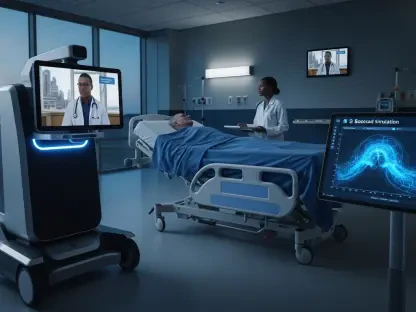
The primary focus of recent developments in the field involves the transition from isolated automated tasks to a fully integrated, intelligent laboratory ecosystem. This evolution requires a fundamental shift in how researchers perceive the relationship between physical hardware and digital control systems. Instead of merely deploying robots to perform repetitive motions, modern institutions are implementing sophisticated software layers that allow machines to make real-time decisions based on experimental data. This approach significantly reduces the human bottleneck in the research process, allowing scientists to focus on high-level experimental design rather than the minutiae of liquid handling or plate movement. By creating a cohesive environment where every instrument communicates seamlessly with a central intelligence, laboratories can achieve levels of throughput and reproducibility that were previously considered unattainable in traditional settings.
Building on this foundation, the integration of artificial intelligence into the laboratory workflow is facilitating a more direct path from initial discovery to clinical application. This “lab-to-clinic” pipeline is being optimized through the use of predictive modeling and automated feedback loops that refine experimental parameters without constant human intervention. For instance, as research progresses from 2026 to 2028, the industry expects a surge in autonomous systems capable of conducting complex multi-step protocols with minimal supervision. This transition is not merely about increasing speed; it is about enhancing the quality of the data generated. By removing the variability inherent in manual processes, these intelligent ecosystems ensure that every result is backed by a rigorous, standardized digital record. Consequently, the pharmaceutical and biotherapeutic sectors are better positioned to translate laboratory findings into effective treatments for patients worldwide.
Establishing Connectivity: The Role of SiLA2 Protocols
Standardization has emerged as a critical pillar for the future of laboratory automation, particularly through the widespread adoption of the SiLA2 communication protocol. In the past, researchers were often hindered by proprietary “black-box” systems that refused to communicate with hardware from different manufacturers, creating significant inefficiencies in the workflow. The move toward open-source frameworks and standardized protocols is dismantling these barriers, allowing for a more modular and flexible laboratory setup. This interoperability is essential for laboratories that need to scale their operations quickly or integrate new technologies as they emerge. By utilizing SiLA2, facilities can ensure that their digital infrastructure remains future-proof, enabling different instruments to share data and commands in a unified language that simplifies the management of complex, multi-vendor automated systems.
Furthermore, the democratization of these standardized protocols is empowering smaller biotechnology firms and academic institutions to implement sophisticated automation that was once the exclusive domain of large industrial giants. A modular digital infrastructure allows for the control of intricate processes, such as continuous chromatography for protein purification, using relatively inexpensive and accessible components. This shift is fostering a more inclusive scientific landscape where innovation is driven by the quality of the ideas rather than the size of the budget. As more organizations adopt these open standards, the collective ability to solve global health challenges increases. The emphasis on connectivity ensures that data generated in one part of the world can be easily understood and replicated in another, reinforcing the principles of transparency and reproducibility that are foundational to the modern scientific method in the current decade.
Technological Frontiers: From Spectrometry to Synthetic Biology
High-Throughput Analysis: Mass Spectrometry Evolution
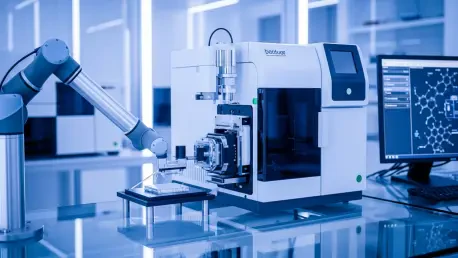
The transformative influence of mass spectrometry on high-throughput experimentation is a dominant theme in current laboratory research. Traditionally, mass spectrometry was viewed as a complex, data-heavy technique that required significant manual oversight and specialized expertise to operate effectively. However, the current trend involves pairing this powerful analytical tool with “direct-to-biology” workflows, allowing for the simultaneous analysis of thousands of chemical reactions and biological assays. This integration is particularly valuable in the early stages of drug discovery, where the ability to rapidly identify promising compounds can save years of research time. While technical obstacles such as matrix effects and massive data management requirements persist, the application of artificial intelligence is effectively streamlining these pipelines, making high-resolution molecular analysis a standard component of automated high-throughput screening.
The ongoing refinement of these workflows is also addressing the critical need for precision across various scales of liquid handling. Accurate volume measurement is foundational for maintaining the integrity of high-throughput experiments, especially when dealing with the minute quantities required for picoliter-scale assays. Researchers are now utilizing advanced sensors and automated calibration routines to ensure that every sample is handled with the utmost consistency. This level of precision is not only vital for internal research quality but also for meeting increasingly stringent regulatory standards in clinical environments. As the industry moves forward, the synergy between high-sensitivity detection methods and precise robotic handling will continue to redefine the boundaries of what is possible in molecular biology. This allows for a deeper understanding of cellular processes and the development of more targeted, effective therapies for a wide range of complex diseases.
Democratizing Access: Open-Source and Low-Cost Innovation
A significant movement toward the democratization of technology is evident in the development of low-cost, open-source hardware and software solutions. For example, the creation of media dispensing systems based on affordable CNC technology demonstrates that high-level automation does not always require a massive capital investment. By developing systems at a fraction of the cost of commercial alternatives, researchers are proving that specialized tools can be made accessible to a broader range of the scientific community. This trend toward affordability is essential for fostering innovation in developing regions and at smaller research institutions. These cost-effective solutions do not sacrifice quality; instead, they utilize clever engineering and standardized components to achieve performance levels that rival traditional, high-priced laboratory equipment, thereby leveling the playing field for global scientific advancement.
In addition to hardware, the democratization of machine learning is being driven by the availability of open, well-curated experimental datasets. Initiatives that challenge the community to predict the spectral properties of compounds illustrate the power of collaborative data science. When researchers share their findings and the underlying data, they provide the necessary fuel for training more accurate and robust predictive models. This collaborative environment encourages the development of advanced algorithms that can identify therapeutic targets with unprecedented speed. By making these computational tools available to a wider audience, the scientific community ensures that the benefits of artificial intelligence are not concentrated in a few hands. This open-access philosophy is accelerating the pace of discovery and ensuring that the next generation of life-saving treatments is developed through a transparent and inclusive process that prioritizes public health over proprietary restrictions.
Navigating the Evolution of Intelligent Life Sciences
The publication of Volume 36 established a definitive framework for the future of laboratory research by emphasizing the necessity of intelligent connectivity and standardized protocols. The primary findings suggested that the successful integration of robotics and artificial intelligence effectively eliminated the human bottleneck in both data analysis and physical experimentation. This shift allowed for a more agile and responsive scientific environment, where discoveries were made with greater precision and at a significantly lower cost. The volume demonstrated that the democratization of technology through open-source hardware and shared datasets was not just a secondary trend but a fundamental requirement for global progress. These advancements provided the infrastructure needed for more complex research areas, such as systems genetics and personalized medicine, to flourish in an increasingly digital world.
Moving forward, stakeholders in the life sciences sector should prioritized the adoption of interoperable standards like SiLA2 to ensure long-term scalability and collaboration. It was clear that organizations that embraced modular and flexible automation strategies were better positioned to navigate the rapid changes in the industry. Furthermore, the focus on extending human healthspan through AI-driven diagnostics and senolytic therapies required a commitment to ethical and transparent biological research. The collective insights from the volume pointed toward a future where the laboratory was an autonomous partner in the scientific process, capable of self-optimization and continuous learning. By implementing these actionable strategies, the scientific community prepared itself for a decade of innovation that promised to transform the fundamental understanding of biology and the delivery of healthcare on a global scale.