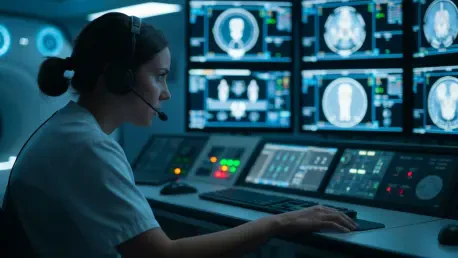

The rapid expansion of remote technologies into medicine often raises valid concerns about the loss of the human touch, but a groundbreaking shift in Magnetic Resonance Imaging (MRI) is challenging this narrative by demonstrating how distance can paradoxically lead to a more focused, safer, and equitable patient experience. A comprehensive analysis spearheaded by the American Board of Magnetic Resonance Safety is reframing the conversation around remote scanning, moving it from a potential liability to a significant enhancement in care. This new model is not about replacing skilled professionals but about optimizing their expertise, ensuring that every patient, regardless of location, receives the highest standard of imaging guided by an expert’s undivided attention. By meticulously redesigning the workflow and prioritizing safety from the ground up, remote MRI is poised to solve long-standing issues of access and quality in medical diagnostics.
A New Paradigm for Patient Safety
Redefining the Technologist’s Role
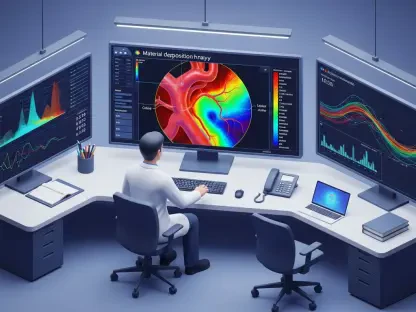
The successful implementation of remote MRI hinges on a complete re-evaluation of the traditional technologist’s duties, transforming a single-person responsibility into a collaborative, specialized partnership. Following extensive research, which included interviews with hundreds of MRI technologists and their supervisors, a committee established a consensus list of 22 distinct responsibilities critical to a safe and effective scan. The innovative remote model thoughtfully divides these tasks between two key individuals: a highly experienced technologist operating from a remote command center and a trained on-site assistant. This division of labor is not arbitrary; it strategically assigns duties based on location and required expertise. The on-site assistant manages physical patient interaction, positioning, and immediate environmental safety checks, while the remote expert assumes control of the complex imaging console, protocol selection, and real-time image quality assessment. This shared-duty framework ensures that every one of the 22 critical tasks is accounted for, creating a system of checks and balances that enhances procedural oversight.
The Power of Undivided Attention
By separating the complex cognitive tasks of the scan from the physical demands of the patient environment, the remote MRI model creates an environment of profound focus that directly translates to heightened patient safety. In a conventional setting, a solo technologist is constantly multitasking, their attention fragmented between operating sophisticated imaging equipment, responding to patient needs, answering facility phones, and addressing other logistical interruptions. This environment inherently carries the risk of distraction at a critical moment. The remote model eliminates this cognitive burden for the expert technologist. Freed from on-site disruptions, the remote specialist can dedicate their full concentration to monitoring the patient’s physiological status, optimizing intricate scan parameters, and ensuring the diagnostic quality of every image acquired. This focused oversight is a powerful safety buffer, as the expert is better positioned to notice subtle changes or potential issues that a distracted on-site operator might miss, effectively assigning more dedicated human oversight to the procedure than ever before.
Expanding the Frontiers of Care
Bridging the Geographical Divide
Beyond its safety benefits, remote MRI technology stands as a powerful force for advancing health equity by dismantling geographical barriers that have long dictated the quality of care available to patients. This innovation effectively “democratizes access” to a pool of specialized talent that was previously concentrated in major metropolitan and academic medical centers. Patients in rural or underserved communities often face the challenge of accessing technologists with the specific, high-level skills required for complex procedures such as fetal, cardiac, or advanced neuroimaging MRIs. Local facilities may lack the personnel with the requisite training and experience to perform these scans optimally. Remote technology bridges this gap, allowing a leading expert in pediatric cardiac MRI in one city to seamlessly guide a scan for a child a thousand miles away. This ensures that a patient’s diagnosis is not limited by their zip code, providing a uniform standard of excellence and making top-tier diagnostic expertise a shared, accessible resource for a much broader population.
Building a Foundation of Trust
The long-term viability and acceptance of remote MRI are fundamentally dependent on the proactive and rigorous implementation of safety-first principles. The consensus from safety experts is clear: for this technology to be adopted responsibly, safeguards and standardized protocols cannot be afterthoughts but must be woven into the very fabric of its development and deployment. This involves creating meticulously designed, safety-driven workflows that anticipate potential issues and build in robust buffers and redundancies. Every aspect, from communication protocols between the remote technologist and the on-site assistant to emergency procedures and data security, must be standardized across all participating facilities. This insistence on establishing an unwavering foundation of safety from the outset is crucial for building trust among clinicians, patients, and regulatory bodies. By demonstrating that the system is not only effective but also inherently safe by design, the medical community can confidently embrace this technological leap forward.
The Path Forward
The successful integration of remote MRI technology represented a significant shift in medical imaging, proving that thoughtful innovation could simultaneously enhance patient safety and broaden healthcare access. The framework, built upon a collaborative model that divided responsibilities, allowed for unprecedented focus from expert technologists, directly improving procedural oversight. Furthermore, its ability to connect specialized talent with underserved populations helped level the playing field, ensuring that geography no longer dictated the quality of diagnostic care. The entire initiative underscored a critical lesson: the responsible advancement of medical technology was achieved not by merely adopting new tools, but by fundamentally redesigning clinical workflows with safety and equity as the guiding principles from the very beginning.