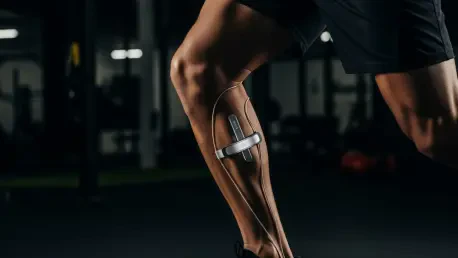

The convergence of human physiology and digital architecture has long been the holy grail of neurotechnology, yet the path to commercializing these systems is often blocked by regulatory hurdles and technical limitations that prevent seamless integration into daily life. Control Bionics Limited, an Australian innovator, recently shattered one of these primary barriers by successfully registering its NeuroStrip platform with the U.S. Food and Drug Administration, marking a pivotal moment in the accessibility of high-fidelity neural interfaces. This regulatory milestone represents more than just a procedural victory; it signifies the transition of sophisticated wearable sensors from niche assistive devices into the mainstream medical and performance markets across the globe. By aligning with the rigorous standards of the American medical device framework, the company has effectively opened a gateway to one of the most sophisticated healthcare economies in the world, ensuring that its technology can be evaluated and adopted by premier clinical institutions. This development serves as a catalyst for a new wave of non-invasive monitoring solutions that prioritize both user comfort and clinical accuracy, setting a high bar for competitors in the burgeoning field of electromyography-based wearables. Moreover, the move validates years of research and development, providing a clear signal to stakeholders that the firm is ready to scale its operations beyond its original core competencies in assistive communication.
Decoding the Evolution of Neural Signal Processing
The technological bedrock of the NeuroStrip platform is the culmination of over 25 years of intensive neural-signal research, aimed at perfecting the detection of the body’s most subtle electrical outputs. At its core, the device utilizes surface electromyography to capture the minute electrical signals that travel through muscles whenever a person attempts to move or even thinks about moving. Unlike traditional diagnostic tools that often require bulky machinery or invasive needle electrodes, this wearable is designed to sit comfortably on the skin’s surface, acting as a high-fidelity bridge between human intention and digital execution. This non-invasive approach is crucial for long-term monitoring, as it eliminates the risk of infection or discomfort associated with implanted sensors while maintaining a level of precision that was previously only available in specialized laboratory settings. By capturing raw muscle data with such high sensitivity, the system provides a crystal-clear picture of how a person’s body is functioning in real-time, allowing for a deep understanding of motor control and muscle health that is both objective and repeatable.
Beyond the hardware itself, the true innovation lies in the sophisticated algorithms that interpret these electrical impulses and transform them into meaningful, actionable information. Instead of merely displaying a confusing stream of raw numbers, the platform processes the data to provide insights into muscle activation patterns, fatigue levels, and movement efficiency. This level of refinement is what allows the device to be categorized as medical-grade, ensuring that the data provided is reliable enough for doctors to use in making clinical decisions or for athletes to use in optimizing their physical output. The ability to turn small muscle twitches into digital commands or diagnostic metrics represents a significant leap forward in human-computer interaction, as it empowers users with a level of control that feels natural and intuitive. This processing capability ensures that the technology remains versatile, capable of serving a wide range of users from those with severe physical impairments to elite performers seeking a competitive edge through physiological optimization.
Strategic Impact: Navigating the American Regulatory Framework
Securing a formal listing with the U.S. Food and Drug Administration provides a layer of professional legitimacy that is absolutely essential for any technology seeking to enter advanced clinical environments. While the company already possessed the ability to market the device for general sports and fitness applications, this official registration serves as a critical seal of quality that simplifies the procurement process for hospitals and large-scale healthcare providers. In the American market, administrative hurdles can often prevent the adoption of innovative tools, but having a verified presence in the federal database removes these obstacles, allowing for more direct engagement with medical procurement officers. This milestone signals to the industry that the device meets the stringent safety and performance standards expected of professional medical equipment, thereby fostering a higher degree of trust among practitioners who rely on accurate data to treat their patients. It marks the transition from being a promising experimental tool to becoming a recognized component of the modern medical toolkit, ready for deployment in diverse healthcare settings across the United States.
It is important to understand the specific nature of this regulatory success, as it establishes the legal and professional foundation for deeper integration into the healthcare system. The registration confirms that the device is officially recognized within the appropriate regulatory category for wearable sensors, which is the standard procedure for non-invasive diagnostic and monitoring tools. While this is distinct from the multi-year clinical trial process required for high-risk surgical implants, it provides the necessary standing to begin large-scale implementation in rehabilitation clinics and research hospitals. This move is a fundamental part of the company’s broader business strategy to pivot from a niche provider of assistive tools to a comprehensive platform for the entire medical technology industry. By checking this regulatory box, the firm has effectively de-risked its expansion into the U.S. market, making it a much more attractive partner for insurance companies and healthcare networks that demand rigorous compliance before authorizing the use of new technologies for their members and patients.
Transforming Rehabilitation and Athletic Performance Paradigms
In the high-stakes world of professional sports and elite human performance, the ability to monitor muscle fatigue and movement efficiency with medical-grade precision offers a transformative advantage. The NeuroStrip allows athletes and their coaching staffs to move beyond the generalized data provided by standard consumer fitness trackers, offering instead a granular view of muscular health and recovery. By identifying subtle changes in muscle activation that might signal the onset of overtraining or a potential injury, the platform enables proactive interventions that can extend a career and optimize training schedules. This level of detail ensures that every exercise and recovery session is backed by objective data, reducing the reliance on subjective feelings and guesswork that often lead to sub-optimal performance. As sports science continues to evolve, the integration of such high-fidelity wearables becomes a necessity for teams looking to maintain their edge in an increasingly data-driven competitive landscape, where even a one-percent improvement in efficiency can be the difference between victory and defeat.
For the clinical rehabilitation sector, the device introduces a new era of objective measurement for patients recovering from neurological events such as strokes or spinal cord injuries. Major hospital systems and specialized rehabilitation centers often require devices to be officially registered before they can be purchased for patient care, and meeting this requirement allows for the direct application of the technology in therapy sessions. By providing real-time feedback on muscle activity, the platform helps therapists and patients see progress that might otherwise be invisible to the naked eye, such as the very first signs of re-activated neural pathways in a paralyzed limb. This objective data is invaluable for adjusting treatment plans and proving the efficacy of specific rehabilitation techniques to both patients and insurance providers. Furthermore, the ability to monitor patients remotely while they use the device at home extends the reach of professional care, allowing for continuous support during the long and difficult road to recovery. This shift toward data-supported therapy ensures that rehabilitation is personalized, efficient, and grounded in the actual physiological responses of the individual patient.
Collaborative Potential: Research and Advanced Human Interfaces
The academic and research communities stand to benefit significantly from this regulatory milestone, as universities and laboratories require validated, recognized tools to ensure the integrity of their scientific studies. Because the platform is now officially recognized by a major regulatory body, researchers can use it with confidence in clinical trials and longitudinal studies that are intended for publication in peer-reviewed journals. This official status increases the likelihood that the data gathered will be accepted by the broader scientific community, potentially leading to a standardized model for recording and analyzing neural signals across different institutions. This opens the door for a data-as-a-service model, where the company can provide high-quality physiological insights to third-party developers and scientists who are looking to build their own applications or conduct deep-dives into human motor control. Such collaborations are essential for accelerating the pace of innovation in neurotechnology, as they allow for a collective pooling of knowledge and resources centered around a reliable hardware foundation.
Looking toward the broader landscape of technology, the platform possesses immense potential as a sophisticated human-computer interface that can bridge the gap between biological intent and robotic action. It has the capability to translate the smallest muscle twitches into complex digital commands, a feature that is incredibly useful for the robotics and prosthetics industries where traditional control methods may be insufficient. Having an established regulatory foundation makes the company a much more attractive partner for other technology giants looking to build next-generation devices, from exoskeleton suits to advanced prosthetic limbs that feel like a natural part of the user’s body. By providing a reliable way to capture and interpret neural signals, the platform serves as a foundational layer for the future of human augmentation and assistive robotics. This potential for cross-industry integration ensures that the technology will remain relevant far beyond the medical field, influencing how humans interact with the digital and mechanical worlds in their everyday lives, from industrial work to personal computing.
Global Expansion and the Trajectory of Market Confidence
While the United States remains a primary focus for growth, the company is actively pursuing a strategy of global expansion by seeking similar approvals in other major regions including Australia, Europe, and the United Kingdom. Navigating these diverse regulatory landscapes is a complex but necessary task to ensure that the technology is available to healthcare systems and consumers worldwide. Each successful application further solidifies the firm’s position as a leader in the neurotechnology space, creating a standardized global presence that allows for easier cross-border collaboration and sales. By aligning its technology with international standards, the company ensures that its platform can be used by global research initiatives and multinational healthcare providers, creating a unified ecosystem for neural signal monitoring. This proactive approach to international compliance demonstrates a long-term commitment to becoming a ubiquitous name in the medical device industry, rather than remaining a local or niche player in the Australian market.
Financial markets and the investor community have responded with notable enthusiasm to these strategic developments, reflecting growing confidence in the brand’s ability to scale its technology successfully. The steady growth of the company’s stock price over the past year suggests that stakeholders recognize the value of moving from a specialized assistive tool to a broad-market medical platform. By systematically removing regulatory and technical barriers, the organization has cleared the way for significant commercial success and high-volume sales in multiple high-value sectors. Investors are increasingly looking for companies that not only possess innovative technology but also have a clear, realistic path to market, and the recent federal registration provides exactly that. This financial stability provides the resources necessary for continued research and development, ensuring that the next generation of neural interfaces will be even more capable and accessible. The combination of technical excellence and strategic regulatory maneuvering has positioned the firm as a key player to watch in the rapidly evolving intersection of healthcare, performance, and digital technology.
The successful registration of the NeuroStrip platform established a new standard for how wearable neural interfaces could be integrated into formal healthcare settings without the complications of invasive surgery. Medical professionals and technology developers identified the immediate need for standardized data protocols to ensure that the information gathered by these sensors could be seamlessly shared across different electronic health record systems. By prioritizing transparency in their regulatory filings, the organization fostered a higher level of trust among early adopters in both the clinical and athletic sectors. Moving forward, the industry began to shift toward a model where physiological data served as the primary driver for personalized treatment plans, necessitating a robust infrastructure for data security and real-time processing. This milestone effectively dismantled the technical and bureaucratic barriers that previously limited the scope of electromyography, allowing for a broader exploration of human-computer interaction. Organizations that followed this lead discovered that the key to long-term success lay in the ability to balance medical-grade precision with the comfort required for daily, long-term use by patients and athletes alike.