


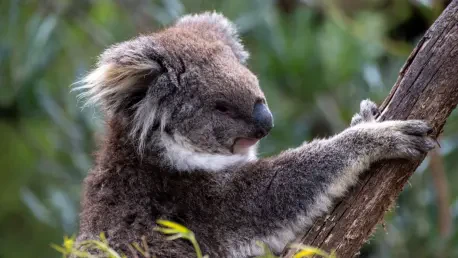

While the iconic koala often symbolizes the modern struggle against habitat loss and human encroachment, recent genomic evidence suggests their numbers were plummeting long before the first people set foot on Australian soil. Traditionally, the narrative of Australian biodiversity loss has centered on the arrival of humans roughly sixty thousand years ago, an event frequently linked to the extinction of various megafauna species. However, sophisticated genomic analysis conducted in 2026 has shifted this perspective, revealing that koala populations began a significant downward trend during the Pleistocene epoch. By examining the DNA of current populations alongside rare museum specimens, scientists have identified a massive reduction in genetic diversity that occurred during a period of intense environmental change. This discovery challenges the simplistic view that prehistoric human activity was the sole driver of wildlife decline, suggesting instead that deep-seated climatic shifts played a much more fundamental role in shaping the evolutionary trajectory of Australia’s unique marsupials.
Investigating Deep Temporal Genetic Trends
Molecular Insights: Decoding the Ancient Record
To reconstruct the demographic history of the species, researchers utilized whole-genome sequencing to map the ancestry of koalas across multiple bioregions. This process involved analyzing single nucleotide polymorphisms and mitochondrial DNA to pinpoint exactly when the species experienced its most severe population bottlenecks. The methodology provided a high-resolution window into the past, allowing geneticists to see through the “noise” of more recent human-induced impacts. What they found was a clear signature of decline that occurred between 120,000 and 200,000 years ago, a timeframe that significantly predates any archaeological evidence of human presence on the continent. These molecular techniques proved that the genetic health of the koala was already compromised long before the introduction of modern threats such as urban development or invasive predators. The level of detail achieved through these 2026 sequencing protocols has fundamentally altered the baseline for understanding what a healthy ancient population actually looked like.
Genetic Bottlenecks: Identifying Prehistoric Population Crunches
The identification of these prehistoric bottlenecks is crucial because it highlights the extreme sensitivity of specialized species to gradual environmental pressures. When a population shrinks to a fraction of its original size, it loses the genetic variance necessary to adapt to new diseases or sudden shifts in food availability. The genomic data indicated that ancient koala populations were once far more widespread and genetically diverse than they are today, but their range began to fragment as the landscape became increasingly inhospitable. By tracing these mutations back through the centuries, the study demonstrated that the species survived on the brink for millennia, lingering in isolated pockets of suitable habitat that acted as evolutionary lifeboats. This vulnerability was not a sudden development but a long-term consequence of the Australian continent’s changing geography. Understanding these deep-time bottlenecks allows conservationists to better interpret the modern genetic landscape, providing a clearer context for the low diversity seen in current southern populations compared to their northern counterparts.
Ecological Drivers of Evolutionary Decline
Climate Instability: The Shift Toward Arid Landscapes
The primary driver behind this early population collapse was likely the gradual aridification of Australia, a process that transformed much of the continent from lush rainforests into the dry scrublands we recognize today. As the climate became more erratic and moisture levels dropped, the vast eucalyptus forests that koalas depend on for both hydration and nutrition began to recede. Unlike generalist species that can switch their diet based on availability, the koala’s extreme specialization made it uniquely susceptible to these floral transitions. The researchers correlated the genomic decline with geological records of shifting dust cycles and pollen deposits, finding a near-perfect match between the loss of forest density and the reduction in koala numbers. This ecological instability created a feedback loop where smaller, more isolated populations were more likely to suffer from localized extinctions. The study serves as a stark reminder that even without the intervention of human-induced climate change, the natural cycles of the planet are capable of pushing a highly specialized species toward the edge of survival through the sheer force of habitat fragmentation.
Conservation Strategies: Lessons from the Pleistocene
The results of this comprehensive genomic survey mandated a significant shift in how modern conservation resources were allocated. Organizations recognized that protecting existing habitats was no longer sufficient and that restoring ancient migratory corridors was essential for long-term viability. Scientific advisors emphasized that the focus should remain on identifying and preserving micro-refugia—pockets of the landscape that historically maintained stable moisture levels during previous periods of extreme drought. Technologists implemented advanced soil sensors and climate models to predict which regions would provide the best sanctuary for the species as continental drying continued into the late 2020s. Furthermore, the data encouraged the development of more robust genetic rescue programs, where individuals from more diverse northern populations were used to supplement the limited gene pools of southern groups. By integrating these deep-time insights into current wildlife management, policymakers established a more resilient framework that accounted for both ancient environmental vulnerabilities and modern human-induced stressors, ensuring that the mistakes of the past informed the successes of the future.







