
The strategic deployment of the ADME-One™ platform represents a fundamental restructuring of the traditional pharmaceutical pipeline, which has long been haunted by the notorious “valley of death” where promising chemical leads frequently vanish during clinical trials due to unforeseen metabolic failures. This persistent obstacle has forced a radical reimagining of the drug discovery lifecycle, leading to the strategic launch of the ADME-One™ platform. By synthesizing the core strengths of Ginkgo Datapoints, Tangible Scientific, and Inductive Bio, this integrated solution addresses the critical bottlenecks in absorption, distribution, metabolism, and excretion profiling. The primary objective is to shift the standard paradigm from a linear, slow-moving sequence to a dynamic, automated ecosystem that prioritizes data-driven insights from the very first day of research. By dismantling the silos that separated laboratory execution from computational analysis, the initiative offers a streamlined path for developers to refine their compounds with unprecedented precision.
Prioritizing High-Stakes Evaluation Through Fail-Fast Philosophies
The “fail fast” philosophy serves as the foundational logic behind this new approach, targeting the most expensive errors in modern medicine development. Historically, comprehensive testing for permeability and metabolic stability was deferred until the later stages of a project because the associated costs and technical complexities were deemed too high for early-stage exploration. This delay often resulted in scientists spending years optimizing a molecule’s binding affinity only to discover later that the body could not absorb it or metabolized it too quickly to be effective. ADME-One™ disrupts this inefficient cycle by pulling these critical assessments into the initial screening phases. By identifying structural flaws or poor pharmacokinetic properties before significant capital is committed, the platform ensures that only the most viable candidates move forward. This proactive vetting process reduces the likelihood of late-stage attrition, which has been the leading cause of wasted resources.
Beyond simply saving money, this shift toward early-stage profiling allows medicinal chemists to make more informed decisions about molecular architecture from the outset. When a researcher understands the metabolic liabilities of a chemical series in real-time, they can modify the structure to enhance stability without compromising the desired therapeutic effect. This creates a feedback loop where biological data informs chemical synthesis in a way that was previously impossible under fragmented traditional models. The platform provides a comprehensive Tier 1 ADME panel that includes microsomal stability, solubility assays, and cell permeability tests, all performed within a centralized framework. This level of transparency gives biotech firms a clearer view of their compound’s future performance in human subjects. Consequently, the transition to early profiling is not just an administrative change; it is a fundamental shift in how small molecules are engineered for survival in biological environments.
Integrating Robotic High-Throughput Facilities With Predictive AI
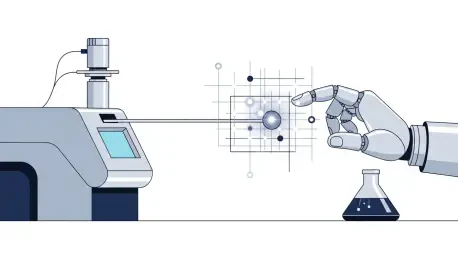
The technical efficacy of the platform depends on the seamless integration of high-throughput robotics and standardized data generation. Ginkgo Datapoints utilizes its extensive facility network to automate routine laboratory tasks, which effectively removes the variability and human error inherent in manual bench work. This automation produces a steady stream of “AI-ready” data, meaning every measurement is recorded in a consistent format that algorithms can digest without extensive cleaning. By standardizing these outputs, the platform creates a robust foundation for predictive modeling that improves over time. This high-velocity data generation allows the system to process thousands of compounds simultaneously, matching the speed of modern digital drug design with physical validation. In an era where computational power often outpaces laboratory output, this robotic infrastructure ensures that experimental results are never the bottleneck in a discovery program, providing a reliable bridge.
Complementing the physical side of the operation, Inductive Bio employs its proprietary Compass platform to translate raw experimental data into sophisticated human pharmacokinetic projections. This computational layer goes beyond simple data points, offering scientists a predictive look at how a drug will behave within a living patient’s system. While the robots handle the physical assays, the AI layers interpret the results to forecast clearance rates and bioavailability. At the same time, Tangible Scientific manages the logistical intricacies of sample inventory and global tracking. This coordination ensures that the physical movement of chemical libraries is as efficient as the digital processing of their data. By automating both the laboratory work and the administrative management of samples, the platform frees senior scientists to focus on high-level strategy and creative problem-solving. This dual approach transforms the laboratory from a series of manual tasks into a high-performance engine for pharmacological insight.
Navigating Geopolitical Shifts and the Future of Reshored Discovery
The move toward an integrated discovery platform is heavily influenced by current economic shifts and a growing focus on data sovereignty within the United States. Recent legislative developments, such as the BIOSECURE Act, have placed a premium on domestic research solutions that can guarantee the security of sensitive intellectual property. ADME-One™ addresses these concerns by providing a fully U.S.-based operational chain, ensuring that proprietary chemical structures and biological data remain within a controlled regulatory environment. This localized approach mitigates the geopolitical risks associated with international outsourcing, which has become a primary concern for pharmaceutical executives navigating a complex global landscape. By reshoring these critical services, the platform offers a secure alternative that combines high-end technological capabilities with the peace of mind required for project stability. This security-first mindset is becoming a non-negotiable requirement for biotech companies.
Organizations that adopted these automated workflows moved toward a future where drug discovery was less about trial and error and more about precise engineering. The decision to integrate AI directly with physical lab loops represented a major shift in how the industry approached chemical optimization. Future efforts focused on expanding these panels to include specialized toxicity screens and more complex organ-on-a-chip models to further refine the predictive power of the system. For stakeholders, the next logical step involved auditing current pipelines to identify where these automated services could replace fragmented legacy processes. It became clear that the path to success required a departure from outdated outsourcing models in favor of secure, high-throughput domestic platforms. By embracing this industrialized approach, researchers established a more resilient foundation for developing the next generation of life-saving therapeutics. The evolution of the laboratory into an integrated data ecosystem proved to be the most effective way to manage costs.