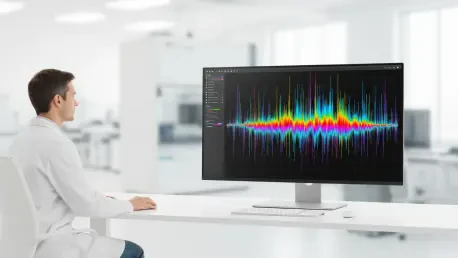

A high-resolution observation of the human body has finally replaced the era of guessing through a keyhole, transforming how biological complexity is interpreted at the cellular level. In the past, understanding the immune system was like looking at a single, blurry photograph of a crowded stadium and trying to guess the final score of the game. Clinicians relied on isolated snapshots—a single blood count or a solitary protein marker—to make sweeping decisions about health and disease. Today, a radical shift is underway as the medical field moves from these grainy still-lifes to high-definition, 360-degree digital simulations of internal defenses. Systems immunology is no longer just looking at the players; it is tracking every movement, every signal, and every interaction across the entire field of the human body in real time.
This transition marks the end of an era where medical conclusions were drawn from fragmented data points that often missed the underlying narrative of a patient’s health. The current landscape demands a more dynamic approach, recognizing that the immune system does not function in a vacuum. Instead of viewing a white blood cell count as a static number, researchers now treat it as a single coordinate in a vast, moving map of biological activity. By integrating temporal data with systemic interactions, medicine has begun to mirror the actual complexity of human life rather than the limitations of traditional laboratory equipment. This digital transformation allows for the simulation of disease progression, offering a predictive power that was previously relegated to the realm of science fiction.
The End of the Snapshot Era in Modern Medicine
The historical reliance on static diagnostics frequently led to treatments that addressed symptoms rather than systemic imbalances. Because the immune system is in a constant state of flux, a measurement taken on a Tuesday might be entirely irrelevant by Thursday, yet clinical decisions were often anchored to those single moments in time. Systems immunology dismantles this rigid framework by emphasizing the importance of longitudinal data. By observing how immune cells evolve and communicate over weeks or months, scientists can identify the subtle warnings of an impending cytokine storm or the early failure of a chemotherapy regimen. This shift from a snapshot to a cinematic view of health ensures that interventions are based on trajectories rather than isolated incidents.
Furthermore, the move toward digital simulations allows for the testing of therapeutic scenarios in a virtual environment before they are ever applied to a living patient. This computational modeling relies on the vast amounts of data generated by modern sequencing, creating a “digital twin” of a patient’s immune response. Such models can account for the ripple effects that occur when a single pathway is inhibited, preventing the unintended consequences that often plague traditional drug development. The era of trial and error is being replaced by a more precise, data-driven methodology that respects the fluid nature of human biology.
Why a Holistic View of Immunity Is Non-Negotiable
The human immune system is arguably the most complex network in existence, influenced by a lifetime of genetic predispositions, environmental stressors, and previous infections. Traditional research often encountered roadblocks because it relied heavily on animal models that did not reflect human diversity or focused on single pathways while ignoring the rest of the biological noise. In a world where chronic conditions like autoimmune disorders, allergies, and cancer are on the rise, the old one-size-fits-all approach is proving entirely insufficient. Systems immunology bridges this gap by using high-dimensional data to explain why two people with the exact same diagnosis can have completely different responses to the same treatment.
This holistic perspective acknowledges that the immune system acts as a central hub, connecting everything from gut health to psychological stress. Consequently, a failure to account for these interconnected variables leads to a superficial understanding of disease. By examining the totality of the immune landscape, researchers can uncover how a person’s unique history of viral exposures—the virome—shapes their current ability to fight off new pathogens. This breadth of vision is essential for developing therapies that are as multifaceted as the diseases they aim to cure. It shifts the focus from the disease itself to the individual host, recognizing that the environment in which a tumor grows is just as important as the genetic mutations of the tumor cells.
The Technological Engine: Multi-Omics and Spatial Resolution
The transition to personalized medicine is powered by a suite of omics technologies that allow scientists to observe immune behavior at an unprecedented resolution. Single-cell RNA sequencing has moved beyond the limitations of bulk tissue samples, enabling the examination of gene expression in individual cells. This capability has led to the discovery of rare cell populations that often act as the primary drivers of disease, which were previously hidden in the average data of larger samples. By identifying these “outlier” cells, clinicians can target the specific roots of an inflammatory response rather than suppressing the entire immune system.
Beyond the genetic blueprints, tools like chromatin and protein mapping reveal the actual functional state of a cell. While genomics provides the list of instructions, technologies such as CITE-seq reveal the proteins currently in action, bridging the gap between genetic potential and biological reality. Even more transformative is the advent of spatial transcriptomics, which preserves the geographical context of cells within a tissue. This breakthrough allows researchers to see how the physical proximity of immune cells within a tumor or an inflamed joint dictates their behavior. Knowing that a T-cell is present is no longer enough; understanding that it is physically blocked from reaching a cancer cell by a wall of suppressive fibroblasts is the insight that actually changes clinical outcomes.
Navigating the Complexity of Big Data and AI
While the influx of data is revolutionary, it introduces significant computational hurdles that must be cleared to ensure clinical accuracy. One of the primary challenges involves batch effects, where technical variations between different laboratories or equipment can create false patterns in the data. Strategies to distinguish genuine biological signals from technical artifacts are critical, as a single error in data processing can lead to a flawed diagnostic model. This requires a level of mathematical rigor that exceeds traditional biological research, necessitating a new generation of scientists who are as comfortable with coding as they are with pipetting.
The curse of dimensionality also presents a risk, where having too many variables and too few patients can lead to overfitting. This occurs when a model identifies random coincidences in a specific group of people that do not apply to the general population. To prevent this, researchers utilize mixed-effects models and longitudinal analysis to ensure that the patterns found represent universal biological truths. Artificial intelligence acts as the ultimate pattern finder in this context, sifting through billions of data points to identify biomarkers that a human eye would never notice. However, the necessity of biological validation remains paramount; AI can suggest a correlation, but laboratory experiments must still prove the underlying mechanism to ensure patient safety.
Practical Frameworks for the Future of Personalized Care
Systems immunology is moving out of the lab and into the clinic through specific, actionable strategies that are redefining patient care. One of the most promising concepts is the identification of the immune set point, which establishes a baseline for each individual based on age, sex, and environment. By understanding a patient’s “normal” state, doctors can predict how they will react to a vaccine or a new therapy before it is ever administered. This proactive approach allows for the adjustment of dosages or the selection of alternative drugs, significantly reducing the risk of adverse reactions and improving the efficiency of healthcare delivery.
The scope of data collection is also expanding beyond simple blood samples to include localized information from mucosal swabs, the gut microbiome, and even cerebrospinal fluid. These sources provide a more accurate picture of organ-specific immune responses, which often differ significantly from what is seen in the general circulation. Furthermore, the integration of wearable technology allows for the continuous monitoring of immune fluctuations in real time. This shift from reactive treatment to proactive management means that a flare-up of an autoimmune condition could be detected and treated days before the patient even feels the first symptoms.
The final stage of this evolution involves the implementation of tailored therapeutic interventions that match a patient’s unique immune landscape with the specific molecular mechanism of a drug. Instead of relying on broad-spectrum immunosuppressants that leave a patient vulnerable to infections, clinicians can now select targeted biologics that only silence the specific pathway causing the problem. This level of precision was the ultimate goal of the transition toward systems-based medicine. The integration of high-dimensional profiling into routine clinical practice ensured that the complexity of the human body was no longer an obstacle to healing, but rather the very map used to navigate toward a cure. Future efforts focused on the global standardization of these data protocols to ensure that personalized medicine became an accessible reality for diverse populations across the globe.