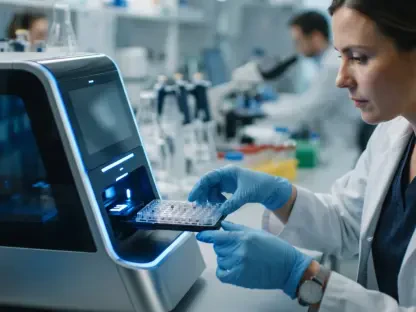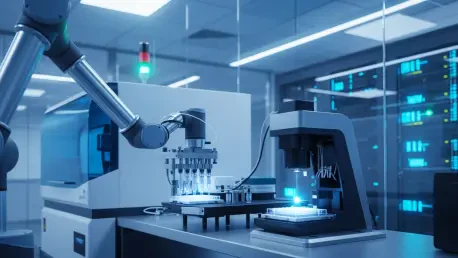

The global pharmaceutical sector is currently undergoing a massive transformation as the industry faces the dual challenges of rising research costs and the diminishing returns of traditional screening methods. Innovations in artificial intelligence and robotics are no longer merely speculative tools but have become the central pillars of a more efficient and predictive drug development process. By integrating digital intelligence with physical laboratory operations, leading organizations are finding new ways to bridge the gap between virtual predictions and biological reality. Experts like Jon Wingfield and Wenshu Xu, who possess extensive backgrounds in laboratory automation and drug discovery tools, are at the forefront of this shift. Their work emphasizes the importance of moving beyond simple mechanical tasks toward an intelligent, data-centric approach that addresses the fundamental bottlenecks in the therapeutic pipeline. This evolution is driven by the realization that computational power alone cannot solve the complexities of human biology without high-quality, real-world validation. As a result, the industry is seeing a significant investment in “physical AI,” a concept that uses experimental feedback to continuously refine and ground virtual models, ensuring that the most promising drug candidates are identified and advanced with greater precision.
Shift in Methodology: Transitioning From Volume to Veracity
In previous decades, the primary objective of laboratory automation was to maximize throughput, leading to a race where scientists attempted to test as many compounds as possible in the shortest amount of time. This era was characterized by the widespread adoption of liquid handling systems and microplate processing technologies designed to perform repetitive tasks at high speeds. While these advancements certainly increased the volume of experiments, the focus on quantity often came at the expense of data quality and biological context. Large datasets were generated, but they frequently lacked the metadata and environmental nuance required to make highly accurate predictions about how a compound would behave in a clinical setting. Consequently, the high-throughput model reached a point of diminishing returns, where the sheer scale of testing did not necessarily correlate with an increase in the number of successful drug approvals.
Today, the focus has shifted toward a more holistic and integrated view of automation that prioritizes the integrity and depth of information over simple plate counts. Modern systems are now designed to manage the entire movement of samples through complex, connected workflows where data is captured, contextualized, and analyzed in real-time. This approach ensures that every experimental outcome is enriched with detailed parameters, allowing researchers to understand not just whether a reaction occurred, but exactly why it behaved in a specific way. The goal is to generate the highest-quality data possible to inform critical decision-making throughout the discovery process, rather than just filling databases with superficial results. By focusing on veracity, companies can build more reliable models that reduce the uncertainty inherent in biological research, ultimately streamlining the path from early-stage discovery to human trials.
Economic Realities: Leveraging Physical AI and Negative Data
The economic landscape of modern drug development is increasingly unsustainable, marked by staggering financial risks and high failure rates during late-stage clinical trials. To mitigate these risks, the industry is aggressively adopting a “fail fast” mentality, utilizing advanced analytics to identify and terminate unpromising projects as early as possible. By ending development on weak leads sooner, pharmaceutical companies can redirect their finite resources toward molecules that demonstrate a higher probability of clinical success. This strategic shift requires a level of predictive accuracy that traditional methods simply cannot provide, leading to the rise of physical AI as a mandatory component of the research infrastructure. Unlike purely digital models, physical AI relies on constant experimental validation to ensure that virtual predictions remain anchored in physical biological realities.
One of the most significant challenges for current AI models is the historical lack of access to data from unsuccessful experiments, as scientific literature and internal databases have traditionally prioritized successful outcomes. However, modern discovery teams are now recognizing that understanding why a specific molecule failed is just as essential for training robust models as understanding why another succeeded. Consequently, there is a major push to collect and standardize comprehensive datasets that include these negative results, providing a more balanced and realistic training set for machine learning algorithms. By incorporating failure data into the design process, researchers can create AI systems that are better at navigating the complex chemical and biological spaces where most drug candidates typically falter. This data-driven strategy is becoming a cornerstone of how companies manage their portfolios and justify the massive investments required for drug development.
The Iterative Loop: Merging Computational Design with Physical Synthesis
The traditional Design-Make-Test-Analyze (DMTA) cycle was once viewed as a linear and often fragmented process, but it is being transformed into a highly iterative and integrated loop. With the rapid advancement of protein structure prediction and computational modeling, the “analyze” and “design” phases now frequently precede any actual laboratory work. This allows researchers to model potential targets and their interactions with small molecules or biologics in a virtual environment before a single chemical bond is synthesized. By starting with a more informed hypothesis, the number of wasted iterations in the laboratory is significantly reduced, which accelerates the overall timeline of the discovery cycle. This transition from a linear to a circular workflow enables a continuous flow of information, where every physical test result is immediately fed back into the digital model to inform the next round of design.
Furthermore, many organizations are actively working to break down the traditional silos that have separated chemistry and biology departments for decades. Historically, these teams often operated in different geographic locations or within distinct corporate structures to optimize for specific localized costs, but today, speed has become the more valuable currency. By integrating chemical synthesis and biological testing within the same physical environment, companies can move new molecules directly into assays without the delays associated with logistics and shipping. This physical proximity allows for a tighter coupling of the DMTA phases, enabling researchers to complete multiple cycles of design and testing in the time it previously took to complete one. The integration of these disciplines is not just a matter of convenience; it is a strategic necessity for maintaining a competitive edge in an industry where time-to-market is a critical factor for success.
Autonomous Operations: The Integration of Microfluidics and Organoids
The ultimate vision for the pharmaceutical industry is the transition from basic automation to true laboratory autonomy, where systems can operate with minimal human intervention. This shift is often compared to the evolution of automotive technology, moving from simple cruise control to fully self-driving capabilities that can diagnose errors and self-correct in real-time. Achieving this level of autonomy requires a significant cultural shift among scientists, who must move away from manual operational tasks and focus instead on high-level strategy and complex data analysis. Autonomous laboratories utilize sophisticated sensors and feedback loops to monitor experimental conditions constantly, ensuring that any deviations are corrected before they can compromise the integrity of the data. This level of control is essential for managing the increasingly complex biological models that are now being used in the early stages of drug discovery.
Technological enablers such as microfluidics and organoids are playing a vital role in this transition by providing more human-relevant biological environments for testing. By using these advanced models earlier in the process, researchers can better predict how a drug candidate will behave in terms of toxicity, metabolism, and efficacy long before it reaches human patients. These complex physical systems require specialized engineering and a high degree of integration to function effectively within an automated workflow. Partners like TTP are instrumental in developing the bespoke tools and infrastructure needed to connect these disparate laboratory processes into a seamless, autonomous system. By building the physical foundations that support AI, these experts are helping the industry turn digital potential into tangible medical breakthroughs that were previously unreachable through traditional methods.
Strategic Implementation: Establishing the Infrastructure for Resilient Discovery
The industry recognized that the successful integration of physical AI and autonomous systems required more than just the purchase of new hardware; it demanded a fundamental redesign of the research infrastructure. Organizations that prioritized the development of flexible, modular platforms were able to adapt more quickly to the rapid pace of technological change. These pioneers invested heavily in data standards and interoperability, ensuring that information could flow freely between different instruments and software platforms without losing its context or quality. By creating a unified digital and physical architecture, these companies established a foundation for resilient discovery that could withstand the shifting demands of the therapeutic landscape. The transition was often difficult, requiring a blend of biological expertise, mechanical engineering, and data science that was previously rare within a single organization.
The shift toward physical AI proved to be a decisive factor in improving the success rates of drug discovery programs across the sector. As laboratories became more autonomous and data-driven, the time required to move a molecule from initial design to clinical validation was drastically reduced. The focus on high-quality data and the inclusion of negative results allowed for the creation of more accurate predictive models, which in turn lowered the overall costs of development. Scientists were freed from the burden of repetitive manual labor, allowing them to focus on the creative and analytical aspects of drug discovery that still require human intuition. Ultimately, the integration of these advanced technologies established a new standard for the industry, where the synergy between digital intelligence and physical validation became the primary driver of medical innovation and the delivery of new treatments to patients.