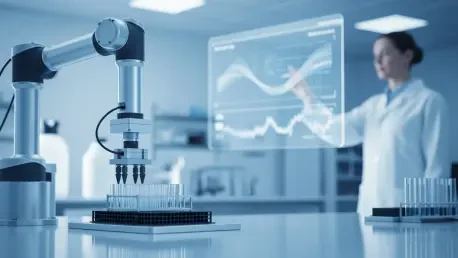

The rapid evolution of technology is fundamentally reshaping the landscape of scientific research and development, compelling a critical departure from the manual, paper-based laboratory practices of the past toward an integrated, automated, and digitally-native ecosystem. This paradigm shift, often termed the “Lab of the Future,” is not merely about upgrading equipment but involves a complete reimagining of scientific workflows, data management, and operational strategy. By systematically harnessing the capabilities of artificial intelligence, cloud computing, and advanced analytics, R&D and healthcare laboratories are unlocking unprecedented potential to accelerate innovation, dramatically improve accuracy, and deliver superior outcomes. This transformation promises to save lives, enhance patient care, and solve some of the most complex challenges facing society today, marking a new era in scientific exploration and discovery. The pressure to innovate faster and more efficiently has never been greater, making the adoption of these digital frameworks a strategic imperative for any organization aiming to remain at the forefront of its field.
The Imperative for Modernization
From Sticky Notes to Smart Systems
A significant disconnect has emerged between the sophisticated digital capabilities embedded in everyday life and the anachronistic state of many scientific research environments. While society leverages instant information access and AI-powered assistance for countless tasks, numerous laboratories remain constrained by manual data entry, disconnected systems, and a reliance on paper records. This operational model creates profound inefficiencies, leading to data silos that prevent comprehensive analysis and hampering collaboration across teams. The persistence of these outdated methods places immense pressure on scientists to produce faster, higher-quality results without the foundational infrastructure needed to support such demands. The friction between high expectations and inadequate tools is the primary catalyst driving the urgent need for modernization, pushing organizations to replace fragmented workflows with cohesive, intelligent systems that can keep pace with the speed of modern science.
The Biopharma Vanguard
The biopharmaceutical industry has positioned itself at the forefront of the movement to embrace and implement “Lab of the Future” initiatives. This sector faces extraordinary pressure to accelerate scientific discovery for two critical reasons: the necessity to fortify drug development pipelines and the need to mitigate the colossal financial risk posed by the loss of exclusivity on patented drugs, a figure estimated to exceed US$236 billion. For organizations of all scales, from multinational pharmaceutical corporations to nimble, innovative startups, the adoption of digital collaboration tools and the pursuit of operational efficiency have transitioned from being advantageous to being prerequisites for survival and market leadership. In this high-stakes environment, the ability to rapidly analyze vast datasets, automate repetitive tasks, and foster seamless collaboration is directly linked to an organization’s capacity to innovate and maintain a competitive edge in the global marketplace.
Proven Benefits of Digital Investment
The decision to invest in comprehensive laboratory modernization is no longer speculative but is backed by tangible, quantifiable evidence of significant returns. A comprehensive survey of R&D executives provides compelling data on the benefits realized through these digital transformations. A majority of respondents (53%) reported substantial enhancements in overall laboratory productivity, while 30% achieved notable improvements in cost efficiencies. Critically, nearly half of the executives (45%) observed a marked decrease in human error, a vital factor in ensuring the integrity and reliability of scientific and clinical results. Furthermore, over a quarter (27%) documented an acceleration in the pace of therapy discovery, with nearly 60% anticipating that their current investments will continue to shorten discovery timelines over the next two to three years. These positive outcomes unequivocally demonstrate that digital transformation is a proven and powerful strategy for driving progress.
A Blueprint for the Lab of the Future
The Ultimate Goal The Predictive Laboratory
Despite the significant progress made, the transformative journey toward a fully digital R&D environment is far from complete. Current data reveals that only 11% of surveyed executives have successfully implemented a fully predictive laboratory—a sophisticated ecosystem characterized by the deep integration of artificial intelligence, advanced automation, digital twins, and a cohesive data fabric. The ultimate vision for this environment is one that fosters a virtuous cycle of accelerated innovation. In this model, AI algorithms generate novel hypotheses, which are then validated through automated wet-lab experiments. The outcomes of these experiments are seamlessly fed back into the system to retrain and refine the AI models, creating a continuous feedback loop of learning and discovery. This powerful capability will not only enable a more profound understanding of complex disease biology but also support the sustainable replenishment of biopharma pipelines, paving the way for the next generation of life-saving breakthroughs.
Establish a Clear Modernization Roadmap
A successful digital transformation hinges on a clear, strategic vision that is meticulously aligned with the broader R&D and business objectives of the organization, rather than a haphazard adoption of the latest “buzzwords and shiny tools.” The development of a detailed implementation plan, complete with defined capabilities and strategic investments, is a foundational requirement. An effective roadmap skillfully balances the pursuit of short-term wins, which serve to build momentum and demonstrate immediate value, with the commitment to long-term, transformational goals. The critical importance of this strategic approach is underscored by survey findings indicating that 70% of respondents who reported reduced late-stage product failures and increased Investigational New Drug (IND) approvals attributed these significant successes to being guided by such a well-defined and comprehensive strategic roadmap for their modernization efforts.
Transform Data into a Strategic Asset
Data serves as the foundational bedrock of the modern, digitally-enabled laboratory. The full potential of artificial intelligence and advanced analytics can only be realized when built upon a solid and reliable data infrastructure, a belief shared by 84% of surveyed R&D executives. Achieving this requires three critical actions. First is comprehensive instrument connectivity, which involves linking all laboratory equipment to enable the seamless, automated transfer of data to centralized, cloud-based systems, thereby eliminating error-prone manual data entry. Second is the construction of a robust and scalable data infrastructure capable of managing the immense volume and variety of data generated in modern research. Finally, raw data must be transformed into high-quality “data products” that adhere to FAIR principles—making them Findable, Accessible, Interoperable, and Reusable. This ensures data is not trapped in isolated silos but becomes a strategic asset.
Focus on Operational Excellence and Governance
Beyond the implementation of new technology, a successful modernization effort demands a rigorous focus on optimizing laboratory operations and establishing strong governance. This includes a strategic shift in how expensive lab equipment is managed, treating it as a shared, high-value asset rather than the property of individual teams. By implementing modern approaches to track equipment utilization, organizations can optimize complex workflows, avoid unnecessary capital expenditures, and maximize their return on investment. Furthermore, robust data governance is a non-negotiable prerequisite for this transformation. A comprehensive governance framework provides the necessary structure to ensure data quality, security, and integrity across its entire lifecycle. This foundation is absolutely essential for exploiting the full potential of sophisticated technologies like artificial intelligence and digital twins, enabling their responsible and effective application in scientific discovery.
Champion a Culture of Digital Adoption
The most advanced technologies and streamlined processes ultimately failed if the scientists intended to use them did not fully embrace them. The human element was frequently identified as a critical, and often underestimated, component of any successful digital transformation. Surveys consistently highlighted significant cultural hurdles, with many organizations reporting the difficulty of scaling new technologies and processes as a major challenge, while others pointed to scientists’ hesitancy to adopt new ways of working. Overcoming this resistance required a proactive and empathetic approach to change management. The most successful initiatives engaged scientific teams early in the process, clearly communicated the rationale and tangible benefits of the transformation, and empowered them with the necessary digital skills and continuous support. This approach fostered trust and ensured the sustained adoption of new tools and workflows, proving that a supportive organizational culture was the ultimate catalyst for innovation.