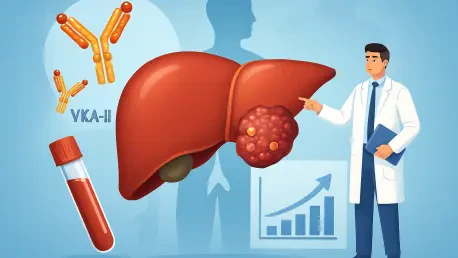

Emerging from the complexities of cancer biology, a formidable biomarker known as Protein Induced by Vitamin K Absence or Antagonist-II (PIVKA-II) is steadily reshaping the clinical landscape for hepatocellular carcinoma. This abnormal protein, once viewed as a simple serological anomaly resulting from metabolic dysfunction within tumors, is now recognized as a multifaceted tool critical for diagnosis, prognosis, and therapeutic guidance. Its deep-seated connection to tumor biology and superior performance in key clinical scenarios position it not just as an alternative to the traditional marker alpha-fetoprotein (AFP), but as an essential component in the modern management of one of the world’s most prevalent and challenging cancers. The evolution of PIVKA-II from a laboratory curiosity to a cornerstone of clinical practice highlights a significant shift toward more precise and personalized oncology.
The Dual Role of PIVKA-II: A Marker and a Driver of Cancer
The biological origins of PIVKA-II, also identified as des-γ-carboxy prothrombin (DCP), lie in the dysfunctional metabolic environment of hepatocellular carcinoma cells. It is an abnormal, non-functional variant of the coagulation protein prothrombin, and its production is a direct consequence of impaired γ-glutamyl carboxylase activity. This impairment is often exacerbated by the hypoxic conditions found deep within solid tumors and a localized deficiency in vitamin K, preventing the proper formation of functional prothrombin. Consequently, the release of PIVKA-II into the bloodstream serves as a highly specific signal of underlying HCC. However, its significance extends far beyond that of a passive byproduct. Extensive research has unveiled its active participation in cancer progression, establishing it as a potent oncogenic factor that actively fuels the very disease it indicates, a dual role that makes it an exceptionally valuable clinical tool.
Crucially, PIVKA-II functions as a direct driver of malignancy by hijacking critical cellular communication networks. Upon its release, it interacts with cell surface receptors to promote HCC growth, proliferation, and invasiveness. It achieves this by activating key signaling pathways, including the well-documented c-Met/JAK1/STAT3 and Ras/Raf/MEK/ERK cascades, which are fundamental to cell survival and division. Furthermore, PIVKA-II plays a pivotal role in stimulating angiogenesis, the process of forming new blood vessels that are essential for supplying nutrients and oxygen to a growing tumor. It engages the KDR/PLCγ/MAPK axis, effectively instructing the body to build a vascular network that supports the cancer’s expansion and potential metastasis. This dual identity as both a reliable marker of disease presence and an aggressive driver of its progression is central to its clinical significance and underpins its utility across the entire spectrum of HCC management, from initial detection to long-term therapeutic monitoring.
PIVKA-II in Clinical Practice: A Comprehensive Toolkit
Enhancing Early Detection and Diagnosis
In the critical arena of diagnostics, PIVKA-II has consistently demonstrated higher sensitivity and specificity than the long-standing benchmark, alpha-fetoprotein. This performance advantage is particularly pronounced in two challenging clinical scenarios: the detection of AFP-negative HCC (AFP-NHCC), a significant subgroup of patients where traditional screening methods frequently fail, and the identification of larger tumors measuring 5 cm or more. This superior diagnostic capability has not gone unnoticed by the global medical community. Recognizing its ability to close crucial diagnostic gaps, prominent medical bodies in high-prevalence regions, such as the Japanese Society of Hepatology and the authors of the Chinese Diagnosis and Treatment Guidelines for Primary Liver Cancer, have officially incorporated PIVKA-II testing into their standard clinical protocols, solidifying its role in routine cancer screening and surveillance programs for at-risk populations.
The diagnostic power of PIVKA-II is amplified significantly when it is integrated into advanced, multi-parametric models that leverage the strengths of several data points. Algorithms such as GALAD, GAAD, ASAP, and aMAP represent the next generation of diagnostic tools, combining PIVKA-II levels with other key biomarkers like AFP and demographic information, including age and gender. This integrated approach creates a robust and dynamic tool capable of sophisticated risk stratification. By analyzing these variables together, these models generate a composite score that provides a far more accurate and nuanced assessment of an individual’s risk for HCC than any single marker could achieve alone. This methodology is transforming surveillance strategies, enabling clinicians to more accurately identify high-risk individuals who may benefit from more intensive monitoring or earlier intervention, thereby improving the chances of detecting cancer at a more treatable stage.
Guiding Prognosis and Monitoring Treatment
Beyond its diagnostic utility, PIVKA-II serves as a remarkably reliable barometer for predicting patient outcomes and assessing the efficacy of various cancer treatments. Elevated baseline levels of the marker, measured before the initiation of therapy, are consistently and strongly associated with more aggressive tumor characteristics. These include increased tumor size, a higher likelihood of microvascular invasion, and a significantly greater risk of cancer recurrence following curative-intent therapies such as surgical resection or thermal ablation. This prognostic information is invaluable for clinicians, as it allows for the early identification of high-risk patients who may require more aggressive treatment strategies or closer post-treatment surveillance. The ability of PIVKA-II to reflect the underlying tumor biology provides a crucial window into the potential clinical course of the disease, guiding personalized treatment planning from the outset.
The true dynamic power of PIVKA-II is revealed in its capacity to provide real-time insights into treatment response. Monitoring the changes in its levels throughout the therapeutic journey offers a clear and objective measure of clinical efficacy. A significant and rapid decline in PIVKA-II concentrations following an intervention is a powerful positive prognostic indicator, correlating strongly with favorable clinical outcomes, successful tumor control, and longer recurrence-free survival. Conversely, persistently high or rising PIVKA-II levels act as an early warning signal, suggesting that the current treatment is failing to control the disease or that a recurrence is imminent, often before it can be detected by imaging. This utility is not limited to surgical interventions; it extends across a wide spectrum of systemic treatments, including transarterial chemoembolization (TACE), targeted molecular therapies, and modern immunotherapies, making it an indispensable tool for ongoing patient management.
Navigating the Challenges and Looking Ahead
Acknowledging Current Limitations
Despite its clear and compelling advantages in the management of hepatocellular carcinoma, PIVKA-II is not a flawless biomarker, and its implementation is accompanied by specific challenges that require careful consideration. One of the most significant hurdles is the current lack of standardization across the various immunoassays used for its detection. Different methods, such as ELISA and CLEIA, are employed in laboratories worldwide, but they often lack universally accepted cut-off values for defining a positive result. This inconsistency makes it difficult to directly compare findings from different clinical studies or even from different healthcare institutions, complicating the establishment of definitive, global guidelines. This methodological variability underscores an urgent need for international consensus to standardize detection protocols and harmonize reporting, which would enhance the biomarker’s reliability and facilitate its broader adoption.
Furthermore, the clinical interpretation of PIVKA-II levels can be confounded by several non-HCC factors that can lead to falsely elevated results, necessitating careful clinical judgment. For instance, patients undergoing anticoagulant therapy with vitamin K antagonists like warfarin can exhibit high PIVKA-II levels as a direct result of the drug’s mechanism of action, independent of any malignancy. Similarly, severe vitamin K deficiency from other causes or the presence of other non-malignant liver conditions can also cause elevations. The biomarker is not entirely specific to HCC, as it can also be raised in other malignancies, including cancers of the gallbladder and pancreas, as well as in non-cancerous conditions such as chronic kidney disease. These potential confounders highlight the importance of interpreting PIVKA-II results within the context of a patient’s complete clinical picture, including their medical history, concurrent medications, and other diagnostic findings, rather than relying on it as a standalone diagnostic.
The Future of PIVKA-II in HCC Management
Looking toward the future, the trajectory for PIVKA-II in clinical oncology is exceptionally promising, with ongoing research and technological advancements poised to refine its application and expand its impact. The development of next-generation assays and novel sensor technologies is a primary focus of this innovation. These new platforms are being engineered to deliver higher specificity and greater reliability, aiming to minimize the influence of confounding factors and improve the accuracy of PIVKA-II detection. A particularly exciting frontier is the integration of PIVKA-II data with the power of artificial intelligence and deep learning algorithms. By training these sophisticated computational models on vast datasets, researchers are creating predictive tools that could revolutionize early diagnosis and enable highly personalized prognostic modeling, tailoring surveillance and treatment strategies to the unique risk profile of each patient.
The successful integration of PIVKA-II into widespread clinical practice has established it as an indispensable biomarker in the comprehensive management of HCC. Its inclusion in major clinical guidelines and its central role in advanced multi-parametric diagnostic models have underscored its significant translational value. By providing critical, actionable information for diagnosis, prognosis, and the real-time monitoring of treatment efficacy, PIVKA-II has directly contributed to a more personalized and effective standard of care for patients. The continued research aimed at clarifying its precise molecular functions, establishing universal standards for its detection, and validating its utility across increasingly diverse patient populations and disease etiologies has ensured that its impact on improving outcomes for individuals with HCC will only continue to grow.