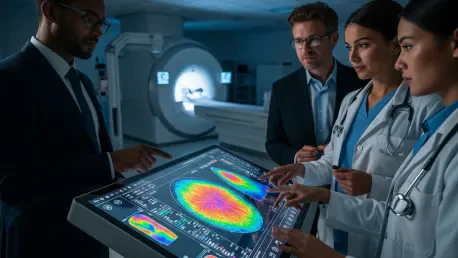

The sudden acceleration of artificial intelligence in healthcare has reached a critical milestone as a massive international competition focused on medical imaging diagnostics officially begins in Beijing this month. This initiative aims to bridge the gap between theoretical algorithmic research and practical clinical application by inviting the brightest minds from around the globe to solve complex diagnostic puzzles. By utilizing high-resolution datasets that were previously restricted to internal research, organizers provide a rare opportunity for developers to train models on diverse patient demographics and pathological conditions. This event is not merely a contest but a concerted effort to establish new benchmarks for accuracy in detecting early-stage malignancies and cardiovascular anomalies. Experts suggest that such high-stakes environments foster rapid innovation that often takes years to achieve through traditional academic channels. The global medical community is watching closely to see how these localized breakthroughs might eventually influence international standards for digital health services and patient care workflows everywhere.
Advancing Algorithms: High-Resolution Data Analysis
Participants are tasked with developing sophisticated deep learning architectures that can process multi-modal data including computed tomography scans and magnetic resonance imaging results with unprecedented speed. Current benchmarks indicate that the primary challenge lies in reducing false positives while maintaining a sensitivity rate that exceeds the average human radiologist’s performance in busy hospital settings. To achieve this, engineers are increasingly turning to hybrid models that combine convolutional neural networks for feature extraction with vision transformers for understanding spatial relationships within the tissue. The competition encourages the use of synthetic data generation to augment training sets where rare diseases lack sufficient representation. This approach ensures that the resulting AI tools are robust enough to handle the edge cases that often lead to misdiagnosis in traditional clinical environments. Furthermore, the integration of explainable AI components is a mandatory requirement for top-tier entries to ensure that doctors can understand the reasoning behind a specific automated suggestion.
The competitive framework also includes a dedicated track for real-time processing, where algorithms must analyze incoming imaging streams with minimal latency to support emergency room scenarios. In these high-pressure environments, the ability of an AI to provide instantaneous feedback on potential life-threatening conditions like intracranial hemorrhages can be the difference between recovery and permanent disability. Developers are experimenting with edge computing solutions that allow these powerful models to run directly on the imaging hardware rather than relying on distant cloud servers. This shift toward localized processing not only improves speed but also enhances data security by keeping sensitive patient information within the hospital’s local network. The competition evaluates these systems based on their computational efficiency as much as their diagnostic accuracy, reflecting the practical constraints of modern hospital infrastructure. As these technologies mature, the goal is to create a seamless integration where the AI acts as a reliable second pair of eyes that never tires and never overlooks a subtle detail during a long shift.
Strategic Implementation: Global Standards and Scalability
The broader implications of this competition extend to the democratization of specialized medical knowledge, particularly in underserved regions where access to expert radiologists is limited. By deploying highly accurate diagnostic models to rural clinics, healthcare providers can offer a level of care that was previously only available in major metropolitan research hospitals. This scalability is a core objective of the current research initiatives, as the global demand for diagnostic services continues to outpace the supply of trained medical professionals. The models developed during this event are expected to undergo rigorous clinical trials to validate their performance in diverse real-world settings before they are approved for widespread use. These trials will focus on how the AI interacts with existing electronic health records and whether it genuinely reduces the time required to reach a definitive diagnosis. It is anticipated that the most successful participants will secure partnerships with major medical device manufacturers to embed their software into the next generation of scanners, creating a more intelligent and responsive global health infrastructure.
The conclusion of the initial phase of the competition demonstrated that the integration of artificial intelligence into medical imaging was no longer a theoretical pursuit but a tangible reality. Stakeholders recognized that the most effective way forward involved a strict focus on data transparency and the continuous monitoring of algorithmic performance post-deployment. Medical institutions were encouraged to update their IT infrastructures to accommodate these advanced tools while investing in specialized training for staff members to interpret AI-generated insights effectively. Regulatory bodies emphasized the importance of maintaining a human-in-the-loop approach where the final diagnostic decision remained with the physician, supported by the objective data provided by the software. Industry leaders also highlighted the necessity of creating feedback loops where clinical outcomes were used to refine the models over time, ensuring that the technology remained relevant as medical knowledge evolved. By prioritizing ethical considerations and cross-border data sharing, the global community established a foundation for a new era of precision medicine that benefitted patients regardless of their geographical location.