
The staggering reality that over ninety percent of all drugs entering human trials ultimately fail to gain approval casts a long shadow over modern medicine, with unforeseen cardiotoxicity being a primary culprit for these costly and dangerous late-stage collapses. The concept of the cardiovascular digital twin represents a significant advancement in pharmacology and personalized medicine, emerging as a powerful new strategy to confront this challenge head-on. This review will explore the evolution of this technology, its key components, performance metrics, and the profound impact it has begun to have on various applications. The purpose of this review is to provide a thorough understanding of the technology, its current capabilities, and its potential future development in reshaping the drug development landscape.
An Introduction to Computational Cardiovascular Modeling
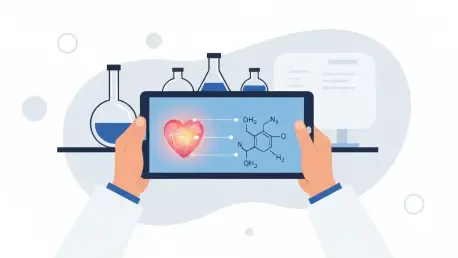
At its core, a cardiovascular digital twin is a sophisticated computational replica of a human heart, designed to simulate its intricate physiological and molecular responses to therapeutic compounds. This technology moves beyond simplistic predictive models by creating dynamic, data-driven systems that can forecast how a heart will behave under different conditions. The impetus for this innovation stems directly from the persistent problem of drug-induced cardiotoxicity, a phenomenon responsible for a significant portion of clinical trial failures and post-market drug withdrawals. By creating these virtual models, researchers can test drug candidates in-silico before they ever reach a living subject.
The promise of this approach lies in its ability to provide a level of predictive detail previously unattainable. Traditional preclinical testing often relies on animal models that do not fully recapitulate human cardiac physiology, leading to blind spots that only become apparent in human trials. Digital twins, by contrast, are built upon human-derived data and are engineered to simulate the specific biological mechanisms that govern heart function. Initiatives like the CARDIOVERSE project, backed by the Advanced Research Projects Agency for Health (ARPA-H), exemplify this new frontier, aiming to build a platform that can accurately predict a drug’s cardiac effects across a vast spectrum of human genetic backgrounds, making the entire development pipeline safer and more efficient.
Core Technologies of the Digital Twin Platform
Multi Modal Data Generation from Diverse Biological Models
The foundation of any robust digital twin is the quality and diversity of its underlying data. To build a virtual heart that accurately reflects human biology, scientists are turning to advanced biological models that capture the genetic variability of the global population. This involves the use of specialized mouse models engineered to mimic specific human cardiac conditions, alongside human induced pluripotent stem cells (iPSCs). These stem cells can be differentiated into cardiomyocytes—beating heart cells in a dish—that carry the unique genetic code of the individuals from whom they were derived.
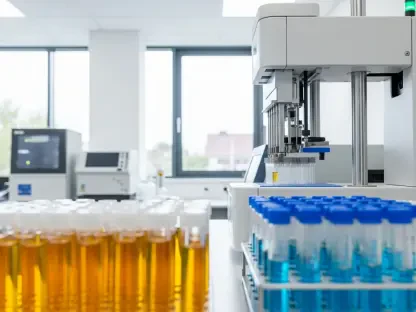
Generating the sheer volume of data required for this endeavor necessitates a new scale of automation. Cutting-edge laboratories are now employing high-throughput robotic systems to culture, treat, and analyze millions of these cellular models simultaneously. This automated approach ensures consistency and generates the massive, high-quality datasets needed to train sophisticated AI algorithms. The integration of institutions like The Jackson Laboratory (JAX) with the high-throughput capabilities of organizations such as the New York Stem Cell Foundation (NYSCF) is critical, creating a powerful synergy that produces comprehensive data on how genetically diverse heart cells respond to different drug compounds.
Predictive AI and Mechanistic Simulation
With a foundation of rich biological data, the next step is to construct the computational engine of the digital twin. This is where advanced artificial intelligence and mechanistic simulation come into play. Sophisticated machine learning algorithms are trained on the multi-modal data to identify subtle patterns and complex relationships between a drug’s chemical structure, a person’s genetic makeup, and the resulting cardiac response. The goal is to move beyond a simple “safe” or “unsafe” prediction and uncover the underlying molecular mechanisms driving cardiotoxicity.
This capability allows researchers to create not just a single virtual heart, but a “population of virtual hearts,” each representing a different genetic background. By simulating a drug’s effect across this diverse virtual population, scientists can predict what fraction of people might experience an adverse reaction and even identify potential genetic biomarkers for that vulnerability. This approach provides a granular forecast, distinguishing between a minor side effect and a life-threatening event, which is a monumental leap from older computational methods that offered only vague probabilities.
Innovations in Predictive Toxicology
The development of cardiovascular digital twins marks a pivotal shift in the field of predictive toxicology, moving away from a heavy reliance on traditional animal testing toward sophisticated in-silico platforms. For decades, preclinical safety assessment has been constrained by the limitations of animal models, which are not only expensive and ethically fraught but often fail to predict human-specific toxicities. Digital twins offer a more direct and relevant method for evaluating how a drug will affect human physiology.
The key innovation driving this transformation is the integration of genetically diverse human cellular data with powerful AI. By grounding computational models in real-world human biology captured at an unprecedented scale, these platforms achieve a new level of accuracy and personalization. This approach enables researchers to predict potential adverse drug reactions with greater confidence long before human trials begin, fundamentally changing the risk-benefit calculation in drug discovery and offering a more precise, human-centric paradigm for safety testing.
Applications and Transformative Impacts on Drug Development
Revolutionizing Preclinical Safety and Efficacy Testing
In the early stages of drug development, cardiovascular digital twins are poised to have a revolutionary impact on preclinical safety and efficacy testing. The technology provides a powerful computational alternative to the large-animal studies that currently dominate this phase. These studies are a major bottleneck, characterized by high costs, long timelines, and significant ethical concerns. By reliably predicting cardiac risk in-silico, the digital twin platform has the potential to dramatically reduce, and perhaps one day replace, the need for such extensive animal testing.
This shift could have profound economic implications, significantly lowering the financial barriers to entry for drug innovation. Smaller biotech startups and academic research labs, which often lack the capital for expensive preclinical programs, could use these platforms to advance promising compounds that might otherwise be shelved. In this way, the technology could democratize the drug discovery process, fostering a more vibrant and competitive research ecosystem and accelerating the development of new therapies.
Enhancing Clinical Trials and Regulatory Pathways
The influence of digital twins extends beyond preclinical research into late-stage development and the regulatory approval process. By providing a clearer picture of a drug’s safety profile early on, this technology can significantly de-risk the transition to human clinical trials. Pharmaceutical companies can proceed with greater confidence, armed with data that can help streamline interactions with regulatory agencies like the FDA.
A particularly impactful application is the ability to improve patient stratification for clinical trials. The simulations can identify genetic profiles that are associated with a higher risk of adverse cardiac events or a greater likelihood of a positive therapeutic response. This knowledge allows for the design of smarter, safer, and more efficient trials, where participants are selected based on their biological suitability. This ensures that trials are more likely to demonstrate efficacy while minimizing risks to volunteers, ultimately paving a smoother path toward regulatory approval and market launch.
Challenges and Implementation Hurdles
Technical Hurdles in Model Validation and Scalability
Despite its immense promise, the development of cardiovascular digital twins faces significant technical challenges. One of the most complex tasks is model validation—ensuring that the computational predictions accurately reflect real-world clinical outcomes in human patients. This requires a rigorous and continuous process of comparing simulation results against retrospective and prospective clinical data, a process that is both data-intensive and computationally demanding. The immense biological complexity of the human cardiovascular system means that creating and validating a truly comprehensive model is a monumental undertaking.
Furthermore, the scalability of these platforms presents a major hurdle. Running detailed simulations for an entire “population of virtual hearts” requires enormous computational power and sophisticated infrastructure. As the models grow in complexity to incorporate more biological variables and genetic backgrounds, the demand for high-performance computing resources will increase exponentially. Building and maintaining this infrastructure requires substantial investment and specialized expertise, posing a challenge for widespread adoption.
Regulatory Acceptance and Industry Adoption
Beyond the technical issues, the widespread implementation of digital twins faces significant non-technical obstacles. A major hurdle is achieving regulatory acceptance. Agencies like the FDA have historically relied on a well-established framework of animal and human trial data for safety assessments. Convincing these bodies to accept in-silico data as a primary basis for regulatory decisions requires a significant paradigm shift, which will necessitate extensive validation and the development of new regulatory guidelines.
Simultaneously, the pharmaceutical industry itself must adapt. Large organizations often have deeply entrenched research and development workflows built around traditional preclinical and clinical methodologies. Integrating novel computational platforms like digital twins requires not only a financial investment but also a cultural shift. It involves retraining scientists, restructuring R&D pipelines, and fostering trust in a new class of predictive evidence, all of which represent substantial challenges to seamless industry-wide adoption.
The Future of In Silico Medicine
Looking ahead, the trajectory for cardiovascular digital twins points toward a future where in-silico medicine plays a central role in therapeutic development. The long-term vision is a drug discovery process where promising therapies can be advanced from concept to clinical trial based primarily on robust computational evidence. This would represent a fundamental re-architecting of the pharmaceutical pipeline, making it dramatically faster, cheaper, and more predictive than the current system.
This evolution is intrinsically linked to the promise of true personalization in medicine. As these digital twin platforms become more sophisticated, they will increasingly enable the design of treatments tailored to an individual’s unique genetic profile and disease state. In this future, a physician could use a patient’s digital twin to test various drug options virtually, selecting the one that offers the highest efficacy with the lowest risk of side effects. This level of precision would mark the full realization of personalized medicine, transforming how cardiovascular diseases and many other conditions are treated.
Conclusion A New Paradigm for Cardiovascular Health
The development of cardiovascular digital twins marked a foundational shift in the pursuit of safer and more effective medicines. By integrating genetically diverse human cell models with sophisticated AI, this technology provided an unprecedented window into the complex interplay between drugs and human biology. Its ability to simulate drug responses across a virtual population of hearts offered a powerful tool to de-risk pharmaceutical development from its earliest stages.
This innovation transformed key aspects of the drug discovery pipeline, from reducing the reliance on animal testing in preclinical studies to enabling smarter, more efficient clinical trial designs. While technical and regulatory hurdles remained, the trajectory was clear. The advancements made in this field established a new paradigm, moving medicine away from a one-size-fits-all approach and toward a future where therapies could be precisely tailored to the individual. Cardiovascular digital twins proved to be a cornerstone technology for the next generation of personalized healthcare.