
The traditional healthcare model has long functioned as a reactive cleanup crew that only arrives after the house is already on fire, but the ORIGIN project is finally handing us the blueprints to detect the very first spark before it even ignites a flame. This landmark initiative represents a profound philosophical pivot in modern medicine, moving the focus from treating established illness toward preventing its very onset. As a collaborative venture involving the Icahn School of Medicine at Mount Sinai, the Uniformed Services University, and the Henry M. Jackson Foundation, the project is designed to bridge the gap between military health innovation and civilian clinical practice.
Current medical structures often struggle with the limitations of organ-based silos, where specialists focus on isolated symptoms rather than the systemic biological disruptions that precede them. The ORIGIN project disrupts this status quo by utilizing massive-scale molecular analysis to identify preclinical signals that remain invisible to conventional diagnostic tools. By integrating the vast, longitudinal health data found within military healthcare systems, researchers are establishing a new benchmark for how chronic diseases are identified and managed in the modern era.
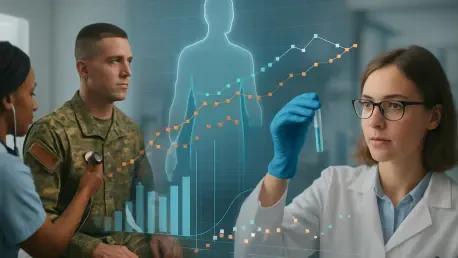
The strategic integration of military health data into the civilian research sector provides a unique opportunity to study disease progression in a controlled, well-documented environment. Military personnel undergo rigorous and regular health screenings, providing a continuous biological record that is rarely available in the general population. This allows the project to move beyond static observations and instead view human health as a dynamic, evolving process that can be mapped and eventually mastered through high-resolution data science.
The Paradigm Shift Toward Proactive Precision Medicine
The global transition toward proactive precision medicine is fueled by the realization that treating chronic conditions in their late stages is both economically unsustainable and clinically inefficient. Rather than waiting for patients to present with physical complaints, the ORIGIN initiative seeks to identify molecular “warning lights” that flicker years before a diagnosis is ever made. This shift is not merely an incremental improvement but a total reimagining of the physician-patient relationship, where intervention occurs during a window of opportunity when the body is still functioning normally.
Dismantling traditional medical silos is a core objective of this collaborative effort, as it encourages a more integrated view of the human body. By bringing together experts in cardiology, neurology, and immunology, the project explores how shared biological pathways contribute to seemingly unrelated conditions. This cross-disciplinary approach is essential for understanding the complexity of the human immune system and its role as a universal sentinel for emerging health threats across all organ systems.
The integration of military healthcare data into this research serves as a catalyst for a broader transformation in public health. Because the military data repository provides a wealth of historical serum samples, researchers can trace the molecular origins of disease with unprecedented accuracy. This strategic partnership ensures that the lessons learned from protecting service members are translated into life-saving strategies for the global civilian population, effectively accelerating the arrival of truly preventive medicine.
Emerging Frontiers in Omics and Preventive Technologies
Breaking the Biological Code Through Multi-Omics Integration
At the technical heart of the project lies the convergence of various “omics” fields, including genomics, proteomics, metabolomics, and exposomics. These technologies work in tandem to create a comprehensive molecular atlas that captures the intricate interplay between an individual’s genetic makeup and their environment. By analyzing blood samples at this microscopic level, researchers can identify specific patterns of proteins and metabolites that signal the very early stages of physiological breakdown.
The impact of high-resolution data science on precision immunology is particularly significant, as it allows for the dismantling of traditional diagnostic barriers. Instead of relying on broad, often imprecise symptoms, clinicians can look for specific molecular signatures that are unique to certain disease states. This provides a level of personalization that was previously impossible, allowing for health strategies that are tailored to the specific biological trajectory of each individual patient.
Evolving clinical expectations are driving the demand for personalized health indicators that function as biological early-warning systems. Patients are increasingly looking for ways to take control of their health before they become ill, and the ORIGIN project is meeting this demand by providing the scientific foundation for these technologies. This movement is expected to transform the healthcare market, shifting investment toward diagnostic tools that prioritize early detection and the preservation of long-term wellness.
Scaling Predictive Capabilities and Market Projections
The sheer scale of the project, which involves a 10-year research scope and more than 13,000 active-duty service members, provides the statistical power necessary to validate these predictive models. By analyzing samples that date back several years, the research team can observe how healthy biological markers gradually shift into disease signatures. This longitudinal perspective is the key to creating predictive tools that are not only accurate but also clinically actionable for a wide range of diverse populations.
Previous successes in predicting Inflammatory Bowel Disease years before a clinical diagnosis served as a powerful proof of concept for this methodology. Those early findings demonstrated that the body begins to signal distress long before a patient experiences pain or inflammation. The ORIGIN project builds on this foundation by applying similar logic to a much broader spectrum of illnesses, proving that the preclinical stage of disease is a goldmine of information for modern clinicians.
Forward-looking forecasts suggest that these predictive molecular signatures will be the primary drivers of growth in the biotechnology and preventative therapy sectors. As the ability to detect disease earlier improves, the market for targeted therapies and personalized nutrition is expected to expand rapidly. This transition will likely incentivize pharmaceutical companies to focus on “intercepting” disease, creating a new category of treatments designed to keep healthy individuals from ever crossing the threshold into active illness.
Navigating the Complexity of Biological and Environmental Data
One of the most significant technical hurdles facing the project is the simultaneous analysis of more than 25 diverse conditions, ranging from autoimmune disorders to neurodegenerative diseases. Each of these conditions has its own unique biological footprint, yet many may share common underlying triggers or inflammatory pathways. Developing the computational power to isolate these specific signals while identifying shared mechanisms requires a level of data integration that is currently at the absolute edge of medical science.
Strategies for correlating toxic environmental exposures with longitudinal biological changes are a critical component of the research. Service members are often exposed to unique environmental hazards, such as PFAS or burn pits, which can have long-lasting effects on their health. By mapping these exposures against molecular changes in the blood, the ORIGIN project provides a way to quantify the biological cost of environmental toxins and develop strategies to mitigate their impact on both military and civilian health.
Identifying shared biological pathways across disparate diseases offers a promising shortcut for future drug development and therapeutic intervention. If a single molecular mechanism is found to contribute to both a specific type of cancer and a specific autoimmune disorder, a single preventive treatment might be able to address both risks. This holistic approach to molecular biology streamlines the path from research to reality, ensuring that new discoveries can be implemented across multiple medical specialties more efficiently.
Privacy, Security, and the Ethics of Predictive Data
The regulatory landscape governing the Department of Defense Serum Repository is complex, requiring a delicate balance between scientific utility and the protection of individual privacy. The Uniformed Services University plays a vital role in this process by ensuring that all data is strictly de-identified before it is analyzed by researchers. This ensures that the privacy of service members is maintained while still allowing their medical history to contribute to groundbreaking scientific discoveries that benefit the broader public.
Compliance standards for handling sensitive military medical records are among the highest in the world, requiring robust security protocols for both digital data and physical samples. Maintaining the integrity of longitudinal serum samples over several years is a logistical challenge that requires constant monitoring and state-of-the-art storage facilities. These rigorous standards serve as a blueprint for how large-scale biobanks should be managed in the future to ensure both data security and scientific reliability.
Ethical considerations regarding the notification of patients about their “preclinical” states are a major focus of ongoing discussion within the project. Informing a person that they have a high molecular risk for a disease they do not yet feel could have significant psychological and social impacts. There are also concerns about how this information might affect insurance coverage or employment opportunities, necessitating a careful approach to how predictive data is shared and used within the healthcare system.
The Future Landscape of Molecular Disease Classification
The ongoing shift from an organ-based diagnosis model to a molecular-centric classification of human illness is set to redefine the foundations of pathology. Instead of grouping diseases by where they appear in the body, clinicians will soon categorize them by the specific biological pathways that have gone awry. This change allows for more precise treatments that target the root cause of a condition rather than just its external symptoms, leading to higher success rates and fewer side effects.
Emerging technologies are already allowing pharmaceutical companies to target preclinical disease signatures with remarkable precision. By developing interventions that work at the molecular level before physical damage occurs, these companies are moving toward a model of “health maintenance” rather than “disease management.” This transition is expected to lead to the development of a new generation of drugs that are specifically designed for individuals who are biologically at risk but clinically healthy.
Military-led innovation continues to influence global public health policies, particularly in the management of rising trends like early-onset colorectal cancer. The findings from the ORIGIN project will likely inform new screening guidelines that start much earlier in life than current standards. By proving the efficacy of molecular screening, the project provides the evidence needed for policymakers to shift resources toward early detection, potentially saving thousands of lives through more proactive intervention strategies.
Transforming the Legacy of Modern Healthcare
The project successfully identified the molecular precursors for dozens of chronic conditions, fundamentally proving that the preclinical window is the most critical period for medical intervention. Researchers established that biological “time travel” via longitudinal serum analysis was a viable method for creating a proactive diagnostic framework. These efforts demonstrated that the transition from reactive care to molecular prevention was not only possible but also economically and clinically necessary for the survival of modern healthcare systems.
Decision-makers in the healthcare industry prioritized the expansion of “omics” infrastructure to ensure that these military breakthroughs could be integrated into standard civilian practice. This investment focused on creating decentralized laboratory networks capable of performing high-resolution molecular screening during routine physical exams. By standardizing these advanced diagnostic tools, the medical community moved toward a future where chronic disease was no longer an inevitability but a manageable biological risk.
Future strategies emphasized the importance of maintaining robust biobanks and data privacy protections to support the next generation of predictive medicine. The initiative ultimately reshaped the physician-patient relationship into a collaborative partnership focused on the preservation of long-term biological integrity. By turning the molecular blueprints of disease into a standard clinical tool, the project ensured that the legacy of today’s scientific innovation would be a healthier, more resilient global population for decades to come.