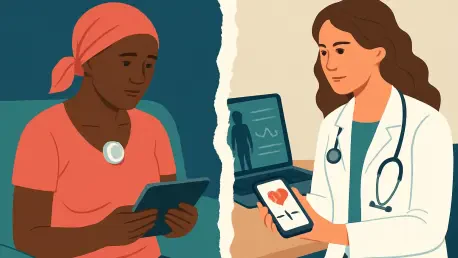

The implementation of digital health tools often risks widening the divide between privileged and underserved patient populations, yet recent clinical evidence suggests that standardized remote monitoring may actually be the key to closing these long-standing disparities. The PRO-TECT (AFT-39) trial has emerged as a landmark study, demonstrating that structured, weekly electronic symptom check-ins can significantly enhance the quality of life and physical function for individuals battling advanced cancer. By moving beyond traditional, intermittent office visits, this approach provides a continuous safety net that captures the real-world experiences of patients in their own environments.
Implementing standardized electronic symptom reporting is no longer just a technological upgrade; it is a fundamental shift toward more responsive and personalized oncology care. Modern practices must recognize that symptom management often fails when it relies solely on a patient’s ability to recall distress during a brief consultation. This guide explores the essential components of remote monitoring, focusing on how these systems improve accessibility, enable proactive intervention, and directly confront the systemic inequities that have historically plagued cancer treatment.
The Strategic Value of Adopting Remote Symptom Monitoring
Adopting best practices in Patient-Reported Outcomes (PROs) is critical for maintaining patient safety and ensuring the accuracy of clinical data. When patients report their symptoms in real-time, the information is far more reliable than retrospective accounts provided days or weeks later. This level of data precision allows oncology teams to monitor the toxicity of chemotherapy and other systemic treatments with greater granularity, ensuring that side effects are managed before they become life-threatening or require treatment cessation.
The benefits of this model extend beyond mere data collection, as participants in remote monitoring programs consistently show improved physical function and a higher overall quality of life. By addressing symptoms like fatigue, pain, and nausea early, clinicians help patients maintain their independence and daily activity levels. Furthermore, the economic impact is substantial. Proactive management reduces the reliance on emergency department visits and unplanned hospitalizations, which are major drivers of healthcare costs and significant sources of stress for families navigating a cancer diagnosis.
Shifting from a reactive clinical model to a proactive one transforms the patient-clinician dynamic. Instead of waiting for a crisis to occur, care teams can intervene the moment a symptom trajectory changes. This transition fosters a sense of security for the patient, knowing that their care team is virtually present between appointments. This strategic shift not only optimizes clinical resources but also ensures that the most vulnerable patients do not fall through the cracks of a fragmented healthcare system.
Best Practices for Implementing Equitable Remote Monitoring Systems
Successful integration of electronic symptom reporting into routine clinical workflows requires a deliberate and structured strategy. It is not enough to simply provide a digital portal; the system must be woven into the daily operations of the nursing and medical staff. Actionable steps include defining clear roles for who monitors the incoming data and establishing a secondary plan for when primary caregivers are unavailable. This ensures that the patient’s input never goes unacknowledged, which is vital for maintaining long-term engagement and trust.
Selecting technology that is inclusive and adaptable is perhaps the most important consideration for achieving health equity. Developers and clinical leads must prioritize tools that accommodate various levels of technological literacy and physical ability. When a system is designed with the most marginalized user in mind, it inherently becomes more effective for the entire patient population. An equitable system is one that removes barriers to entry rather than creating new ones.
Prioritize Multi-Modal Accessibility to Bridge the Digital Divide
A primary best practice for inclusive remote monitoring is the provision of flexible reporting channels, including web-based surveys, smartphone applications, and automated telephone systems. The digital divide remains a significant hurdle in many communities, where high-speed internet or the latest smartphone technology may not be universally available. By offering a “low-tech” option, such as an automated voice-prompted telephone system, healthcare providers ensure that every patient has a voice regardless of their socioeconomic status or geographic location.
Removing barriers related to technological literacy is just as important as providing the hardware. Systems should utilize simple language, intuitive interfaces, and multiple language options to ensure that patients from diverse backgrounds can navigate the surveys with ease. When patients feel confident using the tools provided to them, they are more likely to provide consistent and honest feedback, which is the cornerstone of effective symptom management.
The PRO-TECT trial’s inclusive technology design served as a perfect example of this principle in action. By engaging 1,191 adults across 52 diverse community clinics, the study proved that high participation rates are achievable across all socioeconomic backgrounds when communication channels are varied. The researchers found that many patients preferred the simplicity of the telephone system, which directly contributed to the high level of data completion and the overall success of the intervention.
Establish Automated Response Protocols for Real-Time Clinical Action
The second essential best practice involves connecting patient-reported data directly to clinical staff through automated alerts for severe or worsening symptoms. This ensures that the information collected does not sit idle in a database but instead triggers immediate action. Threshold levels for symptom severity must be clearly defined; for instance, a jump from mild to moderate pain or the onset of severe shortness of breath should immediately notify a triage nurse. These protocols transform the reporting system into a dynamic tool for clinical decision-making.
Detailed instructions on how to handle these alerts are necessary to prevent nurse burnout and ensure timely interventions. When an alert is triggered, the system should provide the nurse with the patient’s recent symptom history and current treatment plan. This allows for a focused and efficient follow-up call, where the nurse can provide immediate advice, adjust medications, or schedule an urgent clinic visit. This proactive approach is the most effective way to prevent minor issues from escalating into major medical emergencies.
The AFT-39 trial demonstrated that real-time alerts allowed care teams to address issues early, thereby reducing emergency interventions. By intervening at the first sign of trouble, nurses were able to provide supportive care that kept patients out of the hospital. This not only preserved the physical health of the patients but also mitigated the financial distress often associated with emergency care, proving that automated protocols are a vital component of a sustainable oncology practice.
Use Standardized Reporting to Mitigate Implicit Clinician Bias
Utilizing objective electronic check-ins provides a structured platform for patients to advocate for their own health, which is a powerful tool for mitigating implicit clinician bias. In traditional settings, a clinician’s perception of a patient’s distress can be influenced by unconscious stereotypes or communication barriers. However, a standardized electronic survey presents the data as it is—an objective record of the patient’s lived experience. This ensures that all concerns are documented and addressed with the same level of clinical rigor, regardless of the patient’s background or verbal communication style.
A structured reporting system empowers patients who might otherwise feel intimidated or overlooked in a clinical setting. It gives them the time and space to reflect on their symptoms at home, leading to more accurate reporting. This shift in the power dynamic encourages patients to become active participants in their care, rather than passive recipients of treatment. When patients see that their reports lead to direct changes in their care plan, their engagement with the medical team increases, fostering a more collaborative and effective relationship.
The ability of these systems to erase the racial health gap in symptom control was a standout finding of the PRO-TECT trial. Black patients, who initially reported a baseline gap in symptom control compared to White patients, saw that disparity disappear after only three months of using the monitoring system. The objective nature of the electronic check-ins ensured that their symptoms were recognized and managed just as aggressively as those of their counterparts, effectively leveling the playing field and proving that technology can be a powerful instrument for social justice in medicine.
Conclusion: Remote Monitoring as a Standard for Equitable Care
The transition to remote symptom monitoring proved to be a pivotal shift for community oncology centers seeking to provide more equitable and effective care. It was discovered that the simple act of providing a consistent, accessible platform for patient feedback could dismantle long-standing barriers to health equity. By implementing multi-modal reporting options and automated clinical alerts, healthcare systems moved toward a future where a patient’s background no longer dictated the quality of their symptom management.
Practices that successfully integrated these systems recognized that technology was only one part of the equation; the commitment of nurse staffing and the thorough onboarding of patients were equally essential for long-term success. These technological interventions allowed clinical teams to prioritize the needs of underserved demographics, ensuring that every individual received the advocacy and medical attention they deserved. Looking forward, the routine use of these platforms will likely become a standard of care, transforming the oncology landscape into one that is more responsive, just, and patient-centered. Clinical leaders were encouraged to view these tools not as optional additions, but as fundamental requirements for achieving true excellence in modern cancer care.