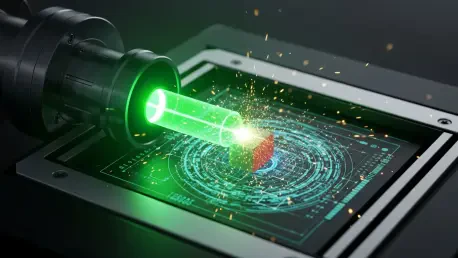

The recent “Lasers, Robots, Action” workshop at the MIT Center for Bits and Atoms demonstrated that high-level chemical analysis is no longer confined to the static environment of a traditional laboratory. Held during the Independent Activities Period, the session sought to demystify Raman spectroscopy, a sophisticated method of molecular “fingerprinting” that identifies substances based on their unique interaction with light. Led by postdoctoral researcher Lamyaa Almehmadi and graduate researcher Jiaming Liu, the event successfully bridged the gap between fundamental physics and practical engineering. Participants from various backgrounds explored how this non-destructive technique could be applied to everyday objects, transforming abstract concepts into tangible solutions. By focusing on the intersection of light scattering and material science, the workshop inspired a new wave of curiosity regarding the chemical makeup of the world. This initiative proved that complex analytical tools can become accessible to a broader audience when paired with innovative teaching.
The Evolution: From Lab Bench to Handheld Device
At its core, Raman spectroscopy operates on the principle of inelastic scattering, where laser light interacts with the vibrational and rotational modes of chemical bonds. When a laser is fired at a sample, a small fraction of the photons undergoes an energy shift, creating a spectral pattern unique to that specific molecular structure. This discovery, which earned C.V. Raman the Nobel Prize in 1928, was historically difficult to implement because the resulting signals were incredibly weak and required massive, immobile equipment for detection. For decades, researchers struggled with the logistical hurdles of bringing such sensitive machinery into the field, often settling for more destructive or time-consuming methods like mass spectrometry. However, the inherent advantage of Raman spectroscopy lies in its ability to analyze materials without causing any physical or chemical damage. This preservation of the sample makes it an ideal candidate for high-stakes analysis where the integrity of the object is paramount.
Significant technological leaps in computing power, laser stability, and miniaturized optics have fundamentally changed the landscape of chemical identification. By 2026, the bulky machinery of the past has been replaced by portable, handheld units that provide instantaneous feedback in diverse environments. These modern devices are equipped with vast digital libraries that allow users to cross-reference an unknown substance’s fingerprint against thousands of known chemical profiles in a matter of seconds. This evolution from a niche physics concept to a ubiquitous industrial tool has been driven by the need for rapid, on-site analysis across various fields. The transition to miniaturization does not sacrifice accuracy; rather, it enhances it by integrating advanced algorithms that can filter out noise and background interference. As these devices become more common, the barrier to entry for performing complex chemical assessments continues to drop, allowing non-experts to conduct sophisticated detective work with a single button press.
Diverse Applications: Solving Problems Across Multiple Sectors
The versatility of Raman spectroscopy is perhaps its most compelling feature, as it can analyze almost any material, from solid powders to liquid solutions, without preparation. In the realm of law enforcement and emergency response, these handheld scanners allow personnel to identify narcotics, explosives, or hazardous industrial chemicals safely from a distance. Because the laser can often penetrate transparent containers like glass or plastic, first responders can determine the contents of a suspicious package without ever opening it. This same non-destructive quality is invaluable for gemologists and art historians who must authenticate precious stones or analyze the pigments in ancient paintings. By identifying the specific chemical markers of a paint or mineral, experts can distinguish a genuine artifact from a modern forgery without risking the surface of the piece. This ability to see through the visible layer of an object provides a level of forensic certainty that was previously unattainable in field conditions.
Beyond forensics and art, the pharmaceutical industry utilizes this technology to maintain rigorous quality control throughout the manufacturing process. By verifying the purity of raw materials and monitoring chemical reactions in real-time, companies ensure that medications meet strict safety standards before reaching the public. Similarly, environmental researchers are now deploying semiconductor-based Raman sensors to detect trace amounts of pollutants in water supplies and air quality monitors. These sensors offer a level of sensitivity that can identify harmful contaminants at the molecular level, providing early warning systems for ecological protection. In the medical field, the technology is being adapted for rapid diagnostics and screenings, allowing for the identification of biological markers associated with various diseases. The integration of high-resolution spectroscopy into these sectors highlights a shift toward more proactive and preventative chemical monitoring. As the technology continues to refine, its role in safeguarding public health and environmental integrity will only grow more prominent.
Technological Synergy: Merging Spectroscopy With Mobile Robotics
One of the most innovative demonstrations during the workshop involved the integration of a robotic dog from the MIT Computer Science and Artificial Intelligence Laboratory. By securing a handheld Raman device to the robot, the facilitators showcased how chemical analysis can be conducted in environments that are far too dangerous for human intervention. This setup allows the robot to navigate toxic industrial leaks, unstable structures, or active crime scenes while the operator remains at a safe distance. The demonstration proved that the fusion of autonomous mobility and molecular fingerprinting creates a powerful tool for remote sensing. Users were able to control the robot via a remote interface, watching real-time chemical data stream through a Wi-Fi-connected application as the robot approached target substances. This marriage of robotics and spectroscopy effectively removes the human element from high-risk zones, allowing for precise identification of unknown threats without jeopardizing lives or health.
The practical sessions of the workshop encouraged a hands-on approach that led to several unexpected insights regarding the composition of common objects. Participants brought in various items for analysis, ranging from personal trinkets to natural specimens found in the environment. One particularly striking example involved the analysis of a stone found on a local beach, which appeared to be a standard geological sample to the naked eye. However, the Raman device revealed a significant probability that the sample contained synthetic compounds and concrete-like materials, suggesting a man-made origin. This finding illustrated how advanced spectroscopy can challenge our perceptions of the natural world by revealing the hidden chemical history of objects. By providing a deeper level of forensic insight, the technology allows individuals to look past the surface and understand the true nature of their surroundings. This capability highlights the importance of using scientific tools to verify reality, as even the most mundane items can harbor complex chemical secrets that remain invisible without lasers.
Advanced Research: Probing the Building Blocks of Innovation
While the practical applications of Raman spectroscopy are vast, the technique also remains a cornerstone of fundamental research into next-generation materials. Postdoctoral researchers at the Department of Materials Science and Engineering utilize these laser-based tools to study unconventional magnetic structures known as altermagnets. By probing the vibrations of atoms within a crystal lattice, scientists can gain a clearer understanding of the underlying physics that governs magnetic and electronic behavior. This knowledge is critical for establishing the design rules required to build ultra-fast computing systems and more energy-efficient electronics. The ability to monitor how atoms move and interact under different conditions allows researchers to customize materials for specific technological needs. As global demand for high-performance computing increases, the insights gained from Raman analysis will play a vital role in the development of hardware that is both faster and more sustainable. This research demonstrates that the same technology used by first responders can also unlock the secrets of subatomic interaction.
The workshop at MIT effectively demonstrated that the fusion of lasers, robotics, and human curiosity could revolutionize how chemical secrets are accessed. Participants moved beyond the theoretical constraints of the classroom and engaged with tools that turned complex molecular data into actionable information. By successfully integrating handheld devices with mobile platforms, the session proved that the technology was ready for deployment in the most challenging real-world scenarios. The event underscored the importance of hands-on experience in fostering a deeper understanding of advanced scientific methods. This collaborative environment encouraged researchers to think critically about the future of material analysis and the potential for autonomous chemical detection. The success of the program suggested that the path forward involves the continued miniaturization of sensors and the expansion of digital chemical libraries to cover an even broader range of substances. Ultimately, the workshop established a unified vision for innovation where the hidden chemistry of the world became accessible to everyone at the touch of a button.