
The modern medical landscape faces a critical inflection point as the effectiveness of traditional antibiotics continues to wane against increasingly resilient microbial threats that claim millions of lives annually. In response to this mounting crisis, the Gladstone Institutes has established the Center for PhAIge Therapy, a pioneering initiative designed to pivot away from conventional pharmacology toward the use of genetically engineered viruses. These bacteriophages, which naturally hunt and destroy bacteria, represent a biological solution to a biological problem, yet their historical implementation has been limited by a lack of precision. By integrating artificial intelligence into the developmental lifecycle of these viruses, researchers are now capable of transforming what was once a niche experimental treatment into a scalable and robust pillar of mainstream medicine. This approach does not merely seek to find new drugs but rather to create a programmable defense system that can adapt to the shifting tactics of superbugs, effectively turning the tide in a conflict where humans have recently been losing ground to microscopic invaders.
Transforming Phage Therapy through Predictive Design
Strategic Initiatives: Target Identification and Pathogen Management
The core of the PhAIge innovation lies in its use of machine learning to eliminate the inherent guesswork from infection management, a shift supported by substantial federal funding from the National Institute of Allergy and Infectious Diseases. This rational design framework focuses on creating a systematic methodology to pair specific viruses with their bacterial counterparts, moving decisively beyond the serendipitous discoveries that characterized phage therapy in the past. By constructing a high-throughput pipeline, scientists can now analyze the complex interactions between diverse phage strains and various bacterial isolates on a massive scale. This technological leap allows for the identification of optimal viral candidates with a speed that was previously unattainable, ensuring that the selection process is governed by data rather than trial and error. This shift is essential for developing therapies that can be deployed rapidly in clinical settings, where the window for effective intervention against aggressive infections is often measured in hours.
Much of the specialized research at the center focuses on the “ESKAPE” pathogens, a group of highly adaptive bacteria known for causing hospital-acquired infections that resist nearly all standard treatments. Among these formidable threats, Klebsiella pneumoniae serves as the primary model for research due to its strong association with deadly respiratory and bloodstream infections that frequently baffle modern clinicians. Understanding how these specific bacteria utilize their genetic plasticity to evade current pharmacological drugs is the fundamental first step in designing a viral cocktail capable of systematically dismantling their defenses. By mapping the resistance profiles of these pathogens, the research team can identify specific vulnerabilities that phages are naturally equipped to exploit. This focused targeting ensures that the developed therapies are not just broad-spectrum attacks but surgical strikes tailored to the unique biological signature of the most dangerous bacteria currently circulating in global healthcare facilities.
Engineering Precision: Genetic Modification and Algorithmic Analysis
To maximize the therapeutic impact of these viral interventions, the center utilizes proprietary genome editing tools that allow for the precise and deliberate modification of phage DNA. These sophisticated alterations are engineered to enhance the “lytic activity” of the virus, essentially transforming it into a more efficient and lethal predator of its specific bacterial host. By fine-tuning the biological properties of a phage, researchers can ensure that the resulting treatment reaches its maximum potency before it is ever administered to a patient. This capability to reprogram the viral genome allows for the inclusion of specialized features, such as the ability to break down bacterial biofilms that often protect colonies from both the immune system and traditional medicine. These engineered phages are designed to be more than just passive killers; they are active, evolving biological agents that can be optimized for specific environments within the human body, providing a level of customization that is impossible for chemical antibiotics to replicate.
Computational modeling serves as the indispensable backbone of this precision-oriented approach, converting massive volumes of laboratory data into actionable medical insights for clinicians. By meticulously analyzing the genetic blueprints of both the phages and the bacteria they target, AI algorithms can predict which specific viral combinations will be most effective against a particular infection. This predictive power represents a paradigm shift that could eventually allow medical professionals to sequence a patient’s infection and receive a custom-tailored treatment recommendation in hours rather than weeks. The integration of AI facilitates the discovery of synergistic effects between different phage strains, allowing for the creation of “cocktails” that prevent the bacteria from developing further resistance. This data-driven strategy ensures that every treatment is backed by rigorous computational validation, significantly increasing the probability of clinical success while reducing the time required to bring life-saving interventions to the bedside of critically ill patients.
Bridging the Gap between Research and Clinical Reality
Validation Protocols: Human Organoids and Systems Integration
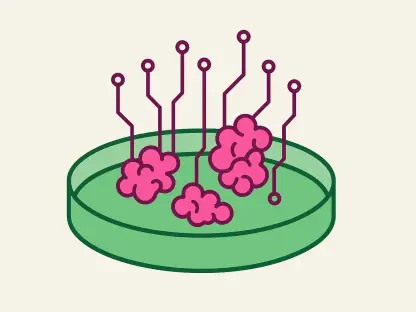
One of the most daunting hurdles in modern drug development is the “translation gap,” a phenomenon where successful laboratory experiments frequently fail to produce the same results when introduced into the human body. To bridge this divide, the center utilizes human lung organoids—miniature, lab-grown tissues that mimic the complex architecture of human organs—to observe how phages behave in a realistic biological environment. This testing phase is absolutely vital for understanding how the therapy interacts with human cells and the surrounding immune system before the transition to formal human trials. By observing these interactions in a controlled yet realistic setting, researchers can identify potential side effects or delivery challenges early in the development process. This methodology provides a much more accurate reflection of therapeutic efficacy than traditional petri dish cultures, allowing the team to refine the viral designs to ensure they remain effective and safe within the intricate systems of the human anatomy.
The global struggle against superbugs is a collaborative endeavor, organized through the CAPT-CEP network to streamline research and development across multiple high-tier academic and medical institutions. While the Gladstone Institutes focuses on the core AI design and genetic engineering of the phages, Stanford University develops advanced delivery mechanisms specifically optimized for the lungs, and the University of Pittsburgh establishes safe and effective dosing regimens. This strategic division of labor ensures that every critical aspect of the therapy, from its initial molecular design to its eventual delivery in a hospital, is managed by specialized experts in their respective fields. This multi-institutional synergy accelerates the pace of innovation and ensures that the transition from bench to bedside is handled with the highest level of scientific rigor. By pooling resources and expertise, the network creates a comprehensive ecosystem that is capable of addressing the multifaceted challenges of treating antibiotic-resistant infections on a global scale.
Scalable Solutions: Adaptive Therapeutics and Long-Term Control
The ultimate objective of this expansive initiative is to establish a sustainable and scalable production model that can keep pace with the rapid and constant evolution of bacterial resistance. Unlike traditional chemical antibiotics, which are static compounds that bacteria eventually learn to bypass, engineered phages can be programmed to co-evolve alongside their microbial targets. This provides a long-term solution to the microbial arms race, as the medicine itself possesses the capacity to adapt to new resistance mechanisms as they emerge in the environment. The shift toward biological therapeutics marks the dawn of a new era in which medicine is as dynamic and adaptable as the pathogens it is designed to defeat. Developing a framework for the rapid manufacturing and distribution of these customized phages is essential for making this technology accessible to a broad population. This scalability ensures that the benefits of phage therapy are not restricted to specialized cases but can be integrated into standard infection control protocols.
Building a resilient infrastructure for infection control requires a fundamental change in how the medical community perceives and treats microbial threats in the modern age. The ability to generate new, effective treatments on demand represents a significant departure from the traditional pharmaceutical model of mass-producing a single drug for millions of people. In this new framework, the emphasis shifts to the underlying technology platform, which can be deployed to create unique solutions for unique problems as they arise. This adaptability is the key to maintaining a strategic advantage over superbugs, ensuring that healthcare providers are never again left without options when faced with a resistant infection. As these technologies continue to mature, the focus will increasingly move toward the integration of these biological tools into the broader public health strategy. This proactive stance is necessary for safeguarding the future of modern medicine and protecting the global population from the ever-present threat of evolving bacterial pathogens.
Implementation Strategies for a New Therapeutic Era
The advancement of AI-driven phage therapy necessitated a significant shift in how regulatory bodies and healthcare providers approached the validation of biological treatments. To move these innovations into the clinical mainstream, stakeholders prioritized the establishment of standardized protocols for the rapid genetic sequencing of bacterial isolates. This logistical groundwork allowed for the immediate deployment of custom-engineered viral cocktails, which proved to be more effective than broad-spectrum antibiotics in early pilot programs. Furthermore, the integration of real-time monitoring systems enabled clinicians to track the evolution of pathogens within individual patients, providing data that informed the next generation of viral designs. These practical steps were essential for demonstrating the safety and efficacy of programmable medicine in real-world scenarios. By focusing on the development of adaptable delivery systems and streamlined manufacturing pipelines, the medical community successfully created a framework that prioritized patient outcomes over static drug formulations. This transition ensured that the tools developed between 2026 and 2030 were capable of meeting the dynamic challenges of microbial resistance for years to come.