
The intricate dance between the human immune system and the central nervous system has long remained one of the most formidable frontiers in modern medicine, presenting challenges that traditional drug discovery methods have struggled to overcome. While the brain was once considered an immunologically privileged site, modern research has revealed a persistent and complex dialogue between neural tissues and circulating immune cells. This realization has opened the door to treating devastating conditions such as multiple sclerosis and Alzheimer’s disease by targeting the neuroimmune axis. However, the sheer volume of data generated by multi-omic studies often paralyzes human researchers, necessitating a shift toward advanced computational frameworks. By integrating large-scale biological datasets with neural networks, scientists are now beginning to uncover specific pathways that were previously hidden in the noise of genomic sequences. These technological advancements are not merely incremental; they represent a fundamental shift in how biological complexity is navigated to find cures.
Revolutionary Approaches to Target Identification
Decoding the Spatial Architecture of Neural Tissues
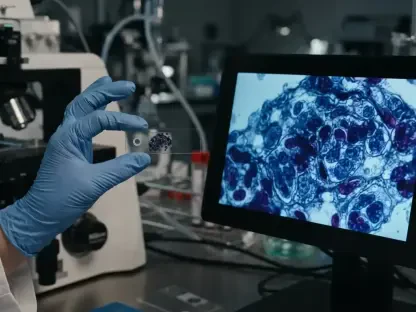
To understand how the immune system influences the brain, one must look beyond simple genetic sequences and examine the precise spatial arrangement of cells within the neurovascular unit. Spatial transcriptomics has emerged as a cornerstone of this effort, allowing researchers to visualize gene expression while maintaining the structural context of the tissue. Processing the petabytes of data generated by these experiments requires sophisticated machine learning algorithms capable of recognizing patterns that define healthy versus diseased states. From 2026 to 2028, the industry is expected to see a surge in the use of graph neural networks to map how microglia interact with neurons during the onset of neurodegeneration. These models can simulate the micro-environment of a lesion, identifying which cells are driving inflammation and which are attempting to repair the damage. By pinpointing the exact location where these interactions occur, developers can design drugs that target specific cellular neighborhoods rather than the entire brain.
Precise Identification of Microglial Phenotypes
Identifying the right target is only half the battle, as the plasticity of immune cells in the brain adds another layer of difficulty to the discovery process. Microglia, the resident immune cells of the central nervous system, can transition between protective and harmful states depending on the signals they receive from their surroundings. AI-driven phenotyping is currently being used to categorize these states with a level of precision that was impossible just a few years ago. By training deep learning models on high-resolution imaging and single-cell RNA sequencing data, researchers have identified rare subpopulations of cells that appear only in the early stages of disease. This level of granularity allows for the development of highly specific therapies that modulate immune behavior without suppressing the entire system. Such a focused approach minimizes the risk of broad immunosuppression, which has historically been a major side effect of neuroimmune treatments. The ability to distinguish between these subtle cellular states is a standard requirement.
Accelerating Validation and Precision Stratification
Generative Chemistry and Molecular Optimization
The application of generative chemistry is fundamentally altering the landscape of molecular design by moving away from traditional trial-and-error methods toward intentional synthesis. Large language models, adapted for the language of chemistry, can now suggest entirely new molecular structures that possess specific binding affinities for neuroimmune receptors. These AI systems are trained on vast repositories of chemical space, allowing them to propose analogs that a human chemist might never consider. In the period from 2026 to 2029, the adoption of self-correcting synthesis loops is expected to become the industry standard for optimizing lead compounds. In these systems, an AI proposes a molecule, an automated robotic system synthesizes it, and the resulting biological data is fed back into the model to refine the next iteration. This rapid cycle of design and testing significantly reduces the time required to move from a hit molecule to a clinical candidate. By automating repetitive aspects, researchers focus on strategy.
Strategic Implementation of Precision Medicine
The conclusion of recent large-scale initiatives demonstrated that the integration of artificial intelligence into the neuroimmune discovery pipeline was no longer an experimental luxury but a necessary evolution. Researchers recognized that the complexity of the human brain demanded a level of computational power that exceeded traditional analytical frameworks. By shifting toward AI-mediated target identification and molecular design, the industry established a more resilient and efficient path for bringing life-changing therapies to market. The focus moved from broad-spectrum treatments toward highly personalized interventions that accounted for the unique immunological landscape of the individual. To maintain this progress, the industry adopted a strategy of standardizing data sharing protocols to ensure AI models were trained on high-quality datasets. Regulatory frameworks also evolved to provide clear validation guidelines for AI-generated evidence. These combined efforts ensured that the discovery of neuroimmune drugs became a more predictable and successful endeavor.