
The sheer complexity of human cellular interaction often dwarfs the capacity of even the most seasoned medical professional to synthesize millions of data points into a single, cohesive diagnosis. Researchers like Dr. Amber Simpson at the University of Alberta are spearheading a movement that shifts the role of artificial intelligence from a mere automated assistant to a fundamental cognitive partner in clinical decision-making. By navigating what experts call high-dimensional data, these computational systems are capable of identifying subtle biological nuances that would otherwise remain invisible to the human eye. This paradigm shift does not seek to replace the physician but rather to augment their capabilities, effectively providing a super-human lens through which to view patient health. As this technology integrates into the healthcare infrastructure from 2026 onward, it promises to bridge the gap between abstract genetic markers and actionable bedside treatment, turning the tide against diseases that have long defied traditional medical analysis.
Pharmaceutical Innovation: Revolutionizing the Drug Discovery Pipeline
The pharmaceutical sector is currently undergoing a radical transformation as artificial intelligence streamlines the traditionally slow and expensive process of bringing new therapies to market. Historically, the journey from a laboratory concept to a pharmacy shelf has been fraught with high failure rates and astronomical costs, often taking over a decade to complete. By utilizing advanced machine learning models, researchers can now analyze how thousands of different chemical compounds interact with specific human proteins in a fraction of the time required by manual methods. This capability allows for the rapid identification of candidates that are most likely to be effective, effectively narrowing the search field before physical synthesis even begins. Consequently, the industry is witnessing a more agile approach to drug development, where data-driven insights direct resources toward the most promising avenues of research, ultimately lowering the barrier to entry for innovative treatments and ensuring that patients receive more effective medications faster than ever before.
Computational Shift: Transitioning From Animal Testing to Simulations
The traditional reliance on animal models in drug testing has long been a bottleneck, primarily because animal biology frequently fails to accurately replicate the complex immune responses found in humans. Statistics indicate that roughly 70% of drugs that pass animal trials fail when they reach human subjects, leading to significant wasted effort and investment. To address this, a human-first strategy is being implemented, using massive datasets to simulate drug interactions with human molecular structures in a virtual environment. These simulations can predict how a specific disease-related molecule will react to a chemical inhibitor with high precision, allowing researchers to weed out toxic or ineffective compounds early. This approach does not entirely bypass the need for rigorous safety checks, but it ensures that the candidates entering clinical trials have a much higher probability of success. By prioritizing these computational models, the industry is creating a more ethical and cost-effective framework that aligns more closely with real human physiology.
Institutional Synergy: Fostering Interdisciplinary Collaboration and Data Integration
The success of these technological advancements is deeply rooted in robust institutional support systems, such as the Alberta Machine Intelligence Institute. With significant backing from the Canadian Institute for Advanced Research, the University of Alberta has become a global magnet for artificial intelligence expertise. This environment encourages a unique synergy between computer scientists, biostatisticians, and clinical ethicists, ensuring that new tools are developed with both technical precision and clinical sensitivity. The university’s AI + Health Hub serves as a practical laboratory where these diverse teams work with integrated health data to turn theoretical algorithms into functional medical applications. By fostering this collaborative culture, the institution is bridging the gap between raw data and bedside care. This interdisciplinary approach is essential for translating complex machine learning models into reliable standards of practice that can be safely deployed across public health systems to provide tangible benefits to patients.
Diagnostic Advancements: Redefining Clinical Oncology and Patient Trajectories
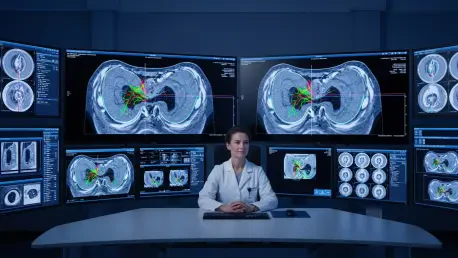
In the demanding field of oncology, the ability to identify the earliest signs of malignancy is paramount to improving survival rates and treatment success. AI is proving to be an indispensable tool in diagnostic imaging, where it acts as an tireless observer capable of detecting minute changes in tissue density or vascular patterns that might be overlooked during a standard review. These systems are trained on extensive libraries of medical scans, allowing them to provide a second set of eyes that enhances the accuracy of radiologists and pathologists alike. This technological integration is particularly valuable in high-volume clinical settings where the risk of human fatigue is greatest. By automating the initial screening process, the system can prioritize urgent cases for immediate physician review while providing reassurance for healthy patients more quickly. This triage capability not only optimizes hospital workflows but also ensures that every patient receives a level of scrutiny that was previously impossible to achieve manually.
Precision Imaging: Utilizing Advanced Algorithms for Detection
Advanced diagnostic algorithms are now capable of perceiving subtle patterns in medical scans that fall outside the range of human perception. By analyzing historical imaging data alongside current patient results, these models can identify indicators of disease progression with remarkable consistency. This level of precision is transforming the role of the radiologist from a primary detector to a specialized interpreter of high-level data insights. In regions where there is a shortage of oncological specialists, these AI tools serve as a critical bridge, providing high-quality diagnostic support to general practitioners. The software acts as a persistent monitor, flagging suspicious cellular developments and allowing for interventions to occur at a much earlier stage. This proactive stance in diagnostic oncology is fundamentally changing the standard of care, moving the medical community away from reactive treatments and toward a model where early detection is the primary defense against the most aggressive forms of cancer.
Temporal Analysis: Navigating Longitudinal Patient Care Paths
Beyond the initial identification of disease, the application of longitudinal data analysis provided a comprehensive roadmap for tracking patient health over extended periods. Rather than relying on static snapshots, these models analyzed fluctuations in medical data points over weeks or months to predict how a patient would respond to specific treatments. This shift toward temporal analysis allowed oncologists to move away from generic protocols and toward highly personalized care plans that accounted for the unique biological trajectory of each individual. By 2026, medical teams implemented these predictive frameworks to adjust dosages and therapies in real-time, significantly improving long-term outcomes and patient quality of life. This evolution in diagnostic methodology highlighted the importance of viewing healthcare as a continuous journey rather than a series of disconnected events. The successful integration of these technologies required a commitment to data transparency and ongoing education for healthcare providers, ensuring that medicine remained both high-tech and human-focused.