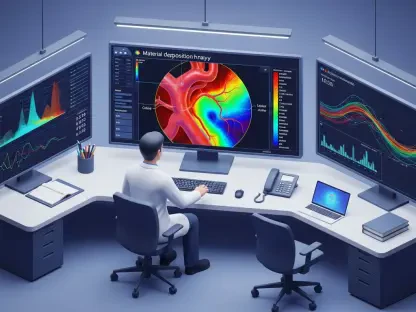

The traditional scientific method, long defined by manual experimentation and painstaking human observation, is currently undergoing a radical metamorphosis into a system of autonomous orchestration. By 2026, the transition from artificial intelligence as a passive data-processing tool to an active “AI scientist” has reached a critical turning point where machines handle the entire research lifecycle. These advanced systems are no longer restricted to identifying patterns in large datasets; they are beginning to manage the hypothesis generation and experimental design phases autonomously. This evolution integrates agentic intelligence with physical automation, allowing machines to work alongside humans as essential collaborators rather than mere assistants. This new era moves beyond empirical constraints, favoring a design-first approach over incremental experimentation. AI scientists possess the reasoning capabilities to analyze complex biological systems at a scale that exceeds human capacity, using predictive modeling to formulate hypotheses and design experiments. By shifting the focus from physical testing to digital reasoning, researchers can bypass the slow, repetitive cycles that have historically hindered the pace of scientific breakthroughs.
The Rise of Agentic AI and Accelerated Computing
The integration of AI scientists into the core of the research process allows for the multi-faceted management of complex projects that were once fragmented across various departments. These autonomous agents are capable of proposing novel biological targets, designing molecular structures, and simulating intricate biological behaviors within high-fidelity virtual environments. By managing both digital simulations and physical laboratory tasks, these systems act as bridge builders between abstract theory and practical application. This agency enables them to identify new uses for existing medications and streamline the transition from a conceptual hypothesis to a tangible proof-of-concept. As these agents operate with a high degree of independence, they can evaluate millions of potential molecular combinations in a fraction of the time required by human researchers. This shift ensures that only the most promising candidates move forward to the physical testing phase, thereby optimizing resource allocation and reducing the likelihood of late-stage failures. The result is a more dynamic and responsive research environment where innovation is driven by systemic logic.
Powering this transformation is the rise of accelerated computing, which provides the technical backbone necessary for modern biology and chemistry to thrive in a digital-first world. Utilizing specialized hardware like GPUs to perform massive parallel processing allows research teams to handle the computational demands of high-level reasoning and massive simulation workloads. This infrastructure ensures that AI scientists can perform advanced simulations in real-time, drastically shrinking development timelines that used to span several years. The availability of such immense processing power has enabled the creation of digital twins for biological systems, allowing for the testing of drug interactions in a virtual space before a single vial is filled. This capability is not merely an incremental improvement; it represents a fundamental change in how scientific inquiry is conducted. By leveraging hardware optimized for the specific mathematics of neural networks, laboratories can now process genomic sequences and protein folding patterns with a level of precision that was previously unattainable. This technical foundation allows for a more focused and rapid approach to solving the most pressing scientific challenges.
Programmable Research and Lab-in-the-Loop Systems
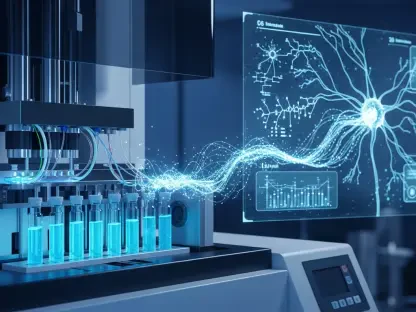
A defining feature of this technological revolution is the “lab-in-the-loop” ecosystem, where AI reasoning is seamlessly merged with robotic automation to create a self-correcting research cycle. In this setup, the AI scientist generates a comprehensive experimental plan that is immediately executed by high-precision robots without the need for manual setup or human oversight. As the robots complete their tasks, the resulting data is instantly fed back into the AI’s reasoning engine for immediate analysis. This creates a continuous feedback loop, allowing the system to refine its strategy and guide the next phase of experimentation based on the latest results. Such an environment eliminates the downtime typically associated with data interpretation and manual intervention, ensuring that the laboratory remains productive around the clock. The precision of robotic execution also minimizes the variability and errors that often plague manual laboratory work, leading to more reproducible and reliable scientific data. This synergy between digital intelligence and physical execution represents the pinnacle of modern automated research.
This integration effectively transforms the research and development pipeline into a single, fluid process known as “programmable research,” where software instructions direct physical matter. Disciplines that once operated in silos can now share automated infrastructure to scale innovation with unprecedented efficiency across various scientific domains. Workflows in fields like synthetic chemistry, which previously took years to complete, can now be compressed into a matter of hours through the use of standardized robotic modules and cloud-based control systems. By closing the gap between digital intelligence and physical execution, laboratories are becoming highly efficient factories for discovery rather than mere testing facilities. This shift allows organizations to pivot quickly between projects, as the same robotic platforms can be repurposed for different biological or chemical tasks simply by updating the AI’s underlying code. The ability to program a laboratory like a computer has unlocked a new level of agility in the scientific community, fostering a culture of rapid iteration and cross-disciplinary collaboration that was once considered impossible.
Global Implications for Healthcare and Materials Science
The impact of autonomous research extends far beyond the traditional pharmaceutical industry, promising to reshape the global healthcare landscape through more efficient discovery processes. By reducing the costs and risks associated with drug discovery, AI scientists are making it feasible to pursue treatments for rare diseases and neglected conditions that were previously ignored. This shift also paves the way for personalized medicine, where therapies are specifically tailored to an individual’s genetic profile rather than being designed for a broad population average. As the barriers to entry fall, a more diverse range of medical challenges can be addressed, leading to more equitable healthcare outcomes across different demographics and regions. The acceleration of clinical trials through better predictive modeling means that life-saving treatments can reach patients much faster than in the past. This democratization of high-end research capabilities ensures that medical innovation is no longer the exclusive domain of the largest corporations, allowing smaller labs to make significant contributions to global health.
Beyond medicine, the principles of simulation and automated experimentation are driving progress in materials science and sustainable energy through the discovery of novel compounds. AI scientists are currently guiding the development of advanced semiconductors, more efficient energy storage systems, and sustainable building materials that reduce environmental impact. By predicting the properties of a material before it is ever synthesized, researchers can pursue ambitious goals that were once deemed too expensive or logistically challenging to explore. This collaborative synergy between human ingenuity and machine processing power is setting a new pace for global innovation across all scientific frontiers, from battery technology to carbon capture solutions. The ability to simulate molecular interactions at an atomic level allows for the design of materials with specific, desired characteristics, such as higher heat resistance or better electrical conductivity. These advancements in materials science provided the essential components for the next generation of hardware, creating a self-sustaining cycle of technological progress. This systematic approach ensured that the most promising sustainable technologies moved from the lab to the market with minimal delay.