
The world of forensic pathology is undergoing a molecular revolution, moving beyond the physical observations of the past toward a data-driven future. Ivan Kairatov, a distinguished expert in biopharmaceutical innovation and research and development, stands at the forefront of this shift. With a deep understanding of how biotechnology can decode the body’s most complex signals, he explores how artificial intelligence is now being used to solve one of the oldest mysteries in crime scene investigation: the exact moment of death. By analyzing the predictable breakdown of metabolites in the blood, researchers are providing investigators with tools that remain accurate long after traditional methods fail.
The following discussion explores the transition from traditional indicators to chemical signals, the scalability of AI models across international laboratories, and the profound impact that a more precise post-mortem interval has on police work. We also delve into the resilience of metabolic data against environmental decomposition and the future of pinpointing the specific hour of an individual’s passing.
Traditional forensic indicators like body temperature and rigor mortis often lose reliability within a few days of death. How do metabolite changes in the blood provide a more stable biological signal, and what specific chemical shifts occur during the first thirteen days post-mortem?
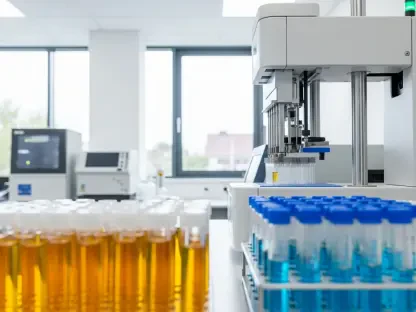
Death is not a static event but rather a powerful and loud biological signal that continues to resonate through the body’s chemistry long after the heart stops. While physical signs like cooling or stiffness dissipate quickly, the organs and tissues begin a systematic process of breaking down into small molecules known as metabolites. These substances are released into the blood in a highly predictable sequence, creating a chemical clock that researchers can read with remarkable accuracy. In studies involving blood samples from over 45,000 autopsies collected over nearly ten years, we have seen that these shifts remain discernible for a significant duration. Even up to thirteen days after death, the metabolic profile provides a steady trail of evidence that allows us to estimate the time of death with a precision of roughly one day, far outlasting the utility of body temperature or vitreous potassium levels.
High-precision models often require massive datasets, yet some labs only have access to a few hundred samples. How does the strength of metabolic signals impact AI training, and what steps should international facilities take to implement this technology with limited data?
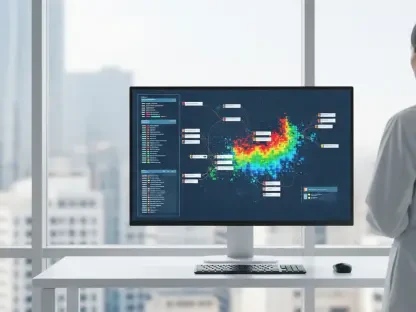
One of the most encouraging discoveries in our research is that the metabolic signal of death is so robust that you don’t necessarily need an overwhelming amount of data to build a functional model. While we were fortunate to have a gold mine of data at the National Board of Forensic Medicine—using 4,876 specific samples with known death intervals to train our AI—our analysis proved that a few hundred individuals are actually sufficient to create a reliable predictive model. This is a game-changer for smaller international facilities that may lack the resources to maintain decade-long databases. For these labs to implement this tech, the focus should be on high-quality sampling and standardized metabolic profiling, as the strength of the biological signal compensates for a smaller sample size. It democratizes forensic precision, ensuring that a laboratory in a smaller jurisdiction can achieve results comparable to those in major metropolitan hubs.
Determining an accurate window of death is essential for narrowing down witness lists and police timelines. How does a one-day precision margin change the trajectory of a complex investigation, and how might this data help detectives reconstruct a deceased person’s final hours?
In a complex murder investigation, time is the most precious commodity, and a one-day precision margin acts as a powerful filter for the overwhelming amount of information detectives must process. By narrowing the post-mortem interval to a specific 24-hour window, police can immediately stop wasting resources on interviewing witnesses who were only relevant days before or after the incident. It allows them to synchronize the biological evidence with digital footprints, such as cell phone records or CCTV footage, to reconstruct the victim’s final hours with much higher confidence. Forensic assessments are essentially a puzzle, and having a definitive date of death provides the frame that holds all the other pieces—like witness statements and physical evidence—in their proper place. This level of accuracy transforms the investigation from a broad search into a targeted, surgical operation.
Pinpointing the exact hour of death remains a significant hurdle compared to identifying the calendar date. What biological markers show the most promise for determining the specific time of day a death occurred, and what data refinements are necessary to reach that level of granularity?
Moving from a 24-hour estimate to a specific hour of death is the next great frontier in forensic systems biology. Currently, our AI models are excellent at identifying the date, but they lack the granularity to distinguish between a death that occurred at noon versus one at midnight. The promise lies in identifying specific metabolites that fluctuate according to circadian rhythms or those that degrade at a much more rapid, hourly rate immediately following the cessation of life. To reach this level of detail, we need to produce and analyze new datasets that include more precise documentation of the exact time an individual was last seen alive and the exact moment they were found. Refining the AI through these tighter temporal windows will eventually allow us to move beyond “which day” to “which hour,” providing a level of detail that could confirm or shatter an alibi in an instant.
Environmental conditions and external factors heavily influence how a body decomposes. In what ways does the metabolic signal remain resilient against these variables, and how can AI distinguish between natural decomposition and changes caused by drugs or toxins in the blood?
We initially approached this research as a high-risk project because we were concerned that external factors—like temperature, humidity, or the presence of foreign substances—would “noise out” the biological signal of decomposition. However, we were surprised to find that the internal metabolic breakdown follows such a rigorous biological program that the signal remains remarkably strong and resilient even in varied conditions. AI is particularly adept at this type of pattern recognition; it can be trained to look past the “noise” created by drugs, pharmaceuticals, or toxins, which were present in many of the 45,000 samples we analyzed. By comparing the degradation patterns across thousands of cases, the model learns to isolate the universal chemical signatures of death from the incidental chemical signatures of the individual’s lifestyle or environment. This ability to distinguish between the two is what makes the AI model an essential companion to the forensic pathologist’s traditional detective work.
What is your forecast for the use of artificial intelligence in forensic pathology?
I foresee a future where AI-driven metabolomics becomes a standard, non-negotiable component of every autopsy, moving from an experimental research tool to a primary forensic pillar. Within the next decade, we will likely see “real-time” death dating, where blood samples are analyzed on-site or in mobile labs to provide immediate temporal windows to investigators. Beyond just timing, AI will eventually be able to integrate metabolic data with genetic and environmental factors to provide a holistic “biological biography” of the final moments of a person’s life. This won’t replace the pathologist, but it will provide them with a high-definition molecular lens that makes the current methods look like blurry photographs. As our datasets grow and our algorithms become more refined, the “silent witness” of the human metabolome will finally be given a clear and undeniable voice in the courtroom.