
The global scientific community recently witnessed a transformative milestone in the decabornization of research facilities as the 2025 Freezer Challenge reached a scale previously thought impossible. This year, the initiative successfully engaged 3,724 laboratories across 36 countries, demonstrating a massive collective appetite for sustainable operational changes within high-intensity research environments. Spearheaded by My Green Lab and the International Institute for Sustainable Laboratories, the competition has evolved from a niche advocacy program into a global standard for laboratory excellence. The numbers tell a compelling story of environmental impact; the participants managed to reduce energy consumption by a staggering 31.6 million kWh in a single year, which contributes to a cumulative total of over 108 million kWh saved since the program began in 2017. This surge in participation reflects a broader industry shift where ecological responsibility is no longer viewed as a peripheral concern but as a core component of institutional prestige and financial health.
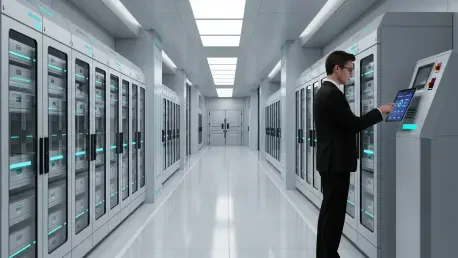
By focusing on the optimization of cold storage—historically the most energy-intensive aspect of laboratory infrastructure—these institutions are effectively rewriting the rules of modern research. Ultra-low temperature freezers are notorious for their high electricity demands and significant carbon footprints, yet they are essential for preserving the biological integrity of samples that represent years of scientific labor. The 2025 winners have proven that it is entirely possible to reconcile the demanding requirements of sample preservation with the urgent need for climate action. This balance is achieved through a combination of rigorous inventory management, equipment upgrades, and a fundamental reassessment of traditional operating temperatures. As these practices become more common, the laboratory of the future is being defined not just by the breakthroughs it produces, but by the efficiency and environmental stewardship it demonstrates in the process of achieving those results.
Strategic Modernization: Rethinking Infrastructure Through Lifecycle Analysis
The most successful organizations in the 2025 challenge, including industry giants like AstraZeneca and academic leaders such as Newcastle University, have moved away from short-term procurement strategies in favor of a “lifecycle thinking” model. Historically, many labs selected equipment based primarily on the initial purchase price, often overlooking the hidden costs associated with high energy consumption and frequent maintenance requirements. Today, however, these top-performing entities prioritize energy ratings and long-term durability, recognizing that a more expensive, high-efficiency unit will often pay for itself within a few years through reduced utility bills and a lower failure rate. At AstraZeneca, this shift was perfectly integrated into their “Ambition Zero Carbon” strategy, allowing the organization to retire hundreds of inefficient, aging units that were both a liability to research and a drain on the power grid. By treating freezer replacement as a strategic infrastructure upgrade rather than a routine purchase, they have set a high bar for the pharmaceutical sector.
Moreover, the process of modernization extends beyond simply buying new hardware; it involves a sophisticated analysis of how that hardware is integrated into the existing lab space. At Mars Global Services, for instance, the strategy involved a comprehensive review of storage layouts to ensure that cooling capacity was not being wasted on underutilized space or disorganized inventory. This type of space optimization allows facilities to consolidate samples and decommission unnecessary units, which directly translates into immediate energy savings. When labs prioritize modern technology that offers better insulation and more efficient compressors, they also gain the advantage of quieter work environments and reduced heat output into the room. This reduction in heat load can, in turn, lower the demands on a building’s HVAC system, creating a cascading effect of efficiency throughout the entire facility. These efforts demonstrate that modernizing lab infrastructure is a multi-dimensional task that requires a deep understanding of both mechanical performance and organizational workflow.
Operational Discipline: Integrating Education Into Daily Workflows
The 2025 challenge winners realized that even the most advanced equipment cannot deliver its full potential without the active cooperation and informed behavior of the scientists using it. Organizations like Boston Children’s Hospital pioneered creative outreach programs such as the “F.R.E.D. Talk” (Freezers Reducing Energy Discussion) series, which transformed a technical subject into an engaging and accessible educational campaign. By using digital signage, targeted newsletters, and interactive seminars, they successfully bridged the gap between administrative sustainability goals and the daily reality of bench scientists. This human-centric approach ensures that best practices, such as closing freezer doors quickly and defrosting units regularly, become second nature rather than burdensome chores. When researchers understand the “why” behind these requests—specifically how they protect the integrity of their own samples—they are much more likely to adopt these habits permanently, leading to a more resilient research environment.
Building on this foundation of education, companies like Amgen have demonstrated that a supportive cultural environment is the strongest catalyst for long-term operational success. By empowering scientists to view themselves as environmental stewards, these organizations have fostered a sense of professional pride in laboratory efficiency. This cultural shift is essential because it moves sustainability out of the realm of compliance and into the realm of professional excellence. When a scientist sees a well-organized, ice-free freezer, they recognize it as a hallmark of a high-functioning lab where attention to detail is paramount. This environment encourages peer-to-peer accountability, where team members help one another maintain standards without the need for constant oversight. By treating educational outreach as a continuous dialogue rather than a one-time lecture, institutions are building a knowledgeable workforce capable of driving innovation in sustainable practices far beyond the duration of a single competition.
Technical Reliability: The Operational Dividend Of Temperature Management
One of the most significant technical shifts observed in the recent challenge was the widespread move toward “chilling up” freezer setpoints from -80°C to -70°C. While -80°C has long been the default setting for ultra-low temperature storage, research from institutions like Johns Hopkins University has shown that for many sample types, the slightly higher temperature provides equivalent preservation while significantly reducing mechanical strain. This ten-degree adjustment can cut energy consumption by as much as 30% to 40%, but perhaps more importantly, it extends the lifespan of the freezer’s compressor. In many cases, laboratories reported that their units lasted years longer before requiring major repairs when operated at -70°C. This shift represents a massive reduction in capital expenditure over time and, crucially, it decreases the likelihood of a catastrophic compressor failure that could jeopardize decades of irreplaceable research material.
Furthermore, the operational benefits of a sustainable lab are directly tied to the speed and accuracy of sample retrieval. The Centre for Environment, Fisheries, and Aquaculture Science (Cefas) highlighted that the labor-intensive process of organizing and indexing freezers pays off immediately by reducing the amount of time doors are kept open. When samples are logically archived and easily accessible through digital inventory systems, the thermal stability of the freezer is maintained, and the scientist’s time is utilized more efficiently. This synergy between “green” practices and “good” science is undeniable; a sustainable freezer is almost always a more reliable and organized freezer. By reducing the frequency of door openings and ensuring that gaskets are clean and functional, labs can prevent the buildup of frost that often leads to mechanical issues. These technical refinements prove that efficiency is not just an environmental goal but a fundamental requirement for high-quality, reproducible scientific research.
Leadership And Incentives: Scaling Success Through Institutional Support
The transition to a sustainable laboratory model is rarely a bottom-up process alone; it requires the clear and vocal endorsement of senior leadership to overcome institutional inertia. At Novartis, executive backing was the primary driver behind the “Chill Up” program, which established campus-wide temperature standards and provided the necessary resources for equipment upgrades. When leadership explicitly links sustainability to the organization’s broader mission, it removes the perceived risks that individual researchers might feel when departing from traditional methods. This top-down support provides a mandate for facilities managers and lab heads to prioritize energy efficiency during their annual planning and budgeting cycles. Without this high-level commitment, sustainability initiatives often struggle to gain the momentum needed to achieve significant, long-term impact across multiple departments or global sites.
In addition to formal mandates, the use of positive reinforcement and incentives has proven to be a highly effective tool for driving participation. Johns Hopkins University has perfected this approach by offering monetary awards for the highest-performing labs and hosting an annual celebratory luncheon to recognize the efforts of its staff. By turning what could be a dry technical challenge into a prestigious community event, they have created a competitive but collaborative atmosphere that rewards innovation. These incentives validate the grassroots efforts of lab managers who spend hours defrosting freezers and cleaning out old samples, making them feel like valued contributors to the university’s environmental goals. This model of leadership proves that when institutions invest in their people and celebrate their successes, they can achieve a “virtuous circle” where environmental progress, cost savings, and staff morale all improve simultaneously.
Long-Term Viability: Sustainability As A Permanent Operational Standard
The lasting legacy of the 2025 Freezer Challenge is the realization that these practices are not merely temporary measures for a competition, but the new standard for the global scientific community. As institutions look beyond the current year, the habits formed during this challenge—such as proactive maintenance, rigorous inventory control, and temperature optimization—are being integrated into official Standard Operating Procedures. At Newcastle University, the momentum from the challenge has already expanded into other areas of lab management, such as reducing single-use plastics and digitizing paperwork. This evolution proves that once a culture of efficiency is established in one area, it naturally spreads to others, creating a more holistic approach to sustainable science. The focus is shifting from “how can we save energy during the challenge” to “how can we design our entire research enterprise to be sustainable by default.”
To maintain this progress, laboratories must now focus on the institutionalization of these “green” habits to ensure they survive staff turnover and changes in funding. This involves building sustainability criteria into the training of new PhD students and post-doctoral researchers, ensuring that the next generation of scientists views freezer management as a core skill. Furthermore, laboratories should seek to establish permanent partnerships with their facilities and sustainability departments to ensure that data collection and energy monitoring remain ongoing processes. By treating the results of the 2025 challenge as a baseline rather than a ceiling, the scientific community can continue to push the boundaries of what is possible in decarbonized research. The ultimate objective is to reach a point where environmental responsibility is so deeply embedded in the scientific method that it no longer requires a “challenge” to motivate action, but is simply the way high-quality research is conducted. In this past year, the winners have provided a clear roadmap for achieving this vision, proving that the most critical assets in any lab—expertise, samples, and equipment—are best protected through a commitment to sustainability.