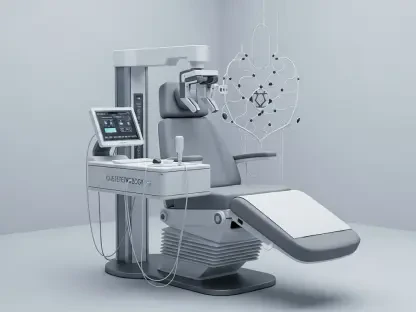

In an age where artificial intelligence continues to pervade every aspect of daily life, the idea of AI chatbots stepping into the realm of psychotherapy is no longer a far-fetched concept. Imagine reaching a point where a simple conversation with a machine could lessen the burden of your anxieties

In an era where technology is constantly evolving the healthcare landscape, the recent partnership between the New Jersey Innovation Institute (NJII) and Cognome holds significant promise. This alliance is poised to make substantial strides in improving patient care through the integration of

Artificial intelligence (AI) and machine learning (ML) represent transformative forces in modern healthcare that are unlocking unprecedented opportunities to improve diagnostic accuracy and optimize treatment plans. By integrating these sophisticated technologies into clinical practice, the

Google has long been at the forefront of technological innovation, and its efforts in the health sector are no exception. By leveraging advanced artificial intelligence (AI) capabilities, the tech giant aims to enhance global health outcomes through improved accessibility to quality health

The utilization of machine learning to predict nonadherence to antiretroviral treatment (ART) among adolescents in Uganda has unveiled promising solutions. Claire Najjuuko, a doctoral student at Washington University in St. Louis, has led a groundbreaking research initiative aiming to improve ART

The recent advancements in open-source AI models have sparked an engaging dialogue in the medical community about their potential to rival proprietary counterparts in diagnosing complex clinical cases. A National Institutes of Health (NIH)-funded study, led by researchers at Harvard Medical School,