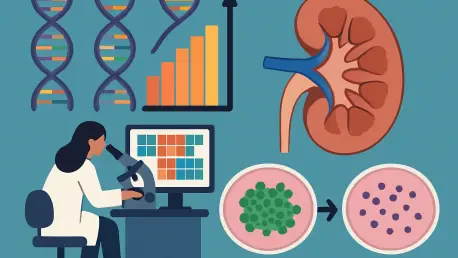

Ivan Kairatov stands at the forefront of a biological revolution, bridging the complex world of biopharmaceutical research with the urgent needs of modern oncology. With years of experience in research and development, his expertise lies in decoding the molecular chaos that defines malignant growth. Recent breakthroughs at City of Hope and TGen have cast a spotlight on “splicing burden,” a phenomenon where errors in the maturation of messenger RNA (mRNA) serve as a roadmap for treatment success. This conversation explores how transcriptomic errors, once viewed merely as a byproduct of cancer, are being reimagined as powerful predictive tools for clinicians. We delve into the mechanics of immune system “priming,” the practicalities of integrating RNA sequencing into clinical workflows, and the potential for these biomarkers to become a universal standard across various forms of cancer.
The discussion focuses on the transition from traditional genomic sequencing to deep transcriptomic analysis. We examine how specific molecular mistakes in 101 patients with metastatic kidney cancer have provided a framework for identifying who will respond to therapy. Kairatov explains the biological triggers that allow the immune system to recognize malformed proteins and the steps necessary to bring these “splicing burden” assessments into standard pathology labs. Finally, the dialogue addresses how these advancements might reshape the long-term survival expectations for patients facing aggressive malignancies.
Traditional mRNA maturation often goes wrong in malignant cells, creating a high “splicing burden.” How do these specific errors transform a tumor’s transcriptomic landscape, and what metrics are used to distinguish a clinical “responder” from a “non-responder” based on these molecular mistakes?
In a healthy cell, the splicing process is a precise editorial act, where non-coding regions are removed to create a perfect blueprint for protein production. However, in malignant cells, this process becomes erratic and chaotic, leading to what we call a high splicing burden. This isn’t just a minor glitch; it fundamentally rewires the tumor’s transcriptomic landscape by producing a flood of aberrant mRNA transcripts that shouldn’t exist. In our recent study involving 101 patients with metastatic renal cell carcinoma, we looked specifically at how these errors correlate with clinical outcomes. We defined a “responder” as a patient who experienced a clear clinical benefit, such as visible tumor shrinkage or disease stability that persisted for at least six months. By analyzing the frequency of these splicing mistakes, we found that patients with a higher burden were significantly more likely to fall into this responder category, providing us with a concrete metric to predict which patients will actually thrive on specific therapies.
Certain malformed proteins resulting from splicing errors appear to flag cancer cells for immune attack. Could you explain the biological process that allows unique splicing events to “prime” the body’s adaptive immunity, and what specific signatures help the immune system differentiate these cells from healthy tissue?
The relationship between splicing errors and the immune system is one of the most exciting frontiers in oncology right now. When a tumor cell makes a mistake during mRNA splicing, it often produces malformed or truncated proteins that are entirely foreign to the human body. These neoantigens serve as a biological “signature” that distinguishes the cancer cell from surrounding healthy tissue, which would otherwise look quite similar to the immune system. In our research, we identified 13 unique splicing events that were highly prevalent in those patients who responded well to treatment. These events essentially act as a “priming” mechanism; the immune system is already alerted to the presence of these “wrong” proteins and is standing by, ready to attack. When we introduce immunotherapies or other treatments, we aren’t starting from scratch; we are simply giving a “nudge” to an immune system that has already recognized the tumor’s mistakes as a target.
RNA sequencing on tumor specimens reveals hundreds of distinct splicing events in metastatic kidney cancer. How can clinicians practically integrate this transcriptomic data into current diagnostic workflows, and what challenges exist when using these biomarkers to choose between immunotherapies and tyrosine kinase inhibitors?
Integrating hundreds of distinct splicing events into a daily clinical workflow is a monumental task that requires a shift from traditional DNA-based testing to comprehensive RNA sequencing. For a clinician at the bedside, the goal is to take this massive transcriptomic data set and distill it into a clear, actionable recommendation—should we use an immunotherapy or a tyrosine kinase inhibitor? The current gap in diagnostics is that we haven’t had many reliable prognostic or predictive biomarkers in the kidney cancer space until now. One of the primary challenges is the sheer volume of data; we need sophisticated computational tools to filter out the “noise” and focus on the specific events that correlate with drug response. However, by identifying the specific transcriptomic signatures that favor one therapy over another, we can move away from a “one-size-fits-all” approach and toward a truly personalized strategy that targets the tumor’s specific molecular vulnerabilities.
Aberrant splicing patterns are emerging as potential universal biomarkers across various malignancies beyond kidney cancer, such as ovarian cancer. What step-by-step advancements are necessary to standardize these “splicing burden” assessments in pathology labs, and how might this data reshape long-term survival expectations for patients?
To move “splicing burden” from a research concept to a standard pathology tool, we need to undergo a rigorous process of standardization and validation across different cancer types, including ovarian cancer and sarcomatoid renal cell carcinoma. First, we must establish standardized protocols for RNA extraction and sequencing that can be replicated in any high-complexity lab, ensuring that the results are consistent regardless of where the patient is treated. Next, we need to finalize the “splicing burden” scoring systems so that a high or low score carries the same clinical weight across different institutions. As these advancements take hold, I believe we will see a dramatic shift in long-term survival expectations because we will be able to identify “responders” much earlier in their treatment journey. Instead of waiting months to see if a drug works, we can use the transcriptomic landscape to select the most effective therapy from day one, potentially turning a metastatic diagnosis into a manageable chronic condition.
What is your forecast for tumor splicing burden research?
My forecast is that tumor splicing burden will eventually become as foundational to oncology as genetic mutation testing is today. Within the next decade, I expect we will see the development of “pan-cancer” transcriptomic panels that can identify these 13 or more critical splicing events across dozens of different tumor types. This will likely lead to a new generation of “splicing-targeted” therapies that don’t just react to the tumor’s growth, but actually exploit the transcriptomic chaos to drive the immune system toward total eradication of the cancer cells. We are moving toward a future where the “mistakes” made by a tumor are no longer just signs of disease, but are actually the very keys we use to unlock the patient’s recovery. As our ability to decode the transcriptome improves, we will be able to offer hope to patients who previously had very few options, fundamentally redefining what it means to live with and survive advanced cancer.