
The actionability gap in genomic testing remains a significant hurdle, as physicians frequently identify mutations for which no effective targeted therapies currently exist. This discrepancy underscores a profound shift in modern oncology where the bottleneck is no longer the ability to map the genetic landscape of a tumor, but the capacity to translate that data into life-saving clinical decisions. For many patients, the promise of precision medicine feels distant when the results of an expensive genomic report highlight drivers that remain pharmacologically out of reach. Dr. Mark Burkard, a lead researcher and oncologist at the University of Iowa Health Care Holden Comprehensive Cancer Center, posits that overcoming this hurdle requires a dual approach that combines biological discovery with structural reorganization. The current trajectory of breast cancer treatment is moving toward a highly nuanced understanding of tumor behavior, where individual genetic markers are analyzed within the context of the entire cellular ecosystem. This evolution necessitates a shift from the historical standard of care, which often relied on broad categories of chemotherapy, to a model that prioritizes biological certainty. As diagnostics become more sophisticated, the medical community must ensure that the infrastructure for delivering these treatments keeps pace with the rapid rate of scientific innovation occurring within laboratory settings and research institutions.
Collaborative Frameworks: Scaling Precision Through Institutional Cooperation
The modern landscape of cancer research requires a level of scale that individual hospitals often cannot achieve alone, particularly as the focus shifts toward increasingly rare genetic subtypes. Dr. Burkard identifies the Big Ten Cancer Research Consortium as a primary driver of progress, utilizing the combined scientific power of major universities to solve complex clinical puzzles. Because many precision medicines target mutations found in only a small fraction of the patient population, pooling resources across multiple institutions is essential for conducting meaningful clinical trials. This collaborative model ensures that even the rarest genetic drivers are studied with statistical rigor, accelerating the journey of new therapies from the experimental stage to standardized clinical use. By leveraging a massive patient database and shared expertise, these institutions can investigate side effects and drug tolerability with a level of detail that was previously impossible. This collective approach also allows for the testing of combination therapies that address the multifaceted nature of advanced breast cancer, ensuring that research remains focused on high-impact outcomes for diverse patient groups.
Furthermore, this collaborative framework facilitates a more rapid dissemination of knowledge, allowing breakthroughs to move beyond academic halls and into the broader medical ecosystem. When a trial within the consortium identifies a successful intervention, the protocols can be standardized and shared among member institutions almost immediately. This reduces the time lag that often exists between a discovery and its practical application at the bedside. The consortium also serves as a training ground for the next generation of oncologists, fostering an environment where data sharing is the default rather than the exception. By breaking down the silos that have traditionally separated research centers, the oncology community can more effectively address the biological complexities of breast cancer. This structural change is vital for maintaining the momentum of precision medicine, as it provides the operational backbone necessary to support the high costs and logistical challenges of modern clinical trials. Ultimately, the goal is to create a seamless pipeline where every patient has access to the most advanced investigative treatments, regardless of which specific facility they visit.
Digital Equity: Democratizing Specialized Oncology Knowledge
A major challenge in modern oncology is ensuring that patients in rural areas benefit from the same advancements as those in major metropolitan centers. With hundreds of FDA-approved oncology drugs now available, it is difficult for community physicians, who must often act as generalists, to stay current on every niche treatment and emerging genomic protocol. To combat this, academic centers like the Holden Comprehensive Cancer Center are expanding their reach by placing university-affiliated specialists directly into local communities. This physical presence helps maintain a high standard of care while keeping treatment accessible for those living far from central hubs, reducing the emotional and financial burden of travel. By integrating specialized expertise into local practice, the health system ensures that the latest precision medicine standards are applied statewide. This model of decentralized care is essential for equity, as it prevents a two-tier system where only those in urban centers receive the highest level of genetic analysis and targeted therapeutic intervention.
Technology plays a vital role in democratizing this specialized knowledge through innovations like virtual molecular tumor boards. These digital platforms allow any physician, regardless of their location, to submit a patient’s genomic data for review by a panel of expert oncologists and genetic counselors. This service provides a free, high-level interpretation of complex sequencing results, empowering rural doctors with insights that would otherwise require a patient to visit a specialized research university. In addition to clinical consultations, these digital tools are used for educational outreach, providing continuing medical education through virtual grand rounds and asynchronous training modules. This ensures that the entire medical workforce is informed about the latest developments in precision oncology, such as new inhibitors or updated screening guidelines. By removing geographic barriers through digital collaboration, the medical community can ensure that a patient in a remote town receives the same informed care as someone in a major city. This approach not only improves patient outcomes but also strengthens the overall resilience of the regional healthcare infrastructure.
Therapeutic Innovation: Addressing Resistance and Undruggable Targets
While the ability to sequence tumor DNA has become standard, a gap remains between identifying a mutation and having an effective pharmaceutical way to treat it. Dr. Burkard notes that while many mutations are detectable, they are not yet actionable with current drug options because existing inhibitors are often limited by significant side effects. For instance, drugs targeting the PIK3CA mutation frequently cause metabolic issues such as hyperglycemia, which can severely impact a patient’s quality of life. The next frontier in drug development involves creating more selective agents that can hit the cancer harder while sparing the patient from debilitating systemic toxicity. This focus on molecular selectivity is a key component of the current research trajectory, aiming to refine the therapeutic window for drugs that were previously considered too toxic for long-term use. By developing medications that interact only with the mutated protein, scientists hope to maximize the destruction of cancer cells while minimizing the impact on healthy tissue.
Several major drivers of breast cancer, such as the p53 and MYC genes, have long been considered undruggable due to their complex protein structures and lack of suitable binding pockets. However, significant progress is being made with the emergence of next-generation AKT inhibitors and treatments specifically designed for resistance mutations like ESR1. These advancements offer new hope for patients whose cancers have evolved to bypass initial hormone therapies, which is a common occurrence in metastatic cases. The research community is also exploring novel ways to target the metabolic pathways that these aggressive mutations rely on for survival. By understanding how a tumor adapts to the pressure of treatment, oncologists can deploy sequential therapies that anticipate and block these resistance mechanisms before they become dominant. The ultimate objective is to continuously expand the library of targeted treatments so that no detected mutation is left without a corresponding clinical solution. This move toward a more comprehensive arsenal of targeted drugs is a fundamental shift that will define the success of precision oncology in the coming years.
Cellular Mechanics: Utilizing Chromosomal Instability as a Diagnostic Guide
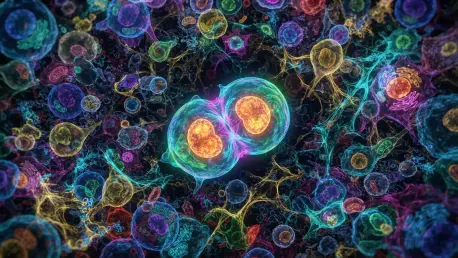
Beyond individual DNA mutations, a significant focus of current research is chromosomal instability, which refers to the chaotic way cancer cells gain or lose whole chromosomes during division. This large-scale genomic instability significantly influences how a tumor behaves, how quickly it spreads, and how it ultimately responds to treatment. Traditionally, sequencing technology focused on point mutations, but measuring this large-scale structural chaos provides a much deeper understanding of a tumor’s biological potential. Dr. Burkard’s laboratory is utilizing single-cell sequencing to digitally reconstruct the genetic makeup of individual tumor cells, allowing researchers to measure the frequency of division errors with unprecedented precision. This data helps identify the underlying mechanics of tumor growth, offering a predictive tool that goes beyond simple genetic presence to look at the actual physical behavior of the cancer cell during its life cycle.
Using chromosomal instability as a predictive tool represents a shift toward smarter chemotherapy applications. Currently, many patients receive toxic treatments like paclitaxel, which targets the machinery of cell division, without knowing if their specific tumor will actually respond to it. By identifying markers of chromosomal instability beforehand, oncologists can predict which patients are likely to benefit from these mitosis-targeting drugs and which can be spared from unnecessary side effects. This allows for a more personalized selection of chemotherapy, ensuring that the treatment matches the biology of the tumor rather than relying on a trial-and-error approach. This research also opens the door to developing new drugs that specifically exploit the vulnerabilities created by chromosomal chaos. By inducing even more instability in a cell that is already struggling to maintain its genetic integrity, researchers may be able to push cancer cells toward a programmed cell death. This strategy of leveraging a tumor’s own weaknesses is a sophisticated evolution of the precision medicine philosophy.
Biological Extremes: Deciphering the Mechanics of Long-Term Survival
The study of extreme survivors—those who live for decades with metastatic disease—reveals that not all breast cancers follow the same aggressive trajectory. Dr. Burkard’s research into these outliers has identified distinct biological profiles that explain why some patients experience such prolonged survival. One group, often referred to as slow-progressors, typically has hormone receptor-positive disease that grows at an exceptionally low rate. Interestingly, their survival is not necessarily driven by a lack of aggressive mutations but by the fundamental biology of the cancer itself, which may originate from a cell type with a low proliferative drive. Understanding why these tumors remain dormant for so long could lead to new therapies that keep cancer in a chronic, manageable state rather than attempting to eradicate it through high-dose toxicity. This research challenges the standard one-size-fits-all prognosis and suggests a more nuanced view of the metastatic landscape.
In contrast to the slow-progressors, another group of extreme survivors consists of exceptional responders who have biologically aggressive tumors that are highly sensitive to specific targeted therapies, such as HER2-directed treatments. In these cases, the treatment is so effective that it causes significant regression of the cancer, allowing patients to maintain a high quality of life for many years. This differentiation is crucial because it suggests that for a small subset of patients, de-escalation of treatment might eventually be a safe and viable option. If the biology of the tumor is fundamentally slow-growing or exquisitely sensitive, continuous high-intensity therapy may not be necessary for long-term control. Identifying these patients reliably through advanced molecular profiling is a major goal of current studies. By tailoring the intensity of the treatment to the specific biological pace of the disease, oncologists can reduce the long-term side effects and financial costs associated with metastatic care. This focus on the person as well as the protein is a hallmark of the next phase of precision medicine.
Strategic Integration: Establishing the Unified Standard for Comprehensive Care
The transition toward a proactive, data-driven science represented a fundamental shift in oncology during this period of rapid innovation. This transformation prioritized knowledge-based interventions and the integration of diverse diagnostic streams into a single clinical workflow. By utilizing minimal residual disease monitoring and investigating the biology of extreme survivors, researchers identified clear pathways for treatment de-escalation and early interception of recurring disease. The collaborative efforts within the Big Ten Cancer Research Consortium provided the necessary scale to validate these precision tools across broader populations. Consequently, the field moved toward a future where treatment was specifically tailored to the unique biological signature of every patient, ultimately maximizing therapeutic efficacy while significantly reducing the physical and financial burden of cancer care. This era established that the success of oncology depended as much on the structural support of healthcare delivery as it did on the molecular discoveries made in the laboratory.
The integration of pharmacogenomics into the standard diagnostic assay allowed for the prevention of severe drug toxicities by identifying how individual patients metabolized specific medications. This shift meant that the choice of therapy was guided not only by the tumor’s mutations but also by the patient’s own genetic ability to handle the treatment. Unified testing platforms streamlined the process, ensuring that all necessary genetic and molecular data were available to the clinical team from the very first day of diagnosis. This holistic approach reduced the delay between diagnosis and the start of targeted treatment, improving the overall efficiency of the healthcare system. The move toward a single-assay model for all patients, regardless of their stage of disease, ensured that the potential for personalized care was realized for everyone. By combining these advanced diagnostics with regional outreach and institutional collaboration, the medical community successfully created a more equitable and effective framework for breast cancer care. This established a new standard of excellence that transformed the patient experience from one of uncertainty to one of precision and hope.