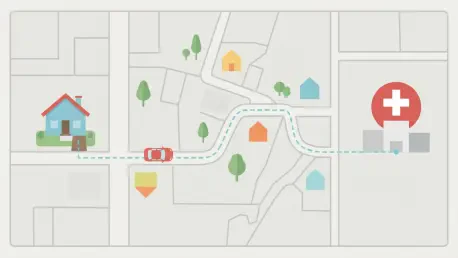

The lack of a comprehensive federal privacy mandate means that a consumer’s protection against location tracking depends entirely on their specific state of residence. In the current landscape, the ubiquitous smartphone has evolved into a sophisticated surveillance tool that meticulously logs every physical movement of its owner, often without their explicit realization of the consequences. Recent investigations have unveiled a deeply concerning trend where precise geolocation signals are systematically harvested to identify individuals visiting sensitive medical sites, ranging from reproductive health clinics to specialized oncology centers. This data does not merely exist in a vacuum. It serves as the raw material for a vast and largely unregulated industry of data brokers who capitalize on the most private moments of a person’s life. While many users believe their medical journeys remain confidential, the reality is that their digital footprint often broadcasts their health status to the highest bidder in real time. This persistent monitoring creates a detailed map of a person’s private life that was once considered unreachable by commercial interests.
The Mechanics: How Brokers Generate Health Inferences
The scale of the data brokerage market is truly staggering, with hundreds of distinct entities operating within a complex ecosystem designed to monetize human movement. These brokers do not simply collect raw coordinates; they employ sophisticated algorithms to generate “inferences” based on behavioral patterns. For instance, if a mobile device remains stationary within the boundaries of a specialized medical facility for several hours, the system concludes that the user is likely a patient seeking treatment for a specific condition. These digital assumptions are then packaged into lucrative marketing segments, such as “cancer survivors” or “expectant parents,” and sold to advertisers who are eager to capitalize on these vulnerabilities. This process effectively strips away the anonymity of the medical experience, transforming a private doctor’s visit into a data point for aggressive commercial targeting. The precision of these inferences continues to grow as tracking technology becomes more refined and datasets more integrated across multiple platforms.
Industry proponents often argue that the data they trade is anonymized and stripped of personally identifiable information, yet technical research suggests these safeguards are frequently insufficient. Investigations conducted by digital rights advocates have demonstrated that movement patterns are essentially unique digital fingerprints that can easily be linked back to specific individuals. Even when brokers attempt to “de-identify” datasets by removing explicit names, the routes a person takes—from their home address to a clinic and back—provide enough context to deanonymize the user with startling accuracy. Furthermore, techniques such as “bridging,” where a tracker pauses at the edge of a sensitive location and resumes immediately afterward, allow brokers to infer a visit even if the specific coordinates of the clinic are nominally excluded from the data set. This persistent tracking creates a permanent record of a person’s health history that is nearly impossible to erase once it has entered the broader commercial data stream. Brokers essentially maintain a shadow medical record for millions of unsuspecting users.
Patient Exploitation: The Human Impact of Data Sales
For many patients navigating serious health challenges, the commercialization of their location data manifests as a digital invasion during their most vulnerable moments. Individuals undergoing chemotherapy or managing chronic illnesses often find their online experiences suddenly saturated with advertisements for unproven “miracle cures,” unregulated supplements, and dubious medical services. This targeted marketing can create a profound sense of psychological distress, as patients feel their private struggles are being observed and exploited for profit. The case of a leukemia survivor who was bombarded with ads for “fake cures” after visiting his oncologist illustrates the predatory nature of this ecosystem. Instead of finding support, patients are forced to filter through a deluge of misinformation that can lead to confusion and anxiety. This environment turns the digital space into a minefield where legitimate medical advice must compete with high-budget, algorithmically driven deceptive marketing. The emotional toll of being tracked during a health crisis adds an unnecessary burden to recovery.
The clinical implications of this data trade extend far beyond advertising, potentially compromising the efficacy of medical treatment and the integrity of the doctor-patient relationship. Neurologists and other specialists have reported an increasing number of cases where patients, influenced by hyper-targeted advertisements, question established medical protocols in favor of alternative treatments found online. When a patient’s location data triggers ads for unproven therapies, it can lead to a dangerous delay in seeking evidence-based care. Moreover, the data files held by brokers are frequently riddled with inaccuracies, leading to a situation where individuals are targeted based on entirely false health inferences. This misinformation loop can convince a person they have a condition they do not, or conversely, exclude them from relevant information based on an erroneous profile. The interference of commercial interests in the medical journey creates a barrier to clear communication between clinicians and their patients, complicating the path to recovery and undermining the trust essential for effective healthcare.
Regulatory Gaps: Why HIPAA Fails to Protect Location Data
A primary reason why the sale of health-related location data remains legal is the profound public misunderstanding of the Health Insurance Portability and Accountability Act. While a majority of Americans believe that HIPAA provides a comprehensive shield for all health-related information, the law’s protections are actually remarkably narrow in the digital age. HIPAA applies exclusively to “covered entities,” which include healthcare providers, insurance companies, and their direct business associates. It does not regulate the geographic coordinates broadcast by a smartphone, the information entered into general wellness applications, or the data harvested by third-party brokers who have no direct relationship with a medical provider. This legal vacuum means that as soon as a patient leaves a doctor’s office, the data generated by their mobile device falls outside the realm of federal health privacy protections. Consequently, data brokers can operate with relative impunity, as they are not classified as medical entities under existing federal statutes, allowing them to bypass strict confidentiality rules.
While the Federal Trade Commission has attempted to curb the most egregious practices of data brokers through enforcement actions, these efforts are limited by the absence of a national privacy law. Recent settlements with several prominent brokers have required companies to obtain “affirmative express consent” before sharing sensitive location data, but these orders are specific to individual firms and do not set a binding precedent for the entire industry. Furthermore, many of these settlements lack significant financial penalties, which privacy advocates argue fails to create a sufficient deterrent for a multi-billion-dollar industry. Without a broad legislative mandate, the FTC is forced to play a game of regulatory “whack-a-mole,” addressing violations on a case-by-case basis while the majority of the market continues to exploit loopholes. This fragmented approach leaves the fundamental business model of harvesting and selling health-related location data intact, as most brokers remain free to operate until they are specifically targeted for an enforcement action. The lack of federal policy keeps patients exposed.
User Sovereignty: Practical Steps for Digital Defense
In the absence of federal leadership, a growing number of states have begun to implement their own privacy protections, creating a complex patchwork of rights for American consumers. States like Maryland, Oregon, and Virginia have enacted laws that specifically restrict or ban the sale of precise geolocation data, recognizing the sensitive nature of this information. Perhaps the most robust example is Washington’s “My Health My Data Act,” which prohibits the practice of “geofencing” around medical facilities for the purpose of tracking or targeting patients. This law also grants consumers a private right of action, allowing them to sue companies directly for violations rather than relying solely on state attorneys general. However, this progress is not universal. In other major states, such as California, legislative efforts to block the sharing of sensitive location data have faced significant opposition and setbacks, leaving millions of residents without clear legal recourse. This geographic disparity means that an individual’s digital privacy is currently dictated by their state lines and the local political climate.
Reclaiming a sense of privacy in this environment required proactive engagement and the adoption of specific manual safeguards to mitigate the risks of digital tracking. Privacy experts recommended that users audit their smartphone settings by disabling location services for all but the most essential applications and opting out of cross-app tracking requests. On Android devices, the regular deletion of the “Advertising ID” served as a critical step in breaking the link between physical movements and digital profiles. Some individuals even chose to place their phones in airplane mode before entering medical facilities to prevent the transmission of geolocation signals entirely. While these measures were often inconvenient and placed the burden of protection on the individual, they remained the most effective tools available for safeguarding personal health journeys. Moving forward, the focus shifted toward the necessity of a unified federal standard that recognized health-related location data as a protected category, ensuring that personal medical privacy was no longer a luxury dependent on technical expertise.