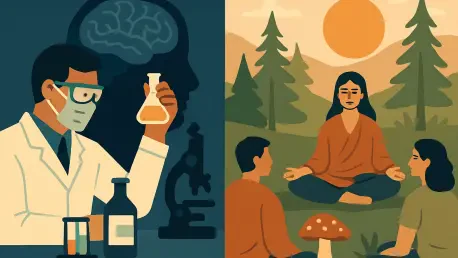

The landscape of mental health treatment in the United States is currently undergoing a structural transformation that challenges decades of conventional pharmaceutical wisdom. This shift is characterized by the emergence of a dual-track regulatory system, where high-tech clinical research and community-based healing frameworks operate in parallel rather than in competition. While the Food and Drug Administration (FDA) accelerates its review processes for breakthrough compounds, several states are simultaneously pioneering decentralized access models that prioritize historical and holistic methodologies. This juxtaposition creates a unique tension within the medical establishment, as regulators attempt to reconcile the precision of laboratory-grade medicine with the nuanced, experiential nature of traditional psychedelic use. The outcome of this experiment will likely dictate how millions of Americans access care for treatment-resistant depression, post-traumatic stress disorder, and other debilitating psychological conditions that have long eluded standard therapeutic interventions.
Federal Acceleration and the Pharmaceutical Model
Strategic Priorities in Federal Drug Review
Federal authorities have drastically shifted their approach toward psychedelic substances, moving away from restrictive prohibition toward an aggressive medicalization strategy. A landmark executive order has paved the way for the FDA to implement “national priority vouchers,” a mechanism designed to fast-track the review of substances that address critical public health needs. These vouchers have already been granted to major pharmaceutical entities like Compass Pathways and the Usona Institute for their work on psilocybin, as well as Otsuka for its research into methylone. By reducing the traditional ten-month review cycle to a mere one or two months, the federal government is signaling that it views these compounds not as dangerous narcotics, but as essential tools for national recovery. This speed, however, necessitates a rigorous adherence to standardized protocols, ensuring that every dose is chemically identical and every clinical setting is strictly controlled to minimize adverse outcomes during the rollout phase.
The push for medicalization is not merely about speed; it represents a fundamental desire to integrate psychedelics into the existing healthcare infrastructure of hospitals and insurance networks. By treating psilocybin or MDMA-related compounds as pharmaceutical products, the government aims to provide a level of safety and predictability that satisfies the demands of the modern medical establishment. This pharmaceutical pathway focuses on the molecular efficacy of the substance, often isolating the chemical interaction from the broader psychological or spiritual context. Researchers are currently focusing on the biological mechanisms of neuroplasticity, seeking to prove that these substances can physically “re-wire” the brain to break the cycles of chronic mental illness. This evidence-based approach is vital for gaining the trust of the wider medical community and securing the necessary funding from private investors who require a clear, regulated path to market for these emerging therapies.
Regulatory Harmony and Legal Synchronization
To prevent a legal quagmire between state and federal jurisdictions, legislative pioneers in Colorado have introduced measures like Senate Bill 26-31. This legislation creates a dynamic framework where state laws automatically adjust to align with any future rescheduling actions taken by the Drug Enforcement Administration (DEA). By ensuring that state-level medical regulations mirror federal approvals for FDA-sanctioned drugs, lawmakers are providing a stable environment for pharmaceutical companies to operate without the fear of local interference. This synchronization is crucial for the establishment of specialty clinics that wish to offer cutting-edge treatments while maintaining full compliance with both local and national oversight bodies. It effectively removes the “gray market” uncertainty that has historically plagued the industry, allowing for a more transparent and professionalized medical landscape that caters to patients seeking high-standard, clinical environments.
Despite this move toward harmony, the legal framework must also account for the complexities of professional licensing and liability. As federal approvals move closer to reality, states are tasked with defining who exactly is qualified to administer these powerful substances within a clinical setting. This involves the creation of new certification standards for psychiatrists and specialized nurses who must be trained in the unique requirements of psychedelic-assisted therapy. The challenge lies in maintaining a balance between the rapid pace of federal medicalization and the meticulous work of ensuring that practitioners are prepared for the intense psychological work required. Consequently, the regulatory landscape is shifting toward a model where the pharmaceutical product is just one component of a larger, federally recognized therapeutic protocol that includes preparation, administration, and integration phases to ensure patient safety and long-term efficacy.
Community Access and State-Level Innovation
Preserving Natural Medicine Frameworks
While the federal government prioritizes a medical-industrial approach, Colorado’s Proposition 122 serves as a vital counterbalance by protecting the “natural medicine” framework. This voter-led initiative ensures that even if a pharmaceutical version of psilocybin becomes a standard prescription drug, the community-based model for organic mushrooms remains intact. This pathway allows for facilitator-led healing centers and personal use that are not tied to the strictures of a traditional hospital setting. Proponents argue that this dual-track system is essential because it respects the cultural and indigenous roots of these substances, which were used for healing long before they were studied in laboratories. By creating a legal “carve-out,” Colorado prevents the pharmaceutical model from monopolizing access, ensuring that those who prefer a holistic or spiritual approach can do so without violating state law or being forced into a medicalized environment.
The coexistence of these two models addresses the reality that different individuals require different types of support for their mental well-being. Some patients may feel more comfortable in a sterile clinic with a board-certified physician, while others might find the most profound healing in a community circle led by an experienced facilitator. Experts like Dr. Shannon Hughes point out that these pathways are complementary, as they serve distinct human needs and draw from different lineages of knowledge. The community-based model often emphasizes the importance of the setting and the relationship between the participant and the facilitator, which can be difficult to quantify in a clinical trial. By maintaining this natural medicine track, states can offer a more diverse range of options, allowing the public to choose a modality that aligns with their personal values, whether those are rooted in modern neuroscience or ancient, communal wisdom.
Managing the Tensions of Rapid Growth
The rapid advancement of federal pharmaceutical approvals creates a significant pressure on state regulators who are still fine-tuning the nuances of community programs. There is a palpable concern that the “fast-track” nature of the medical model might overshadow the slower, more deliberate work of establishing safety standards for non-clinical facilitators. State authorities are currently grappling with the challenge of licensing practitioners who can safely navigate non-ordinary states of consciousness without the extensive background of a medical degree. This requires the development of robust training programs that focus on harm reduction, ethics, and psychological first aid. If states prioritize the speed of the pharmaceutical rollout over the careful implementation of these community standards, they risk undermining the very safety and integrity that the natural medicine framework was designed to uphold for the general public.
Furthermore, the tension between these two tracks extends to the economic and social implications of psychedelic access. The pharmaceutical model is inherently expensive, involving proprietary compounds and highly specialized clinic time, which could potentially limit access to those with significant financial resources or comprehensive insurance. In contrast, the community-based model offers a more affordable alternative through personal cultivation and non-medical facilitation. Regulators must ensure that the growth of the medical sector does not lead to the criminalization or marginalization of the community sector. A successful dual pathway requires a regulatory environment where both tracks are supported through clear communication and mutual respect. This involves public input sessions and the continuous monitoring of safety data from both clinical and community settings to ensure that the evolving landscape serves the best interests of all citizens.
Implementation of Unified Care Standards
The transition toward a diversified psychedelic landscape was facilitated by a shift in how practitioners and regulators viewed the concept of “treatment.” It was recognized that the efficacy of these substances depended heavily on the quality of the integration process that followed the initial experience. In the months leading up to the current period, state boards and federal agencies collaborated to establish baseline standards for facilitator ethics and emergency protocols that applied across both pathways. This ensured that regardless of whether an individual sought help in a clinical or community setting, they were guaranteed a minimum standard of care and protection. This collaborative effort was instrumental in bridging the gap between the rigid requirements of the FDA and the flexible, human-centered approach of local healing centers.
Moving forward, the primary focus for stakeholders should be the expansion of practitioner training and the refinement of integration services. State governments must invest in educational infrastructure to ensure a steady supply of qualified facilitators who are equipped to handle the complexities of psychedelic-assisted healing. This includes providing resources for ongoing professional development and the establishment of peer-review networks to maintain high ethical standards. Additionally, the medical community should continue to explore how community-based insights can inform clinical practices, and vice versa. By fostering a culture of shared knowledge and rigorous oversight, the United States can create a sustainable and inclusive model for psychedelic medicine. This approach not only addresses the immediate crisis of mental health but also builds a resilient framework for the responsible use of transformative substances in the years ahead.