
The pursuit of a definitive solution for treatment-resistant neurological disorders has reached a critical juncture at the University of Miami Miller School of Medicine through its leadership in the BEAT-MS clinical trial. Formally recognized as the ITN077AI study, this Phase 3 multicenter, randomized controlled trial investigates whether a sophisticated immune-resetting procedure can outperform the most advanced pharmaceutical interventions currently available. Under the direction of Dr. Flavia Nelson, a professor of clinical neurology, the Miller School serves as the exclusive Florida site for this research, which focuses on patients with highly active relapsing-remitting multiple sclerosis who have found little relief in traditional medicine. By positioning itself at the forefront of this national effort, the institution aims to provide empirical clarity on a procedure that has long been considered a last resort but may soon become a cornerstone of standard neurological care for those with the most aggressive forms of the disease.
The Challenge: Navigating Treatment-Resistant Multiple Sclerosis
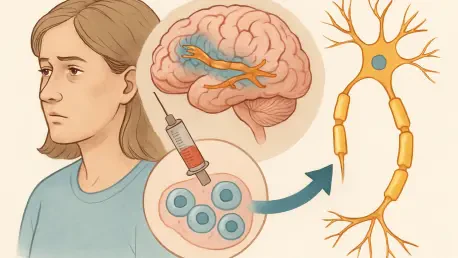
Multiple sclerosis operates as a relentless autoimmune disruption where the body’s internal defense mechanisms mistakenly identify the central nervous system as a foreign adversary. This pathological confusion leads to the systematic destruction of myelin, the insulating sheath that facilitates rapid electrical signaling between the brain and the rest of the physical body. When this protective layer is eroded, the resulting scar tissue, or sclerosis, creates a permanent barrier to communication, manifesting in symptoms that range from temporary sensory loss to profound, permanent motor disability. Despite the rapid expansion of the pharmacological landscape, which now includes dozens of disease-modifying therapies, a substantial segment of the patient population remains refractory to these standard interventions. These individuals experience a “highly active” form of the disease, where the immune system continues its assault unabated, leading to frequent clinical relapses and the constant emergence of new inflammatory lesions that are visible on magnetic resonance imaging scans.
The persistence of disease activity in the face of high-efficacy medications represents one of the most significant hurdles in modern neuro-immunology, as it suggests that standard immunosuppression is sometimes insufficient to halt the underlying biological cascade. For these patients, the emotional and physical toll of failing multiple lines of therapy is immense, often leading to a sense of therapeutic nihilism where no viable options seem to remain. The BEAT-MS trial specifically addresses this critical gap in care, targeting individuals whose disease progression has outpaced the capabilities of conventional drugs. By focusing on this specific demographic, the study seeks to determine if a more radical biological intervention can succeed where incremental pharmaceutical adjustments have failed. The goal is to provide a rigorous scientific framework that moves beyond anecdotal evidence, offering a data-driven path forward for those who have exhausted the traditional pharmacopeia and are searching for a way to stabilize their neurological future before permanent damage becomes irreversible.
Biological Restoration: The Mechanism of Immune-Resetting via AHSCT
The scientific foundation of the BEAT-MS investigation is built upon the transformative concept of autologous hematopoietic stem cell transplantation, a procedure that aims to fundamentally reboot the patient’s immune architecture. This process is not merely a localized treatment but a systemic overhaul that begins with the mobilization and collection of the patient’s own healthy stem cells. Once these cells are safely harvested and stored, the patient undergoes a conditioning regimen involving high-dose chemotherapy, which is designed to deplete the existing, autoreactive immune system that has been attacking the central nervous system. This “clearing out” phase is essential because it removes the mature, long-lived lymphocytes that carry the “memory” of the autoimmune attack. Following this depletion, the previously collected stem cells are reintroduced into the bloodstream, where they migrate to the bone marrow and begin the complex task of generating an entirely new, regulated, and functional immune system from scratch.
This biological reset is intended to produce an immune environment that lacks the specific triggers or imbalances that originally led to the development of multiple sclerosis. While this procedure has been utilized in the field of oncology for decades, its application in autoimmune neurology is based on the premise that the immune system can be “retrained” to recognize the body’s own tissues as self rather than non-self. Currently, this approach is reserved for experimental settings or extreme cases due to the intensive nature of the chemotherapy required, yet the potential for long-term, drug-free remission remains its most compelling attribute. The BEAT-MS trial is uniquely positioned to compare this intensive one-time procedure against the best available therapies on the market, providing a head-to-head analysis of efficacy and safety. By investigating the long-term behavior of the newly formed immune cells, researchers hope to prove that a temporary period of high-intensity treatment can provide a more durable and life-changing result than a lifetime of continuous, yet ultimately ineffective, pharmaceutical management.
Trial Structure: Rigorous Design and Patient Eligibility Criteria
To maintain the highest standards of scientific integrity, the BEAT-MS study employs a meticulous randomized controlled design that ensures every participant’s data contributes to a clear understanding of the procedure’s value. Participants are divided into two distinct cohorts: one group receives the stem cell transplant, while the control group receives the best available therapy as determined by their specific clinical needs and the expertise of their neurologist. This comparative approach is vital for determining whether the higher risks associated with chemotherapy and transplantation are justified by significantly superior clinical outcomes. The study does not just look at relapse rates but also monitors long-term disability progression and brain volume changes, providing a comprehensive view of how each treatment path influences the overall health of the central nervous system. This dual-arm structure allows the researchers to isolate the specific effects of the immune reset while accounting for the high performance of modern disease-modifying drugs.
Eligibility for the trial is strictly defined to ensure that the results are applicable to the specific population that stands to benefit most from this intensive intervention. Candidates must be between the ages of 18 and 55 and have a confirmed diagnosis of relapsing-remitting multiple sclerosis that meets the 2017 McDonald Criteria. A critical component of eligibility is the Expanded Disability Status Scale score, which must be 6.0 or lower; this requirement ensures that participants still possess a degree of functional mobility that could be preserved or improved by the treatment. Furthermore, patients must demonstrate recent and significant disease activity, such as at least two documented relapses within the previous three years while on other medications. By selecting individuals who are in the “sweet spot” of being medically resistant yet still physically capable of recovery, the trial aims to capture the maximum potential for neurological preservation. This strategic selection process is designed to prove that early and aggressive intervention can prevent the transition into more progressive and less treatable forms of the condition.
Community Integration: Leadership, Philanthropy, and Research Support
The successful implementation of the BEAT-MS trial at the Miller School is a testament to the synergy between elite clinical leadership and robust community support. Dr. Flavia Nelson brings a wealth of experience in managing complex neurological cases, emphasizing an approach that balances the cutting edge of science with the practical realities of patient care. Her role involves not only the technical oversight of the transplant process but also the careful long-term monitoring of patients as they navigate the recovery phase. This level of specialized expertise is what makes the University of Miami a regional hub for neuro-immunology, drawing patients from across the Southeast who are seeking alternatives to conventional care. The university’s infrastructure, which integrates laboratory research with bedside application, provides the necessary environment for such a high-stakes clinical trial to thrive, ensuring that safety protocols are strictly followed while data collection remains continuous and precise.
Complementing this clinical expertise is a surge of philanthropic momentum, most notably through the establishment of the Mendoza Family Fund starting in the current year. Founded by Heisman Trophy winner Fernando Mendoza in honor of his mother, Elsa Mendoza, the fund serves as a powerful catalyst for accelerating MS research at the university. With an initial commitment of $500,000 and a strategic goal to exceed $3 million within the next three years, this partnership with the National Multiple Sclerosis Society provides the financial stability needed to sustain long-term clinical investigations. Philanthropy of this scale does more than just fund laboratory equipment; it raises the profile of the disease, encourages other donors to participate, and ensures that the Miller School can continue to offer high-cost experimental treatments to those who qualify, regardless of their financial background. This collaborative ecosystem of doctors, researchers, and dedicated families is essential for moving the needle on a disease that has historically been difficult to manage, creating a sustainable model for future medical breakthroughs.
Strategic Outlook: Future Implications for Multiple Sclerosis Management
The outcomes of the BEAT-MS trial are expected to provide the definitive evidence required to shift the paradigm of multiple sclerosis care from a model of continuous management to one of potential restoration. Beyond the immediate clinical results, the study is generating critical data on the cost-effectiveness of a one-time intensive procedure versus decades of expensive pharmaceutical therapy. In the current healthcare landscape, where the cost of specialty medications continues to rise, demonstrating that a stem cell transplant can lead to long-term drug-free remission would have profound implications for insurance coverage and standard treatment protocols. If the trial proves that the immune reset is both safer and more effective for certain populations, it could move this procedure from the realm of experimental research into the first or second line of defense for aggressive cases. This shift would represent a significant victory for patient autonomy, offering a choice between chronic illness management and the possibility of a durable biological correction.
As the medical community moves forward, the focus must remain on the integration of these advanced biological therapies into the broader clinical workflow. Clinicians should begin preparing for a future where stem cell transplantation is a common referral for patients who show early signs of treatment resistance, rather than a final hope after permanent disability has already occurred. Future research should prioritize the refinement of conditioning regimens to further reduce the side effects of chemotherapy and the identification of biomarkers that can predict which patients will respond best to an immune reset. For patients and their families, these developments highlight the importance of seeking care at specialized centers that offer access to Phase 3 trials and multidisciplinary support. By aligning clinical practice with the emerging data from the Miller School, the healthcare industry moved closer to a reality where the most aggressive forms of multiple sclerosis were no longer viewed as uncontrollable, but as conditions that could be successfully reset and stabilized for the long term.