
Ivan Kairatov is a seasoned Biopharma expert with a distinguished career in research and development, specializing in the technological innovations that drive drug discovery. His deep understanding of protein dynamics and structural biology makes him a leading voice in deciphering the complex molecular pathways that contribute to oncogenesis. In this discussion, we explore the groundbreaking findings regarding the SPOP protein, a key player in cellular regulation that has long puzzled scientists due to its wide range of cancer-linked mutations.
The conversation delves into the newly discovered structural equilibrium of the SPOP protein, moving beyond its known linear filament form to reveal an inactive “double-donut” state. We examine how this balance governs the regulation of gene-regulators like BRD2, BRD3, and BRD4, and how specific mutations bypass normal cellular signals to lock the protein into either overactive or inactive configurations. By understanding the transition between these two states and their localization within nuclear speckles, we gain a new framework for therapeutic intervention in cancers where SPOP activity is dysregulated.
How does the transition between the 22 to 30 molecule double-donut and the linear filament state effectively act as a master switch for protein activity?
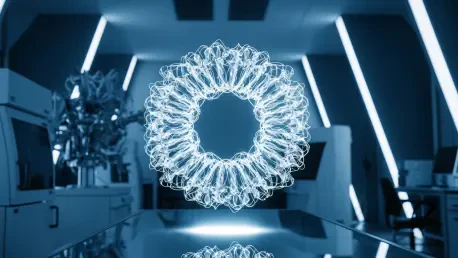
When we look at the SPOP protein, we are seeing a remarkable example of structural choreography that dictates whether a cell remains healthy or turns cancerous. The transition between the double-donut state—which consists of two stacked rings formed by between 22 and 30 individual SPOP molecules—and the linear filament is essentially a master switch for the E3 ubiquitin ligase complex. In the inactive double-donut state, the protein is essentially autoinhibited; the structure is actually wide enough to encircle an entire ribosome, which creates a physical “off” configuration. Conversely, when the scaffolding protein Cullin-3 enters the mix, it activates SPOP by driving the assembly of long, thread-like filaments. This structural duality is truly unique because no other substrate receptor we know of forms these long filaments specifically to manage its own circularization and inactivation.
In what ways do cancer-linked mutations disrupt the delicate equilibrium between these active and inactive states to drive disease progression?
The real danger in cancer comes from mutations that tip this equilibrium toward one extreme or the other, effectively breaking the cell’s ability to regulate protein levels. We see two distinct types of disruption: gain-of-function mutations and loss-of-function mutations. Gain-of-function mutations are particularly aggressive because they drive SPOP to exclusively form filaments, meaning the protein remains perpetually active and over-processes its targets. On the other hand, loss-of-function mutations favor the double-donut state, hindering SPOP’s ability to do its job of balancing gene regulators like BRD2, BRD3, and BRD4. Because these mutations allow the protein to bypass normal cellular signals, the SPOP molecule no longer responds to the regulatory cues that would usually switch it between the “on” and “off” states.
Could you explain the significance of SPOP’s localization within nuclear speckles and how its physical state changes its position within the cell?
The discovery that SPOP localizes to membraneless compartments called nuclear speckles provides a vital clue about where the “off” state actually resides within the cell’s geography. Researchers found that the inactive, double-donut state is very strongly associated with these nuclear speckles, acting as a sort of storage or inhibited zone. When SPOP is activated and transitions into its filament form, its affinity for these speckles drops significantly, and it moves out into the surrounding nuclear environment to interact with its substrates. Gain-of-function mutations illustrate this perfectly by driving SPOP away from the speckles entirely. This suggests that the speckle-associated SPOP is a pool of inactive molecules waiting for the right signal to deploy.
Given that this discovery required hundreds of hours of cryo-electron microscopy, what were the primary challenges in capturing these specific protein structures?
Capturing these structures was a monumental task that required several years of dedicated work and extensive access to high-end cryo-electron microscopy resources. The primary challenge lies in the fact that SPOP is constantly transitioning between these states, making it difficult to “freeze” the protein in a way that reveals the fine balance between activity and inactivity. We are dealing with a quaternary structural transition that is incredibly nuanced, and until now, the double-donut state remained entirely hidden from our view. Even with the hundreds of hours spent analyzing these molecules, there is still missing information regarding some highly prevalent cancer mutations that remain unexplained. It shows that despite our technological leaps, the complexity of protein assembly still has the power to surprise us.
How might this new understanding of the SPOP “off-switch” be utilized to develop more targeted and effective cancer therapies?
The identification of the inactive double-donut structure provides a completely new framework for how we might target SPOP in a clinical setting. If we can deeply understand the specific cellular signaling pathways that govern the transition from the donut to the filament, we might be able to develop drugs that stabilize the inactive form in cases where SPOP is overactive. This therapeutic benefit would come from manipulating the protein’s own natural regulatory mechanism rather than just trying to block its binding sites. By learning how to tip the scales back toward the double-donut, we could potentially restore the balance of gene regulators that contribute to cancer development when left unchecked. It opens up a path where we aren’t just guessing at a mutation’s effect but are instead targeting the structural logic of the protein itself.
What is your forecast for the future of structural biology in drug discovery over the next decade?
I forecast that the next decade will see a shift from looking at proteins as static “locks and keys” toward viewing them as dynamic ensembles that exist in a state of constant flux. The discovery of the SPOP double-donut is just the beginning; we will likely find that many other “undruggable” targets have similar hidden inactive states that can be exploited for therapy. As we integrate high-resolution structural data with our understanding of membraneless organelles like nuclear speckles, our ability to design drugs that intervene at the level of protein assembly will become far more precise. We are moving toward an era of “equilibrium-based” drug design, where the goal is to shift the population of protein shapes within a cell to favor health over disease. This will move us beyond simple inhibition and toward a more sophisticated manipulation of the cell’s own regulatory machinery.