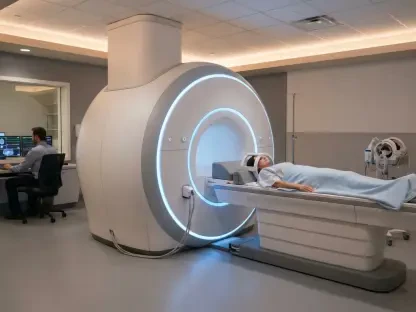

If clinical trials become validations of predictions rather than high-risk gambles, the type of capital available for early-stage research will likely undergo a significant shift. For decades, the pharmaceutical industry has operated under a cloud of uncertainty, where nearly half of all drug candidates inevitably fail during human testing. This high rate of attrition is not merely a financial burden but a reflection of a fundamental gap in our understanding of biological systems.
Etcelera, the latest venture from Flagship Pioneering, was established to bridge this gap by consolidating the expertise of three distinct startups. Under the guidance of Adrian Rawcliffe, the organization is championing a move away from the traditional “roll of the dice” methodology that has long defined drug discovery. By integrating advanced computational tools with deep biological insights, the company seeks to transform clinical trials into predictable outcomes through a deterministic model.
The Strategic Shift: Toward Causal Intelligence
Implementing Causal Intelligence: Moving Beyond Correlation
A central component of this new framework is the implementation of what the company defines as causal intelligence. While conventional artificial intelligence often excels at identifying correlations within massive datasets, it frequently fails to explain the underlying mechanisms of action that drive biological outcomes. This limitation often leads to false positives in the lab, which result in expensive failures during human testing when those correlations fail to hold up in a clinical setting.
In contrast, causal intelligence is designed to decipher the specific cause-and-effect relationships that govern human disease. This requires processing biological information at a scale and complexity that far exceeds human cognitive capacity, utilizing machine learning to predict how a molecule will interact with a living system. By establishing these biological facts early, the company intends to eliminate the guesswork that typically characterizes the early phases of clinical development.
Transitioning the Industry: From Probability to Certainty
This methodology also addresses the limitations of the current probabilistic model, which views each trial as an expensive experiment in human subjects. By shifting the focus toward understanding the functional logic of a disease, researchers can identify the precise biological triggers that lead to pathological changes. This deterministic approach suggests that if the data is sufficiently robust, the outcome of a clinical trial should be known with a high degree of certainty before it begins.
Such a transformation would allow the industry to bypass the high-risk experimentation phase, focusing instead on optimizing the therapeutic benefits for specific patient populations. The integration of these predictive models creates a feedback loop where every successful validation strengthens the underlying platform. As this technology matures, it has the potential to set a new standard for biological research, ensuring that the development pipeline remains focused on high-probability molecules.
Integrating Specialized Technological Pillars
Tracking Disease Progression: Longitudinal Genetic Analysis
The technical architecture of Etcelera relies on the synthesis of three specialized discovery platforms: Etiome, Cellarity, and Empress Therapeutics. Etiome contributes a sophisticated temporal and genetic analysis capability, which is essential for tracking how diseases evolve over time. By monitoring gene expression patterns longitudinally, this platform allows the company to identify the optimal window for medical intervention and pinpoint the patient subgroups most likely to respond.
This temporal dimension is critical because diseases are dynamic, and understanding their progression is key to timing treatments effectively. This focus on the journey of a disease provides a roadmap for researchers, allowing them to see beyond a static snapshot of pathology. By integrating these genetic insights, the company can tailor its approach to the molecular landscape of the patient, ensuring that the chosen intervention aligns perfectly with the biological needs of the individual.
Enhancing Biological Insights: Cellular Mapping and Perturbation
Complementing this temporal analysis, Cellarity provides a holistic view of disease through cellular mapping and advanced machine learning. Instead of focusing on isolated molecular targets, Cellarity examines the behavior of the cell as a whole unit. This system-wide perspective is crucial for understanding how complex diseases alter the entire biological environment, rather than just affecting a single protein. This approach moves the focus from specific markers to the entire cellular landscape.
Simultaneously, Empress Therapeutics adds a layer of multi-omic perturbation tools that allow researchers to observe how systems react to specific disturbances, such as gene knockouts. This ability to test biological responses at scale is vital for confirming the cause-and-effect relationships identified by the causal intelligence engine. By combining these three distinct technological pillars, the organization creates a unified discovery engine that can be adjusted based on the specific disease studied.
The Economic and Operational Future of Biotech
Redefining Industry Economics: Mitigating Research Risk
The financial implications of achieving biological certainty are profound, as the multi-billion-dollar cost of modern drug development is essentially a tax paid for the industry’s high failure rate. If Etcelera can successfully reduce this attrition, it will fundamentally alter the economic landscape for biotechnology companies and their investors. Reducing the burden of failure allows for a more efficient allocation of resources toward promising research areas that were previously neglected.
For instance, diseases that were previously considered too expensive to pursue, such as rare cancers or conditions with small patient populations, could become economically viable if the path to success is predictable. By mitigating the inherent risks of clinical research, the company aims to de-risk early-stage assets, potentially attracting a broader range of capital from investors who seek stability. This shift in the investment climate would provide new resources for challenging issues.
Strategic Alliances: Establishing a New Development Paradigm
To finalize the transition toward a more reliable drug discovery model, the industry prioritized the integration of multi-omic data sets across all stages of development. This shift allowed organizations to move beyond the limitations of isolated research silos, fostering a collaborative environment where predictive accuracy became the primary metric of success. The implementation of these advanced platforms demonstrated that high failure rates were actually the result of fragmented biological data.
By consolidating specialized tools into unified powerhouses, developers successfully turned clinical trials into validations of known biological facts. This approach provided a clear path for future research, suggesting that the most effective strategy involved a focus on causal mechanics rather than simple observation. Consequently, these operational changes led to a more efficient use of capital and an increase in the speed at which life-saving therapies reached the patients who needed them most.