
Ivan Kairatov stands at the forefront of biotechnological innovation, bringing years of deep-seated experience in research and development within the biopharma sector. As an expert who has witnessed the evolution of gene therapy from experimental theory to life-saving reality, he offers a unique perspective on the shifting paradigms of hematology. In this conversation, we explore a groundbreaking advancement recently detailed in the journal Nature, which promises to dismantle the “scorched earth” policy of traditional bone marrow transplantation. This interview delves into the mechanics of epitope editing—a sophisticated form of molecular camouflage—and its potential to make curative treatments accessible to even the most fragile patients, fundamentally altering how we treat everything from sickle cell disease to aggressive leukemias.
The discussion covers the inherent risks of systemic chemotherapy and radiation, the challenge of antibody persistence in the bloodstream, and the precise genome-editing techniques used to shield therapeutic cells. We further explore the clinical implications for patients with inherited blood disorders and how these targeted biological frameworks could soon replace toxic conditioning as the standard of care.
Traditional bone marrow transplants often rely on high-dose chemotherapy to clear space for new cells; how does this impact the patient’s recovery and long-term health?
The current standard of care for stem cell transplantation is essentially a “scorched earth” strategy, where we use high-dose chemotherapy or full-body radiation to physically destroy a patient’s existing bone marrow. While effective at making room for donor cells, these toxic agents cause widespread DNA damage throughout the body, leading to a host of debilitating side effects that patients feel instantly, such as the metallic taste of medication, severe nausea, and a complete loss of immune defense. For many, the road to recovery is paved with long-term risks, including organ damage, infertility, and even the development of secondary cancers years down the line. It is a brutal trade-off where we provide a cure for a blood disease by inflicting systemic trauma on the rest of the organism. This high toxicity often means that the most fragile patients—those whose bodies are already weakened by chronic illness—are deemed too high-risk to even attempt the procedure.
How does the novel strategy involving targeted antibodies offer a departure from the traditional, more toxic methods of preparing the bone marrow?
The shift described in the recent study moves us away from non-specific DNA-damaging agents toward a highly selective, surgical strike. By utilizing antibodies that recognize specific markers on the surface of blood-forming stem cells, we can clear the bone marrow without harming the rest of the patient’s tissues. This biological conditioning acts like a key fitting into a lock, targeting only the cells that need to be replaced while leaving the heart, lungs, and skin untouched. It is a much more elegant approach that avoids the systemic “poisoning” effect of chemotherapy, potentially allowing the body to maintain its overall integrity during the transplant process. This precision is the cornerstone of what we call non-genotoxic transplantation, a framework that prioritizes the patient’s long-term quality of life just as much as the primary cure.
What is the primary obstacle when using antibodies to clear out old stem cells, and how does it complicate the infusion of therapeutic cells?
The fundamental problem with using a targeted antibody is its inability to distinguish between the “bad” original cells and the “good” therapeutic ones we want to introduce. If we infuse the antibody to clear the marrow and then immediately transplant the new stem cells, any remaining antibody in the patient’s system will see those new cells as targets and destroy them instantly. This prevents the therapeutic cells from integrating or “engrafting” into the bone marrow, effectively neutralizing the entire treatment before it has a chance to begin. We have essentially been stuck in a catch-22 where the very tool we use to make space for the cure also prevents the cure from surviving. Solving this requires a way to make the new cells invisible to the antibody while the old cells remain exposed and vulnerable.
Could you explain the concept of “molecular camouflage” and how precise genome editing allows donor cells to evade the patient’s immune conditioning?
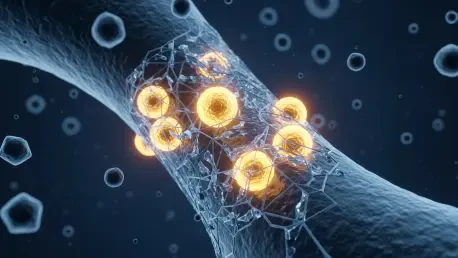
To overcome the antibody conflict, researchers have turned to precise genome-editing tools to create what we call “molecular camouflage” for the donor cells. By changing a tiny, specific recognition site—or epitope—on the surface of the therapeutic stem cells, they essentially alter the “lock” so the antibody “key” no longer fits. This change is incredibly subtle; it is a microscopic adjustment that preserves the normal life-sustaining function of the protein while shielding the cell from detection. During the procedure, the antibody circulates and eliminates the unedited, original stem cells, but it slides right past the edited therapeutic cells without binding to them. This allows the protected cells to survive the conditioning phase, settle into the bone marrow, and begin producing healthy blood without being under constant attack.
In what ways does this selective approach open doors for patients who were previously deemed ineligible for stem cell transplantation?
This breakthrough is a game-changer for “fragile” patients, particularly those suffering from chronic conditions like sickle cell disease or $\beta$-thalassemia who cannot withstand the rigors of chemotherapy. By removing the threat of DNA damage and systemic toxicity, we can offer curative gene therapies to individuals who are currently considered too sick or too high-risk for traditional transplants. The study showed that this method even allows for the selective enrichment of therapeutic cells over time, specifically those edited to increase fetal hemoglobin to compensate for defective adult hemoglobin. We are moving toward a future where a patient doesn’t have to be “strong enough” to survive the treatment; instead, the treatment is finally refined enough to accommodate the patient. It broadens the clinical reach of these therapies from life-threatening, last-resort cases to a much wider population seeking a permanent resolution to their suffering.
What is your forecast for the integration of epitope editing into standard clinical practice for blood diseases and oncology?
I believe we are entering an era where epitope editing will become a flexible, universal platform that safeguards healthy tissue across multiple disciplines, from inherited disorders to aggressive oncology. In the next decade, I expect to see this “shielding” technology used not just for conditioning, but to protect healthy blood stem cells from powerful cancer immunotherapies like CAR-T cells, allowing those treatments to aggressively hunt leukemia while sparing the patient’s immune system. We will likely see a move toward completely chemotherapy-free transplant wards, where targeted biologicals and molecularly protected cells are the standard of care. This will shift the patient experience from one of grueling survival to one of precise, manageable healing, making the dream of “toxicity-free” cures a tangible reality in clinics worldwide.